
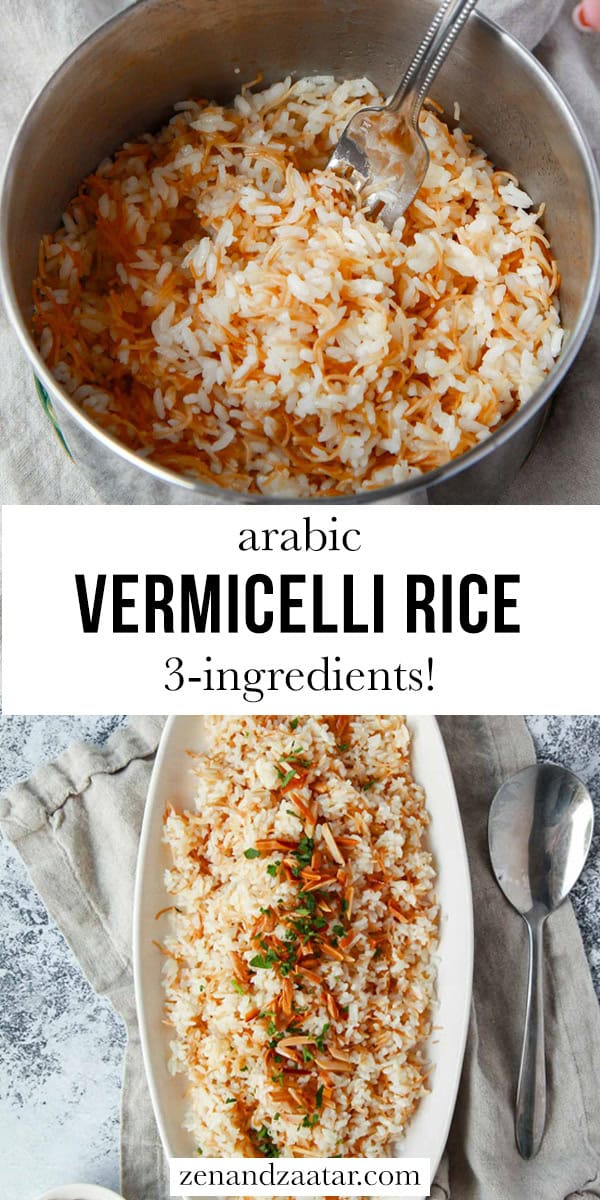
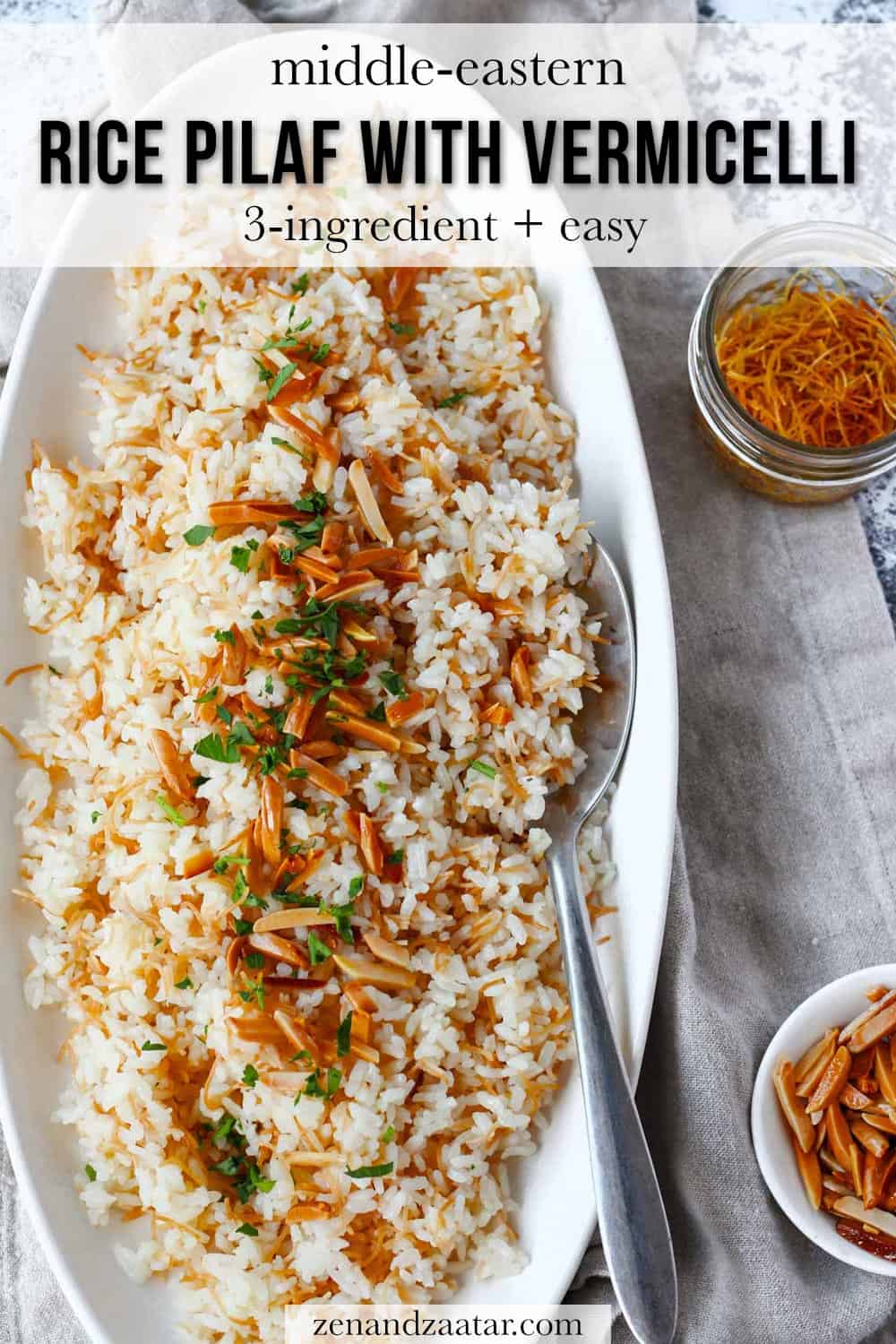
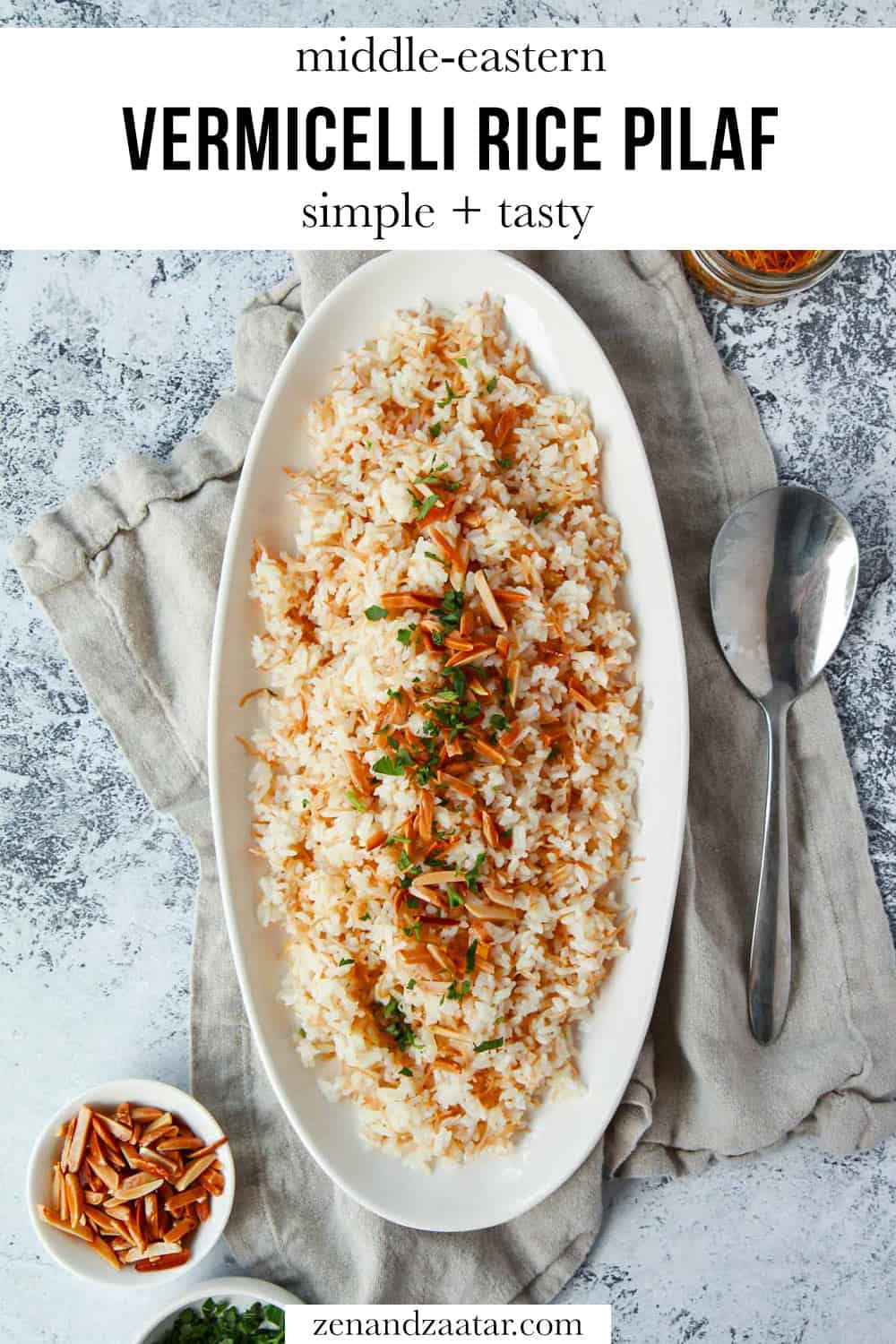
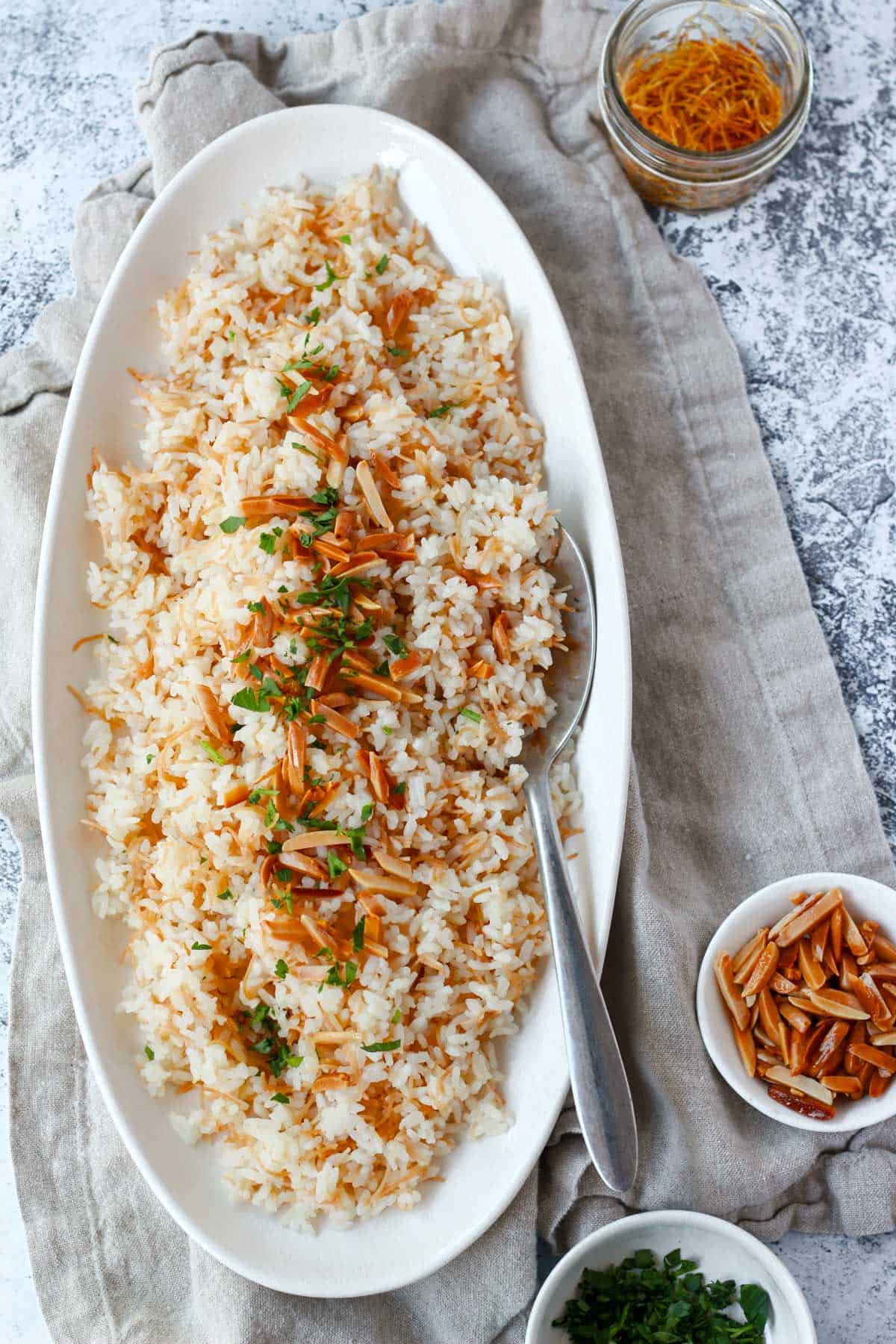
I grew up eating this addicting vermicelli rice as a side to just about every dish. Toasted vermicelli and olive oil make this rice fluffy, buttery, and nutty, with only 3 main ingredients! Also called Lebanese rice or Arabic rice, this Middle Eastern recipe is an easy and addicting way to level up your rice, and my Syrian mom and grandma taught me all the tips to perfect it each time.
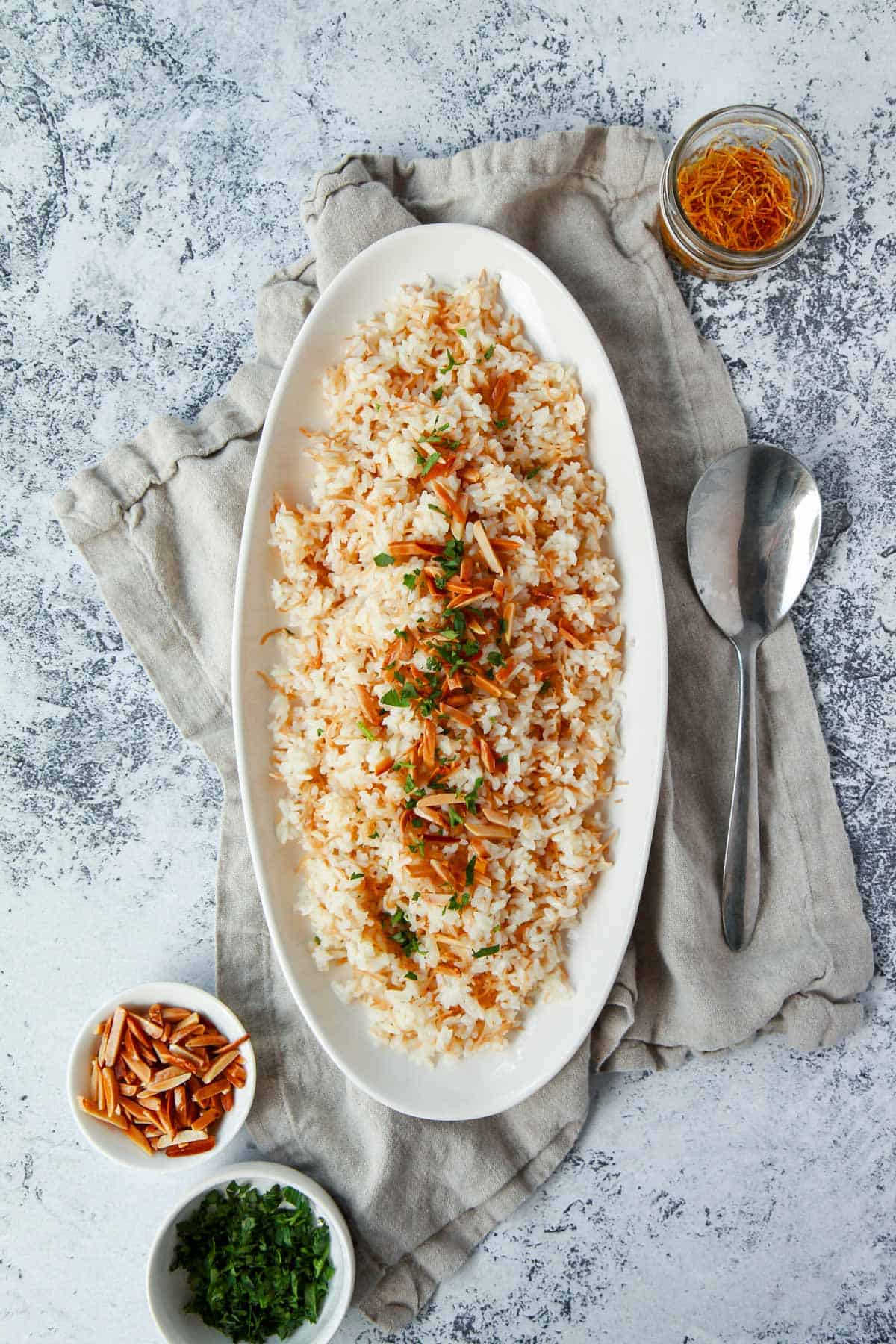
I grew up eating "riz bi sharieh," which means rice with vermicelli in Arabic, as a side to every meal. Every Middle Eastern household typically has rice on the table for main meals like lunch or dinner, and in our household, it was this delicious vermicelli rice. My family likes to toast the vermicelli in olive oil until perfectly golden, so it adds more of the nutty flavor.
After trying this rice for the first time, I couldn't help but ask my mom to make it alongside every meal instead of "normal rice," and I think you will have the same experience. I'm sharing this naturally vegan Middle Eastern recipe now because I've been making it in my household for as long as I can remember to accompany Arabic dishes, but I never wrote it down because it seemed so simple. I regret not sharing it earlier, but I'm so excited to share the technique that my family passed down to me!
Jump to:
What is vermicelli rice?
Vermicelli rice is a form of Mediterranean rice pilaf consisting of 3 main ingredients: rice, vermicelli noodles, and olive oil or butter. Also known as Lebanese rice, you can find this delicious Arabic rice pilaf all over the Levant, including Lebanon, Syria, and Palestine. In these countries, this is served as our "default," plain rice, served alongside stews and main dishes.1
It's a fluffy rice pilaf with an addictive buttery, nutty flavor. Vermicelli noodles are toasted until golden brown, adding nuttiness. Rice is coated in olive oil, butter, or a combination of both, which allows the rice to stay fluffy, adds a buttery flavor, and prevents it from sticking together.
Pilaf is a style of making fluffy rice that doesn't clump together. This technique as well as the word, "pilaf," has Persian origins. The wheat-based vermicelli noodles used in this dish are known in Arabic as sharieh (شعيرية), derived from the word for "hair," due to being hair-thin noodles. They are also known as rishta in Persian, meaning "thread."2
Also common in Egypt and Turkey, this rice has likely been enjoyed in the Middle East since before the 12th century. Medieval Arab sources mention noodles often and document these thin noodles being exported from Sicily in the 12th century. Food historians note that these noodles appeared in Arab cookbooks around the 13th century.3
Ingredient notes
You'll need just 3 main ingredients for this recipe.
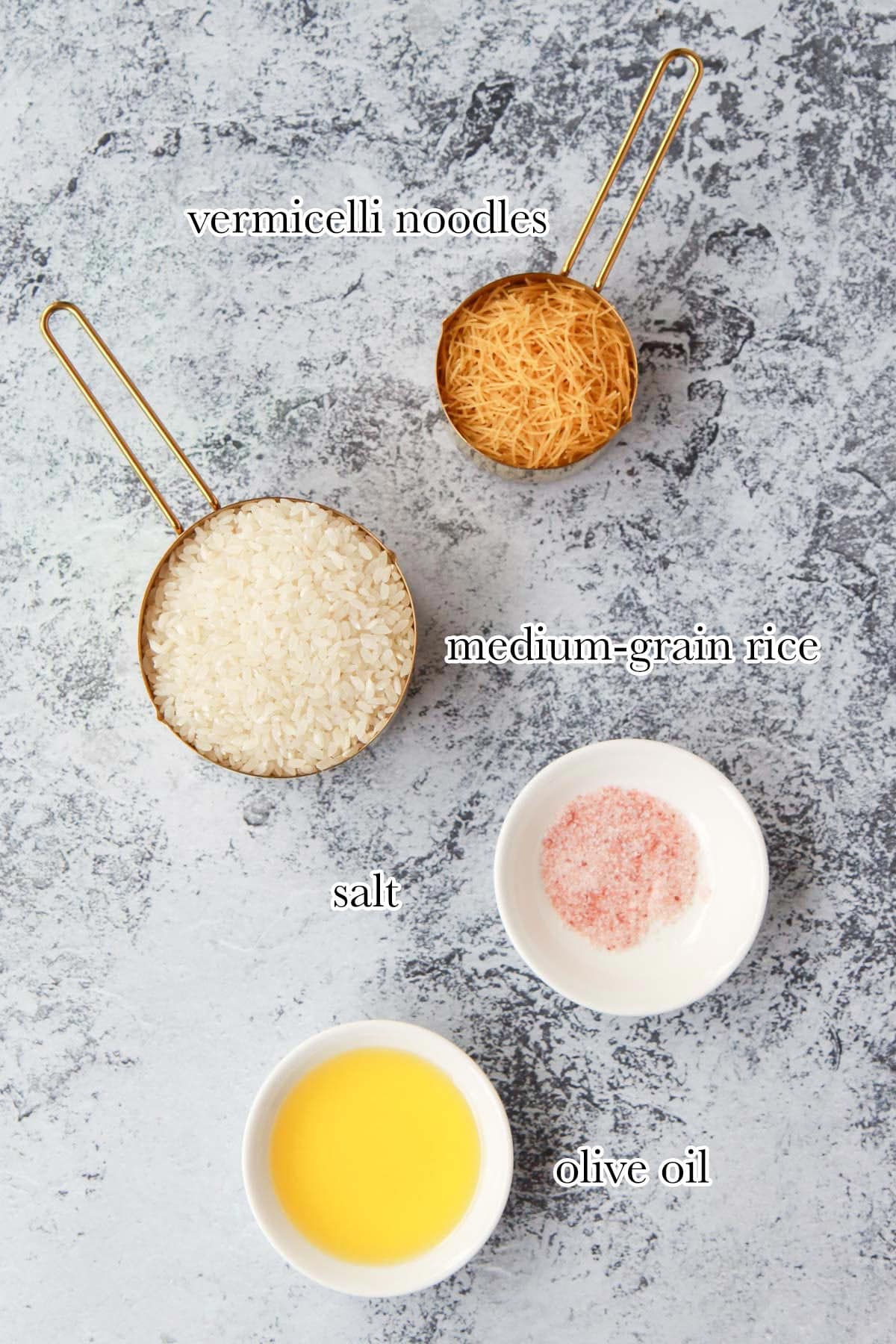
- Rice: I like to use medium grain rice, such as Arborio or Calrose. Alternatively, you can adapt this recipe for long-grain rice, like Basmati.
- Vermicelli: These are the noodles we toast and add to the rice. For this recipe, you will need wheat vermicelli. You can find it at Middle Eastern grocery stores or in the International aisle in your local supermarket. I use pre-cut short vermicelli, which measure to about 1-2 inch long pieces. Alternatively, you can use angel hair pasta and break it into small pieces. I like to use Tazah vermicelli noodles for convenience.
- Olive oil: We use olive oil to toast the vermicelli until golden brown and rice until fragrant. The olive oil also makes the rice fluffy and adds a buttery flavor and coating. Alternatively, you can use vegan butter or a combination of both olive oil and butter.
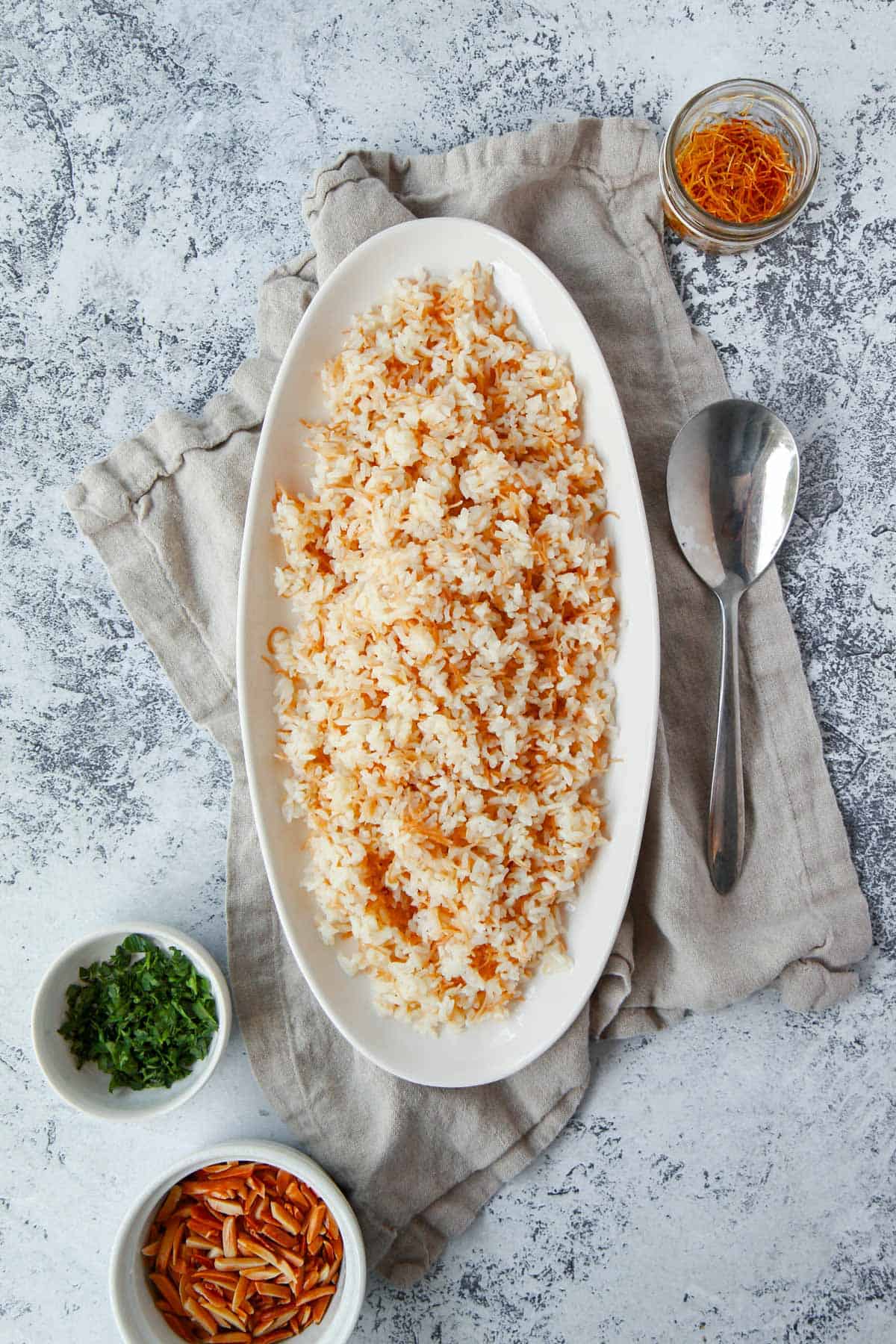
- Toppings: Optionally, you can top the finished dish with pine nuts or slivered almonds toasted in olive oil until golden. You can also garnish with finely chopped parsley.
See the recipe card below for exact quantities.
How to make Arabic rice
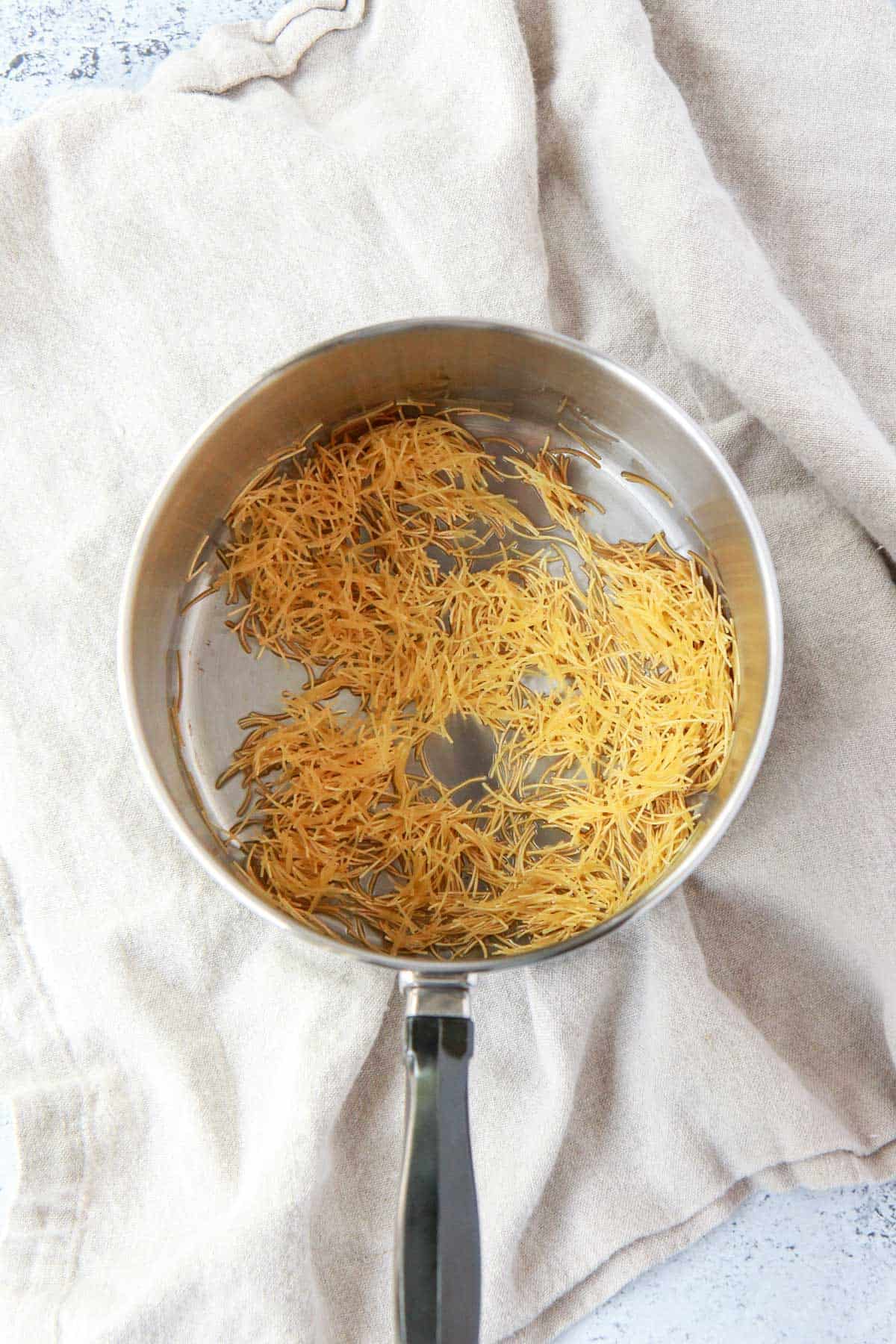
Step 1: Heat olive oil in a medium saucepan, and add vermicelli noodles. Stir to coat.
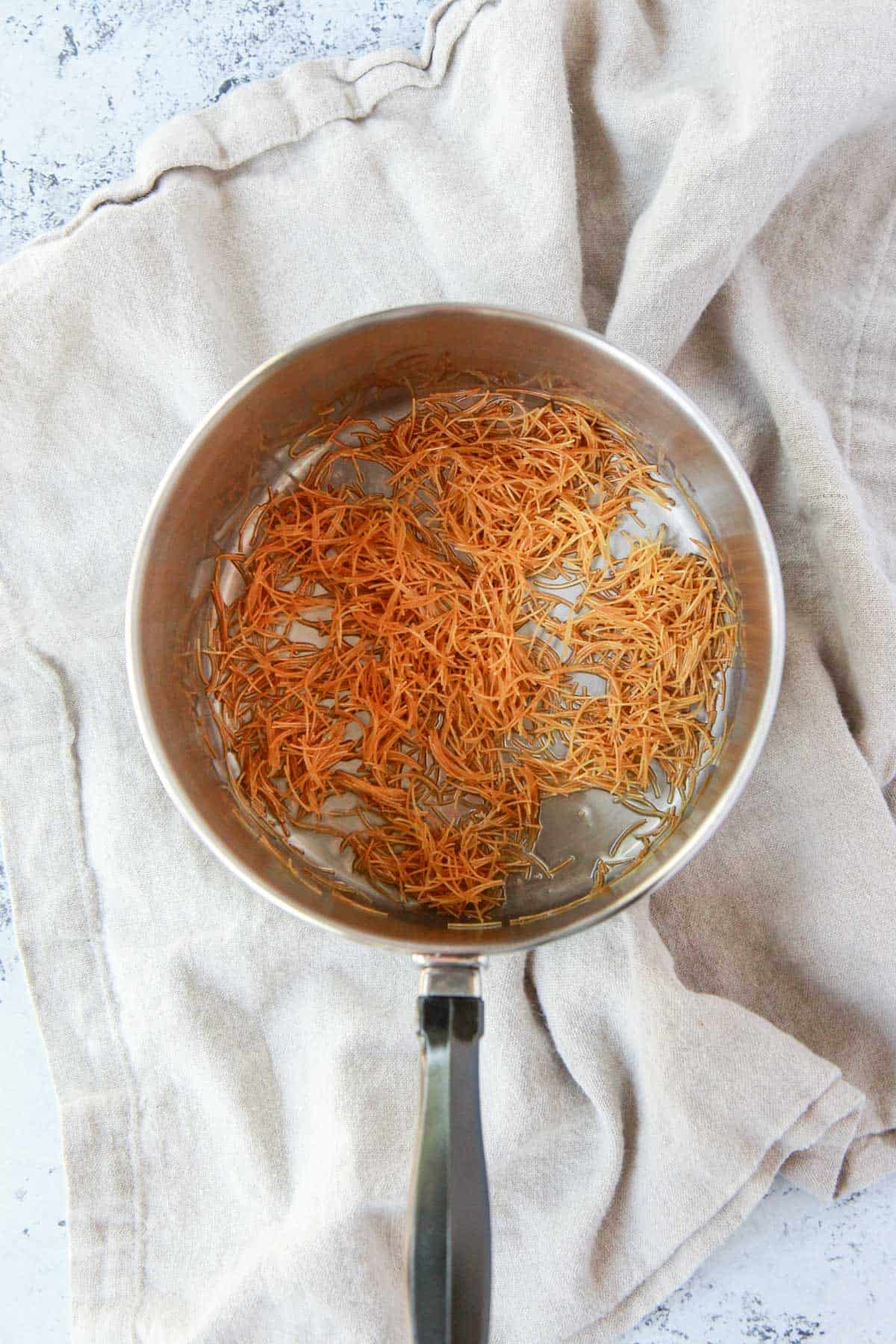
Step 2: Toast the vermicelli noodles for 1-3 minutes, until golden brown. Keep a close eye on them so they don't burn.
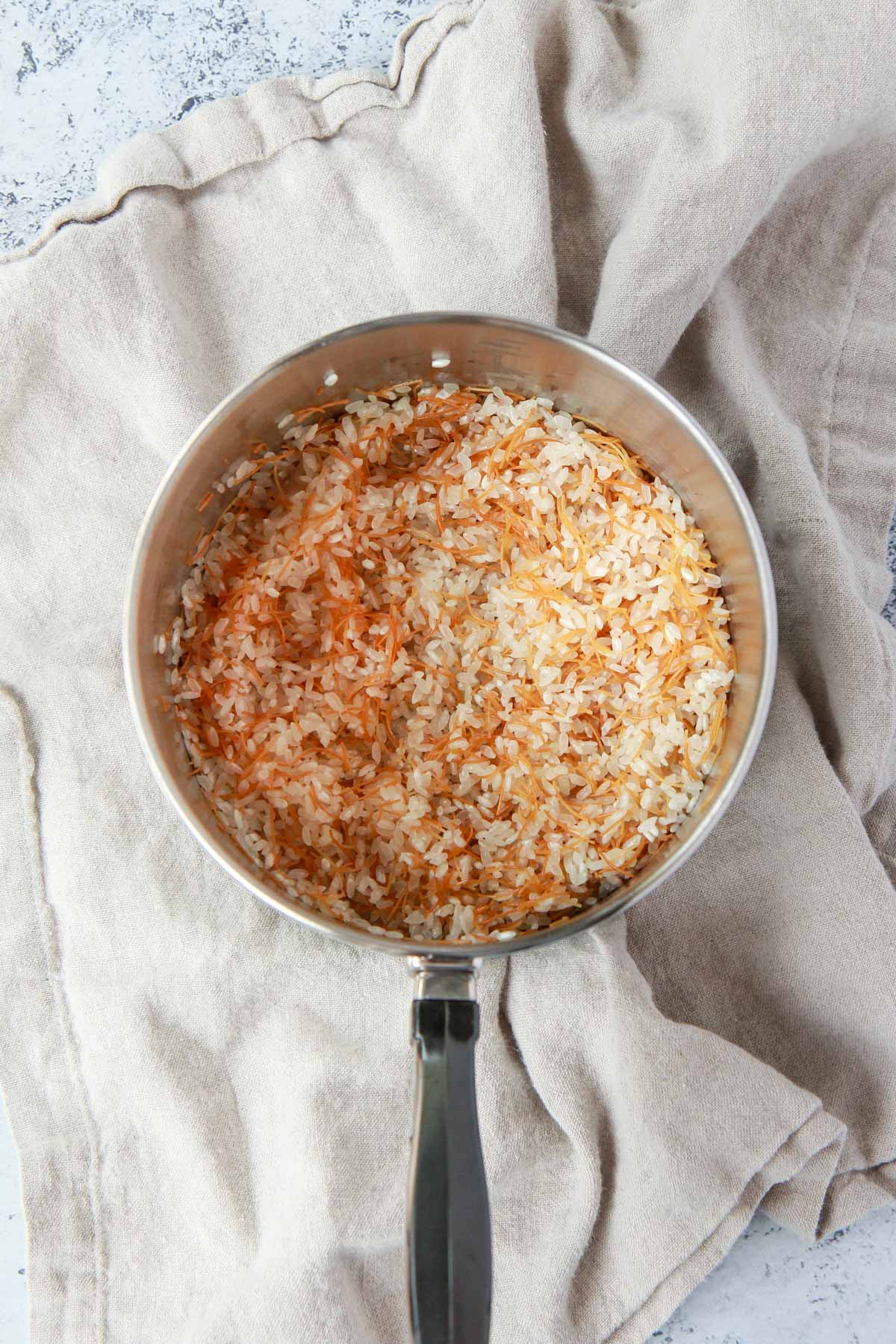
Step 3: Add rinsed rice, and stir to coat. Toast for 1 minute.
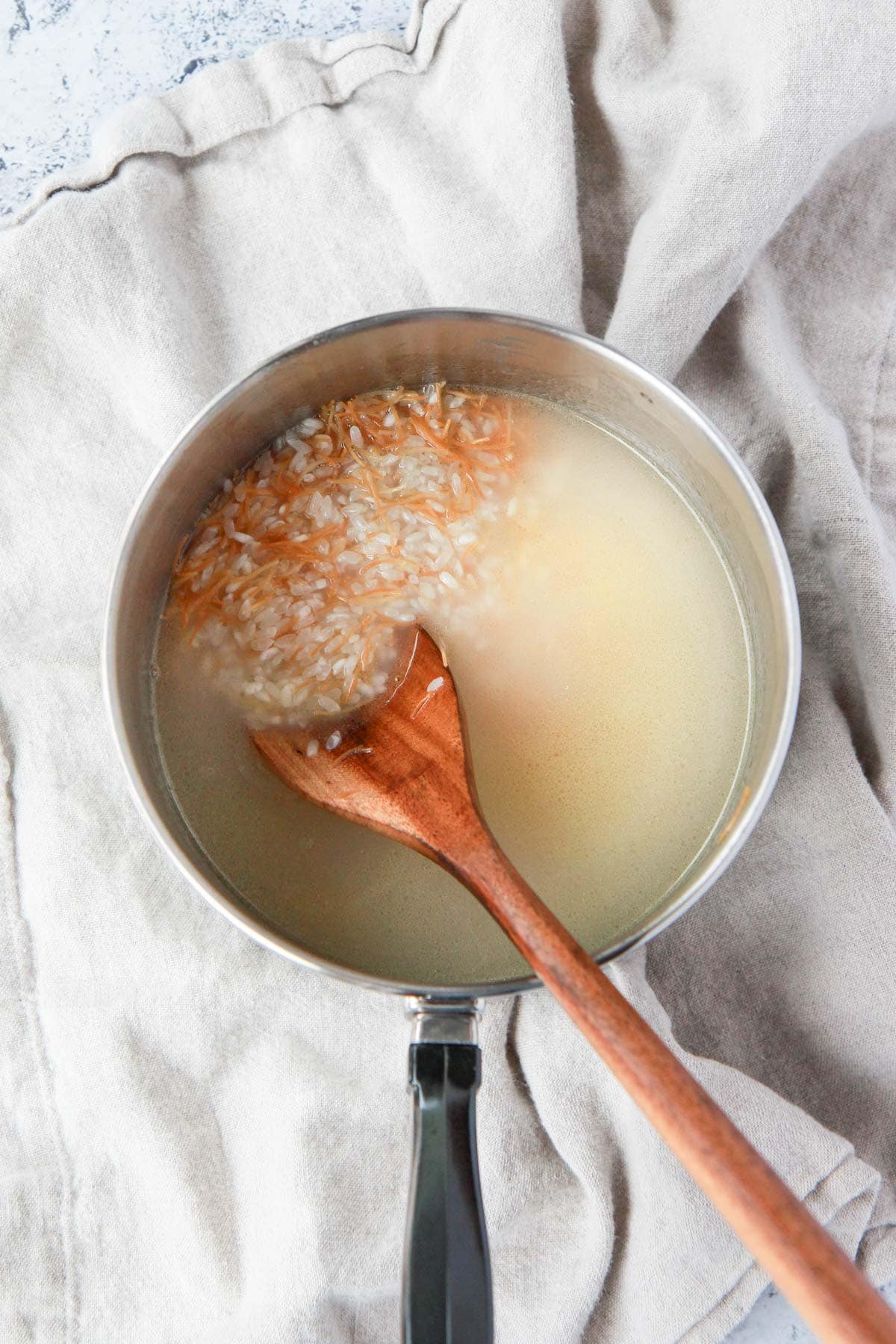
Step 4: Add water and salt and bring to a boil.
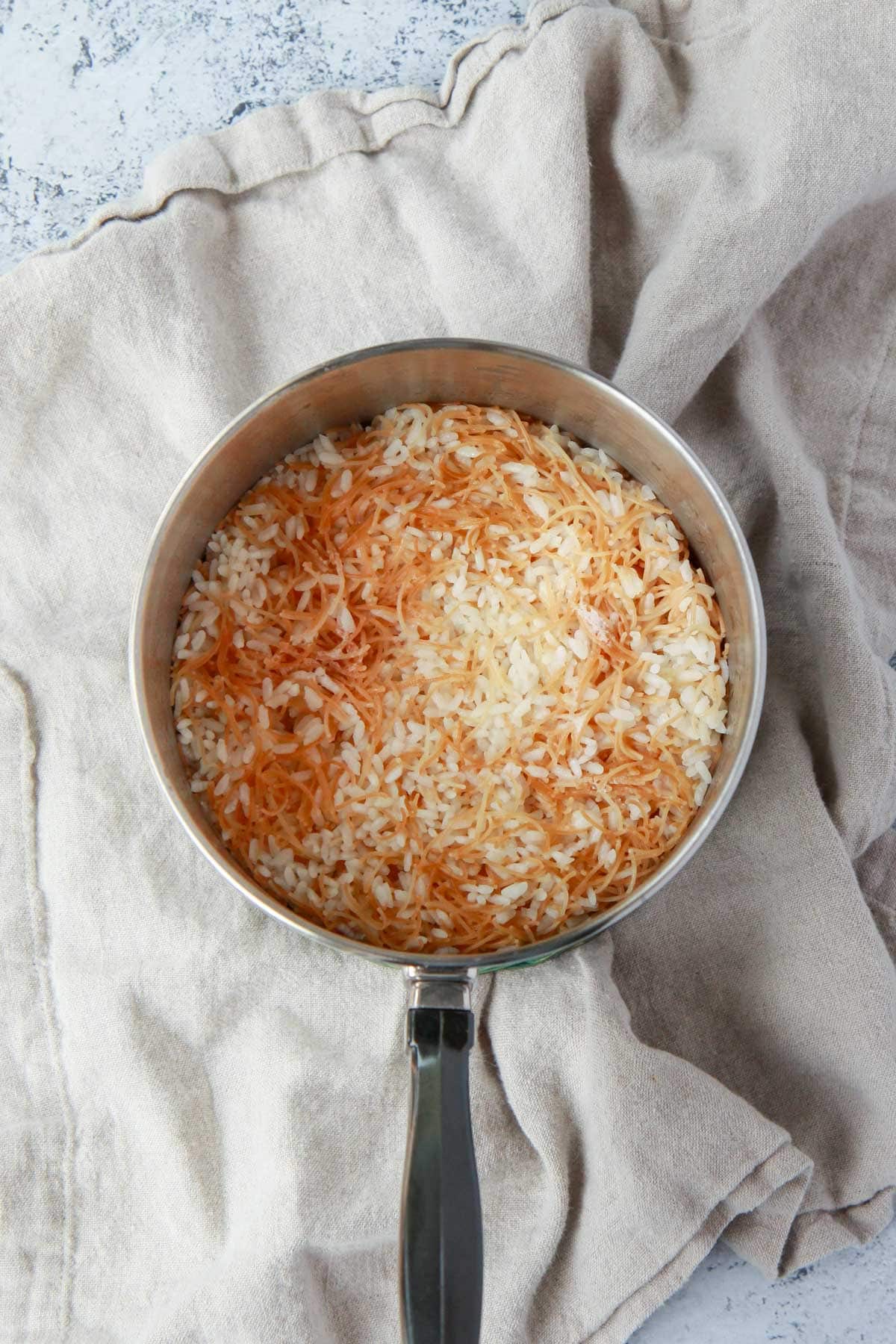
Step 5: Simmer, covered, on low heat for 13-15 minutes, until the water is absorbed and the rice is fluffy. Let rest off of the heat, covered, for 5 minutes.
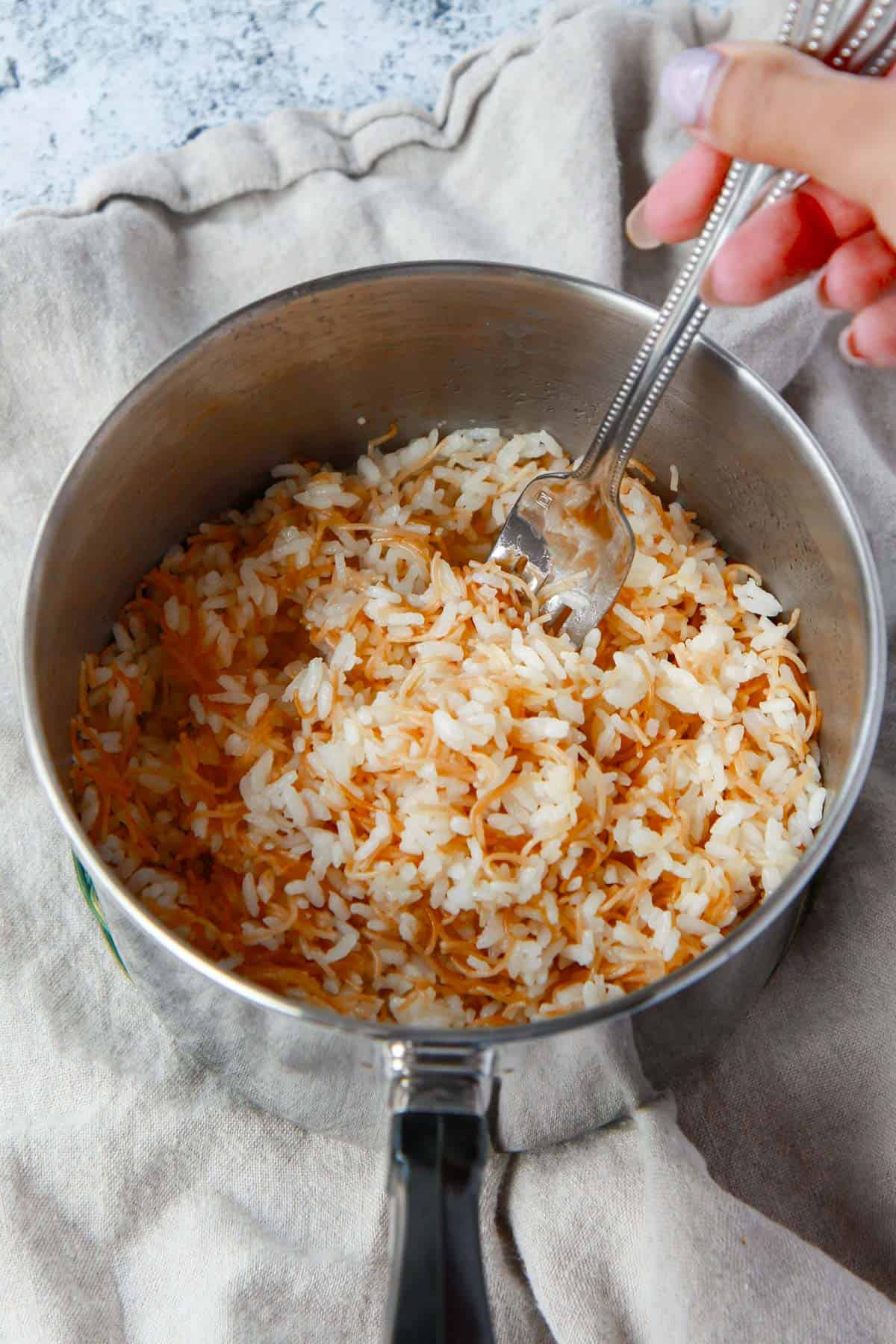
Step 6: Fluff with a fork before serving.
Top tips
- Prep ahead: Make sure your rice is rinsed and drained before you start. Since vermicelli noodles brown quickly, it's best to have the rice prepped and ready to go.
- Toasting the vermicelli: Toast the vermicelli noodles until golden, not brown. Watch closely, as they can brown quickly. They will smell nutty, but not burnt. They'll continue to deepen in color slightly as they cook with the rice.
- Control the heat: Keep your heat at medium-low. If the oil is too hot, the noodles can go from golden brown vermicelli to burnt in seconds. If this happens, you will notice a burnt smell, and it will be best to start over. Burnt noodles can make the whole pot taste bitter.
- Rest before fluffing: After cooking, letting the rice rest, covered, for 5 minutes will help the steam finish cooking the rice. This way, you will avoid burning the rice, and it will be easier to fluff.
FAQs
For short or medium-grain rice, the ratio is 1 cup rice to 1 ¾ cups water. For long-grain rice, like Basmati, reduce slightly to 1 cup rice and about 1 ½ cups water.
Yes! Brown rice works great, but you'll need more water and time. Use about 2-2 ¼ cups water per 1 cup brown rice, and cook for about 30-35 minutes, until tender.
This rice is typically only seasoned with salt, but there are a few seasonings that pair well with it. You can simmer the rice with a cinnamon stick or top it with a light sprinkle of cinnamon. You can also add some finely ground black pepper while cooking or as a topping.
Storing
Store leftovers in an airtight container in the fridge for up to 5 days. Reheat in the microwave or on the stovetop with a splash of water to steam.
Vermicelli rice freezes well. Cool completely before adding to an airtight container or freezer bag for up to 3 months. Reheat from frozen in the microwave or thaw overnight in the fridge and steam on the stovetop with a little water.
What to serve with this rice
In Syrian and Lebanese households, it's served with just about anything, but these are some of my favorite dishes to serve with vermicelli rice:
- Serve it alongside my Arabic Lentil Soup to make a complete meal out of it.
- Try serving Galayet Bandora, a flavorful tomato stew, over a bed of this fluffy rice.
- It makes the perfect side to my Arabic Moussaka.
- It pairs great with proteins, like zaatar tofu.
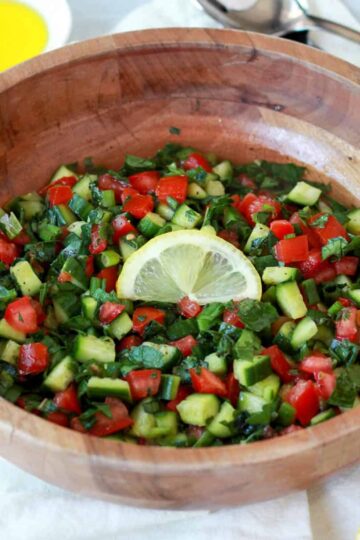
More side dishes you'll love

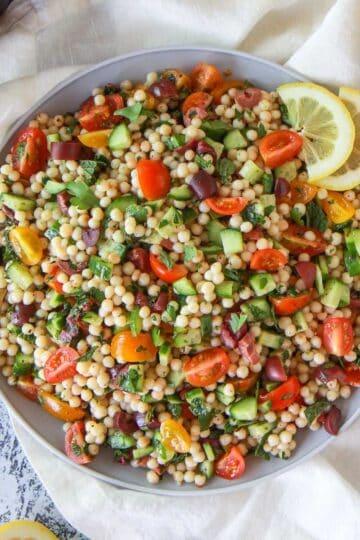
If you're looking for an alternative to rice pilaf, try making a bulgur pilaf to switch things up.
Recipe
Vermicelli Rice (Mediterranean Rice Pilaf)
Equipment
Ingredients
- 1 tablespoon olive oil
- ⅓ cup vermicelli noodles 1-2 inch pre-cut pieces*
- 1 cup medium-grain rice such as Calrose or Arborio, rinsed**
- 1 ¾ cups water
- ½-1 teaspoon salt to taste
- Toasted pine nuts or slivered almonds optional, for garnish
- Finely chopped parsley optional, for garnish
Instructions
- In a 2-quart pot over medium-low heat, add the olive oil. Once hot, add the vermicelli. Stir frequently and toast for about 1-3 minutes, until golden brown. Keep a close eye, as vermicelli can burn quickly.***1 tbsp olive oil, ⅓ cup vermicelli noodles
- Stir in the rinsed rice, coating it in the oil and toasted noodles. Toast for 1 minute.1 cup medium-grain rice
- Add the water and salt. Stir, then bring to a boil. Cover, reduce heat to low, and simmer for about 13-15 minutes, or until all the water is absorbed and the rice is fluffy.1 ¾ cups water, ½-1 tsp salt
- Let the rice rest off of the heat, covered, for 5 minutes.
- Remove from heat and let sit covered for 5 mins. Then, fluff with a fork. Optionally, garnish with toasted nuts and chopped parsley. Serve and enjoy!Toasted pine nuts or slivered almonds, Finely chopped parsley

Leave a Reply