
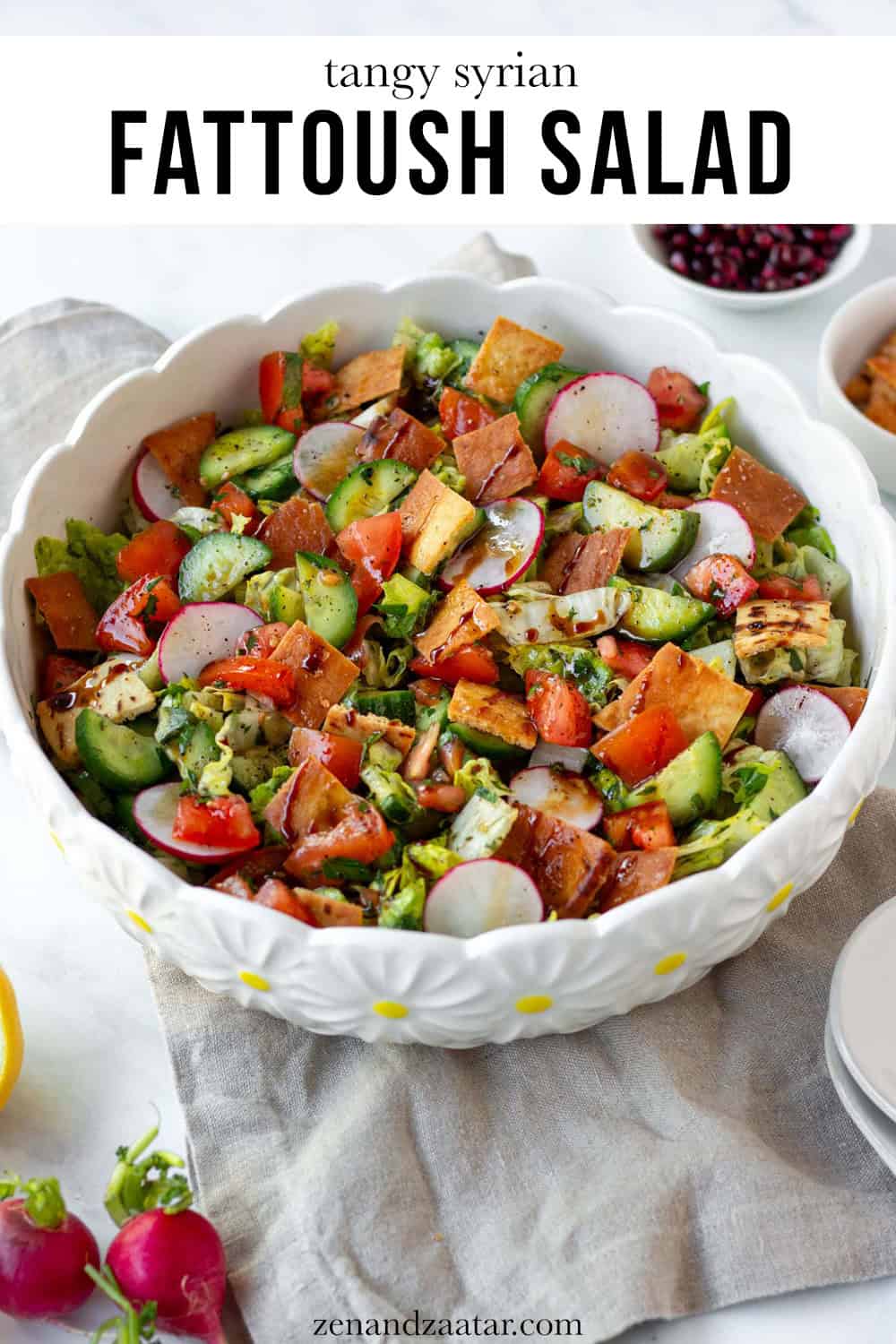
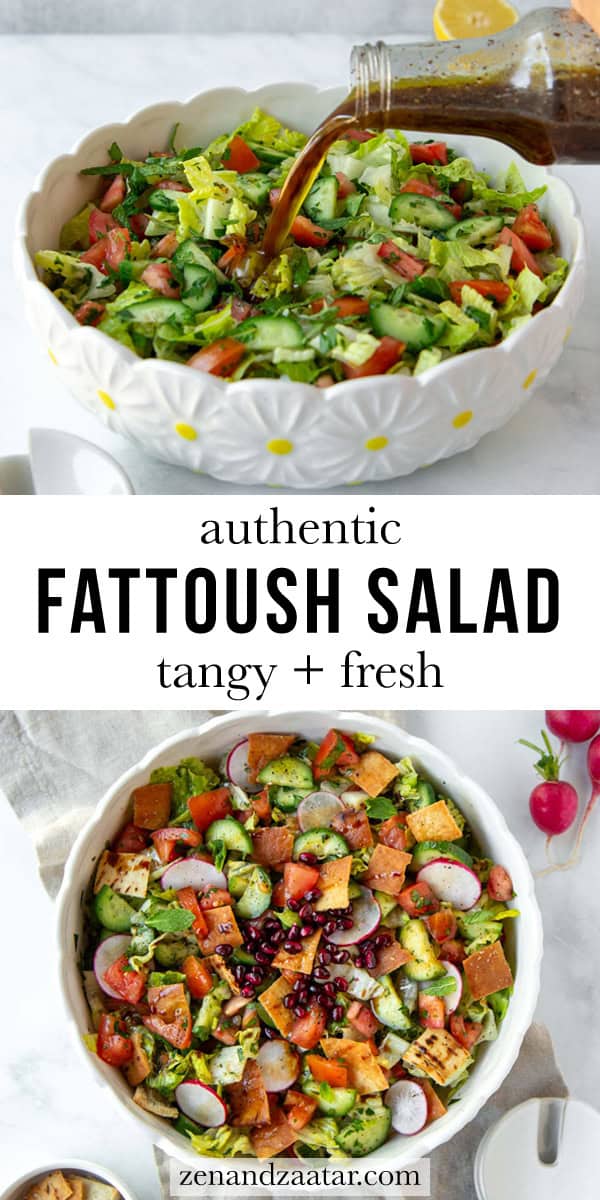
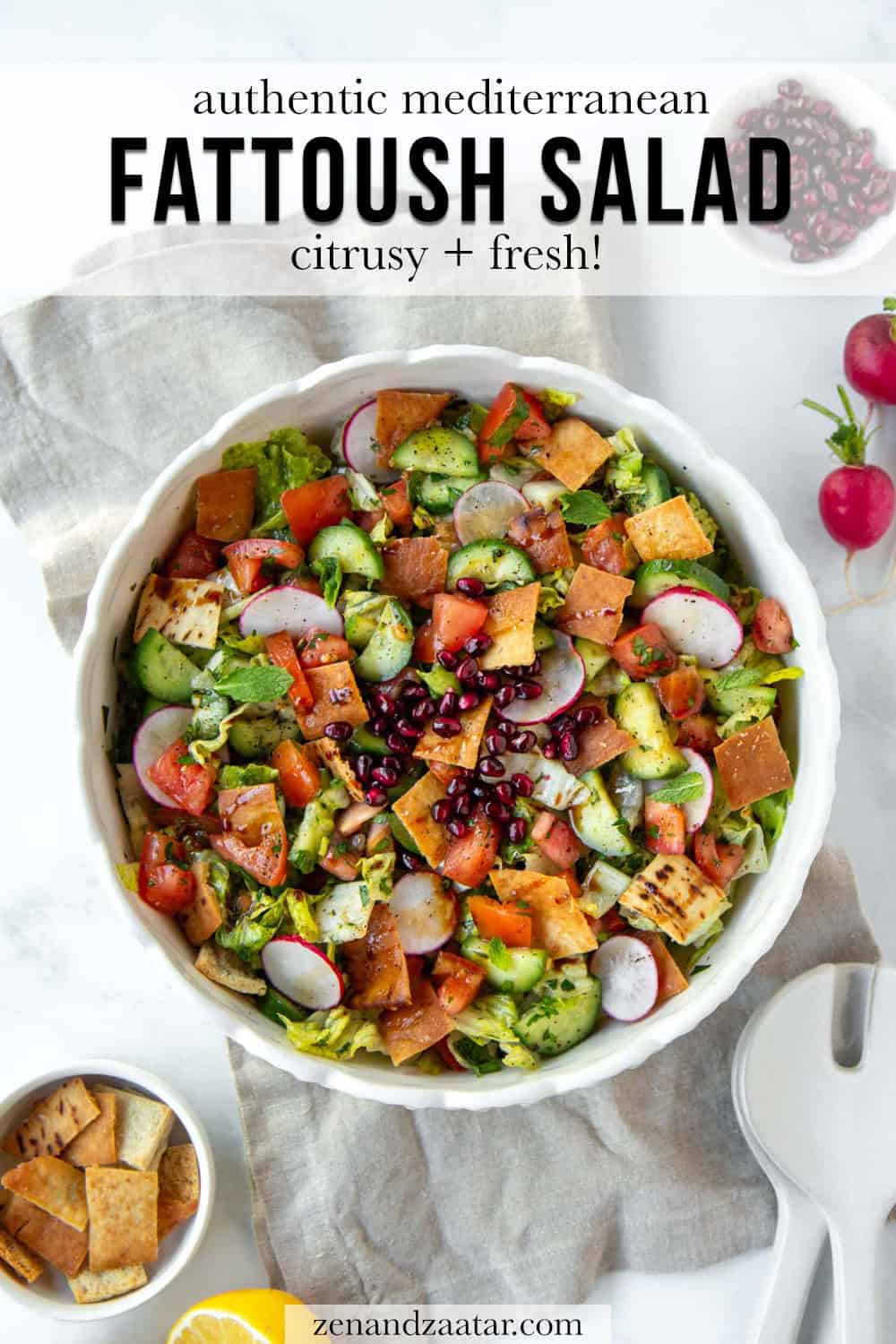
This fattoush salad recipe illustrates everything I love about Syrian cuisine. With fresh veggies and herbs, tangy dressing, and crunchy pita chips, it's been the staple salad on our family dinner table since I was young, and for good reason.
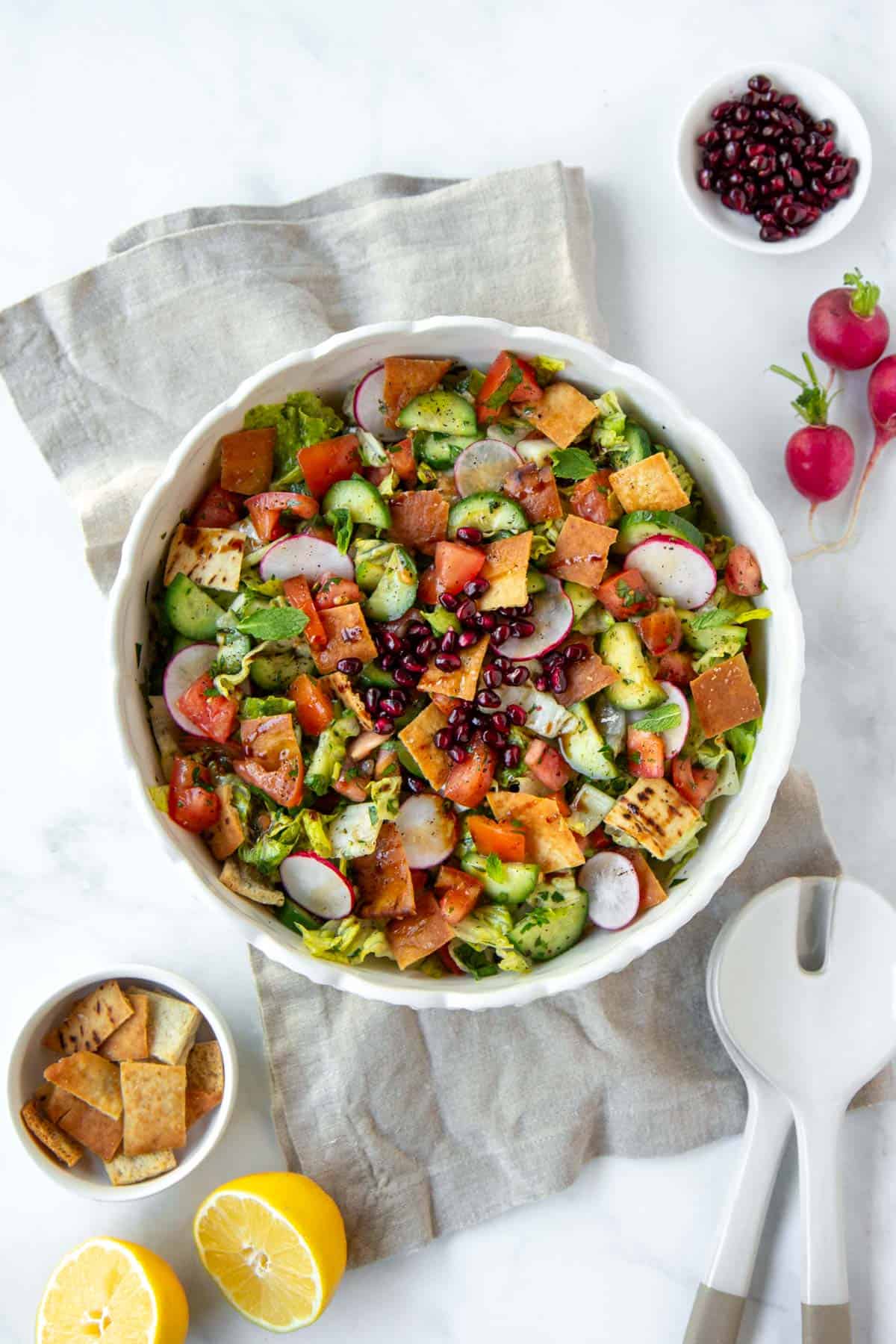
Whether it was at home during the week or alongside teta's plentiful lunches when we visited Syria in the summer, fattoush was the salad I always looked forward to. I wasn't always the biggest fan of salads, but fattoush's fresh flavors, citrusy dressing, and crispy pita chips make it addicting.
Every time I eat it, I'm taken back to the days when my Syrian mom would ask me to help her chop the parsley or slice the lettuce for dinner, and I've been making it ever since. So, I have all the tips to help you make the best fattoush salad.
What is fattoush salad?
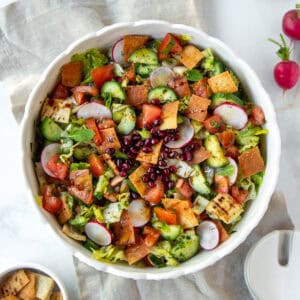
Fattoush is a salad that consists of chopped vegetables, fresh herbs, and torn or sliced pieces of bread, tossed in a lemony olive oil dressing with sumac and pomegranate molasses. Typically, the veggies include cucumbers and tomatoes. Some variations include radishes as well.
Authentically, purslane, or "baqleh," in Arabic, is used for the leafy portion, but today Romaine lettuce is often used in place of or in addition to purslane, due to accessibility. Fresh parsley leaves are the main herb in this naturally vegan salad recipe, typically accompanied by mint leaves.
The Arabic word "fattoush" is derived from the Arabic root word "fatt," which means to crumble, referring to the crumbled or torn pieces of bread that make this salad what it is.1 So essentially, fattoush means crumbled bread.
Fattoush is a Levantine dish, enjoyed across Syria, Lebanon, Palestine, and Jordan, and I'm sharing the Syrian version of this traditional salad. It is thought to have originated in the rural farming regions of what are now Northern Lebanon and Syria, before modern borders divided the region, as a way to use up stale bread. As culinary historian Nawal Nasrallah notes, precursors to fattoush, like a soaked bread dish made with herbs, cucumbers, and olive oil, appear in a 10th-century Arabic cookbook by Ibn Sayyar al-Warraq.2
Ingredient notes
You'll need the following ingredients to make the salad and dressing.
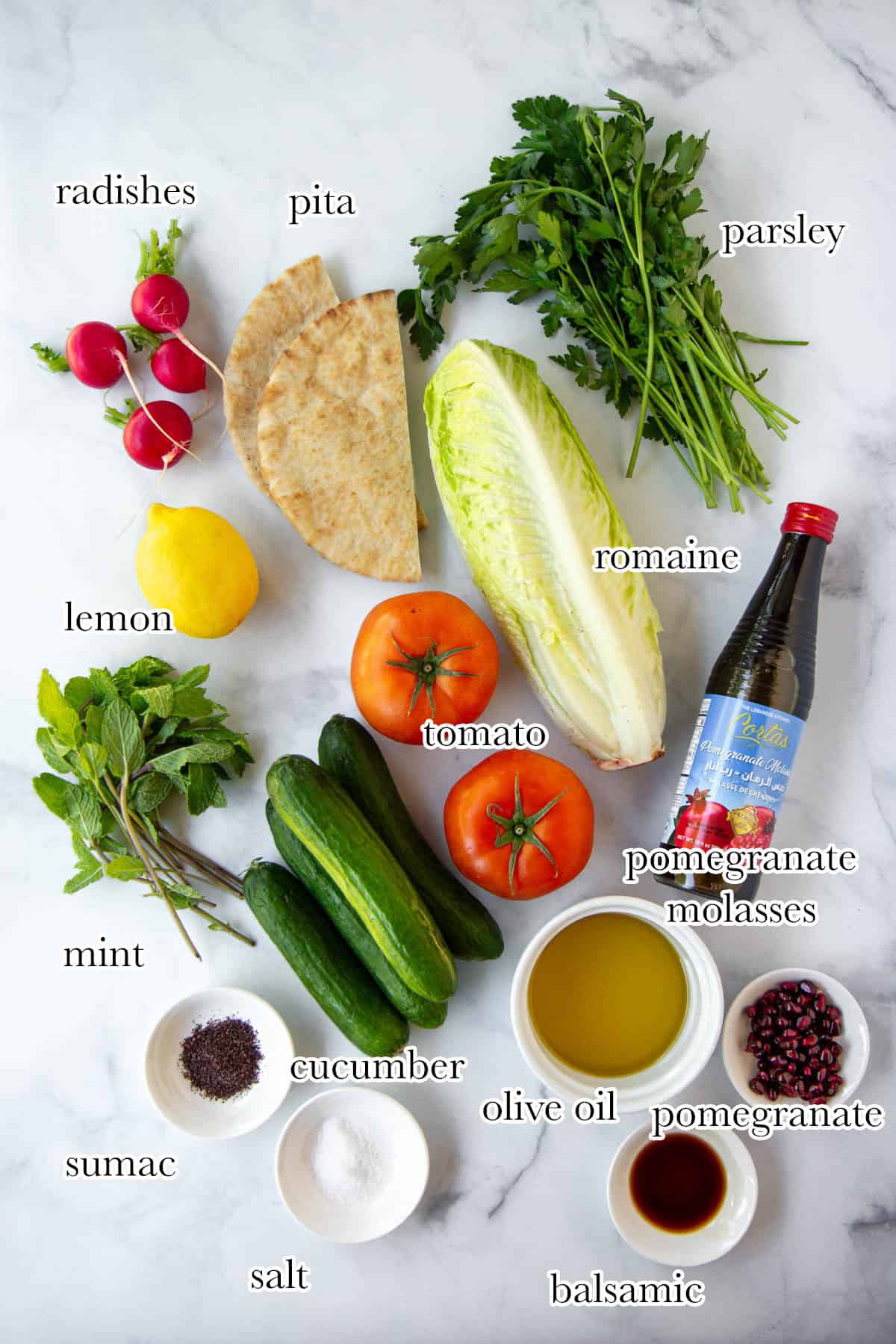
Fattoush salad ingredients
- Romaine lettuce: Romaine lettuce makes up the bulk of the salad. I prefer to use Romaine hearts for the crunchiest texture.
- Italian parsley: Italian flat-leaf parsley is the main herb in this salad.
- Mint leaves: I like to use fresh mint leaves in this salad. However, if you can't find fresh mint leaves easily, feel free to substitute them by adding a little dried mint to your dressing.
- Tomatoes: I prefer vine-ripe tomatoes for a chunky texture in this salad. You can use another variety of large tomato, like hothouse tomatoes, or even substitute an equal amount of halved cherry tomatoes.
- Persian cucumbers: I like to use Persian cucumbers for their crunchy texture. If they're hard to find, you can substitute for an equal amount of English cucumber. If you do, remove the inner core to keep it as crunchy as possible.
- Pita bread: For this pita bread salad, use double-ply pita bread rounds to make the pita chips. Feel free to substitute store-bought pita chips if you're short on time. If you do, look for single-layer pita chips for a thin, crispy texture.
Fattoush dressing ingredients
- Olive oil: Use a high-quality extra virgin olive oil for the best flavor.
- Lemon juice: Use freshly squeezed lemon juice for the brightest taste.
- Pomegranate molasses: Pomegranate molasses adds a syrupy, tangy flavor that really makes this dressing taste on point. I like to use Cortas brand pomegranate molasses. You can find it online or at an international grocery store.
- Sumac: This is the tart spice that makes fattoush taste like fattoush. It's a staple in Middle-Eastern cooking with a deep reddish-purple color and a citrusy flavor. You can find it at most international grocery stores or online.
See the recipe card below for exact quantities.
Variations
The beauty of fattoush salad is that you can customize it to your tastes. Here are some of my favorite ways to tailor it.
- Purslane: To make a truly authentic Syrian fattoush, you can include a handful of purslane leaves, called "baqleh" in Arabic or "verdolaga" in Spanish. Since it's hard to find around me, I usually skip it, but you may be able to find it at a Latino grocery store.
- Lettuce: Sometimes I like to replace a portion of the romaine lettuce with chopped kale leaves to switch things up. If you do this, massage some of the dressing into the kale leaves to soften them.
- Additions: Feel free to switch up the veggies as you like. Some of my favorite additions are diced bell pepper and chopped green onion.
- Garlicky: Add a couple cloves of minced or grated garlic to the dressing if you like a garlicky flavor. I prefer to keep it simple and leave garlic out to let the other flavors shine through.
How to make fattoush salad
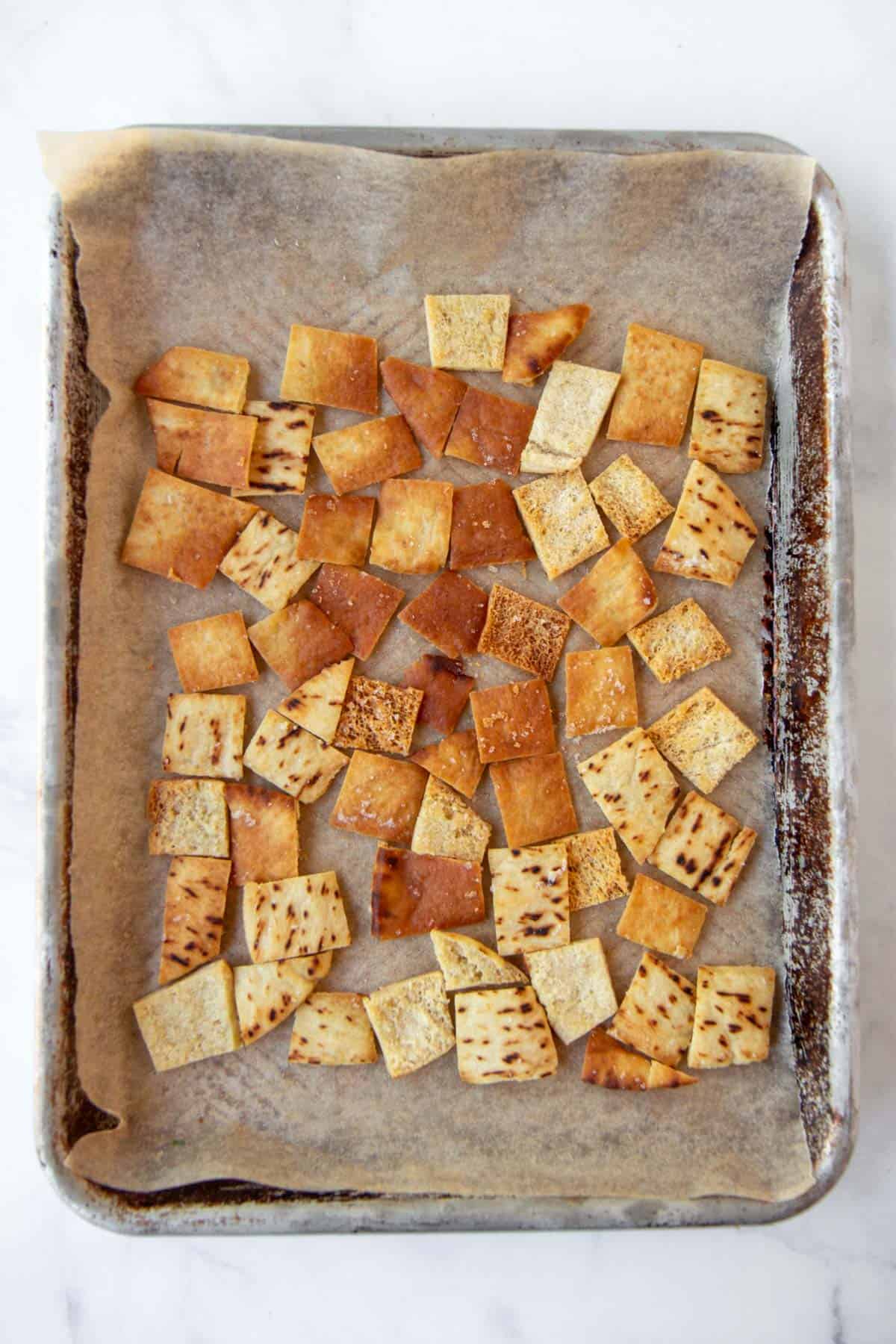
Step 1: Slice each layer of pita bread into small squares, toss with olive oil and salt, and bake the pita chips until crispy.
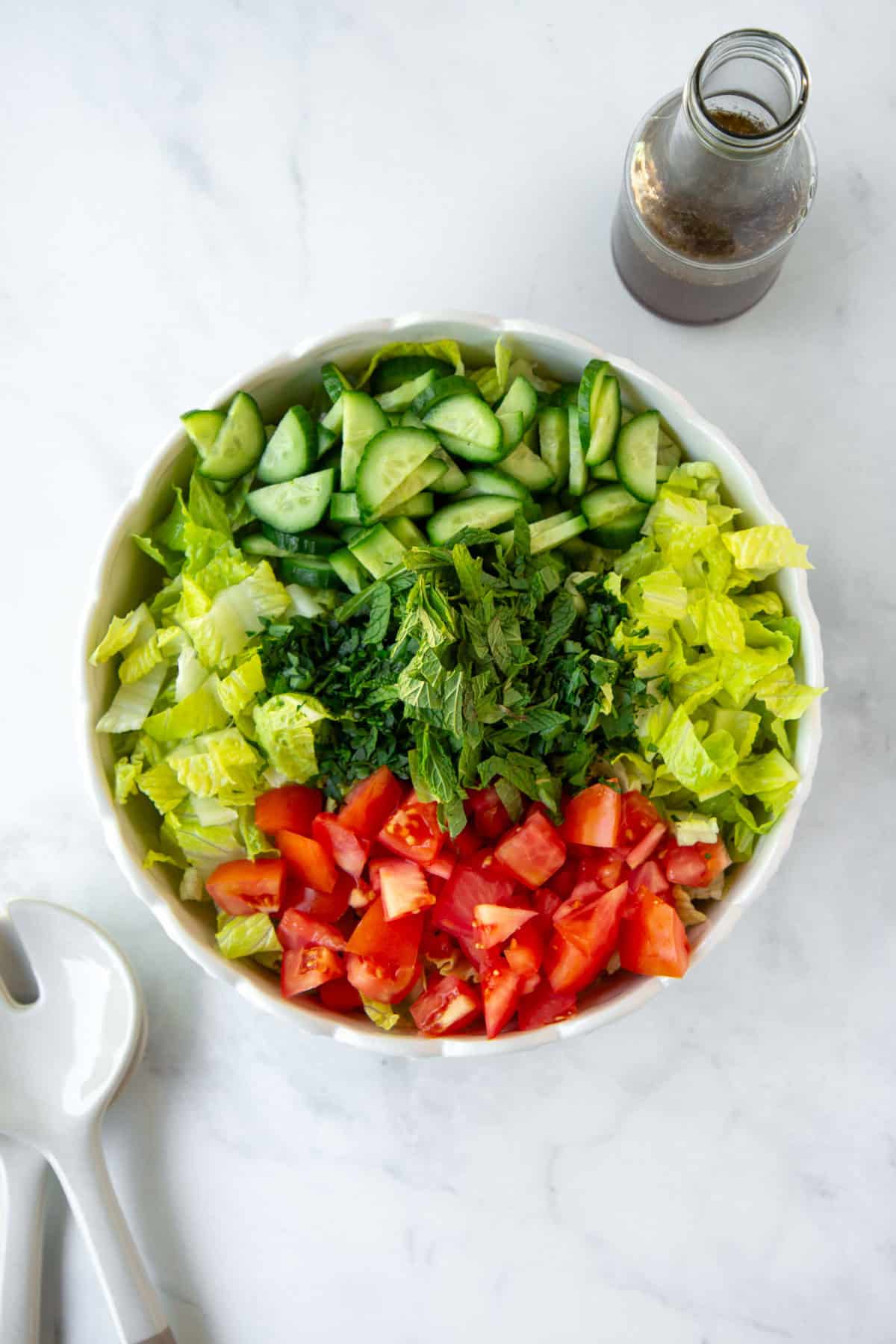
Step 2: Prep your ingredients. Chop your cucumbers and tomatoes into similar sizes, thinly slice your romaine lettuce, finely chop your parsley leaves, and thinly slice your mint leaves.
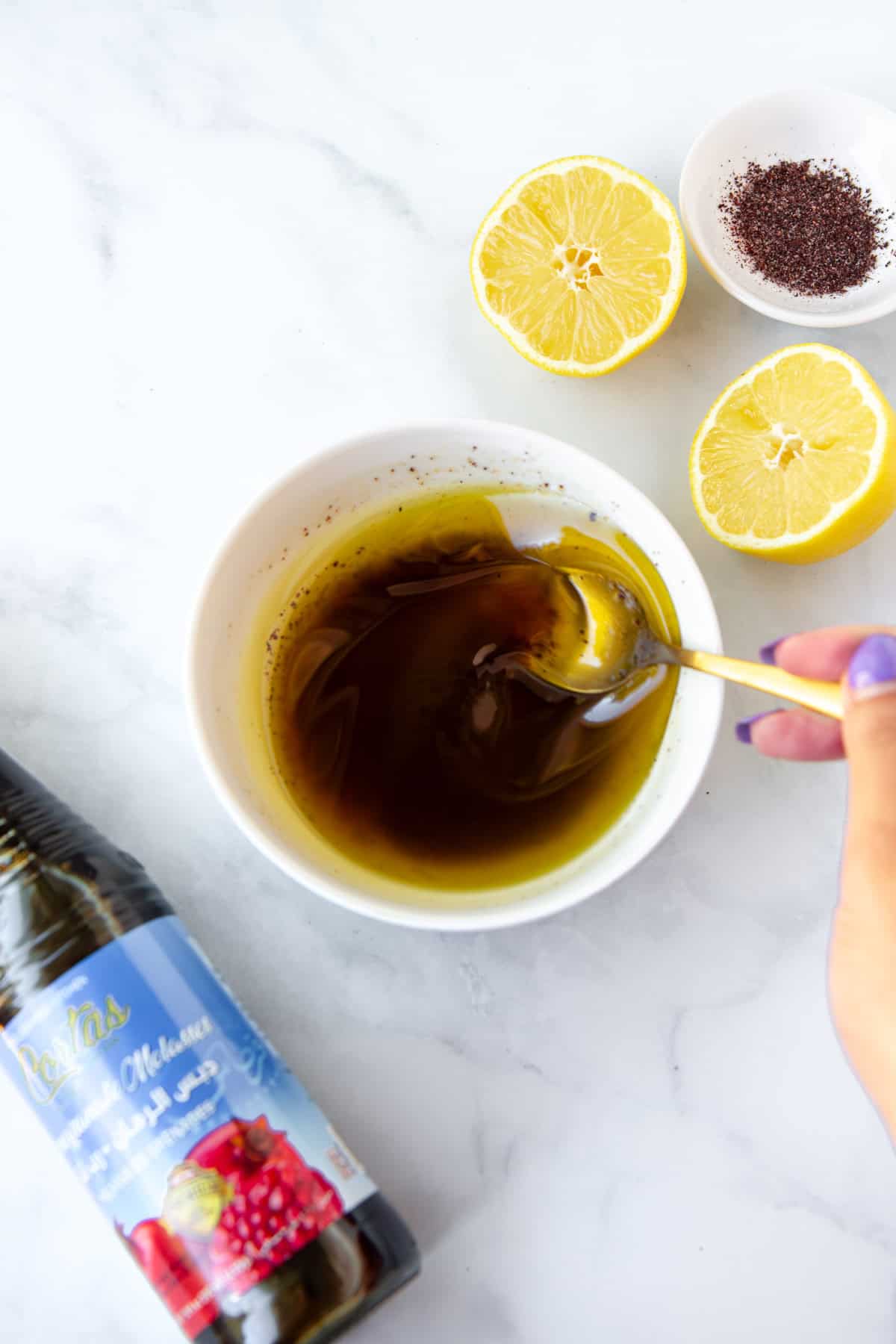
Step 3: Mix the ingredients for the fattoush salad dressing together until thoroughly emulsified.
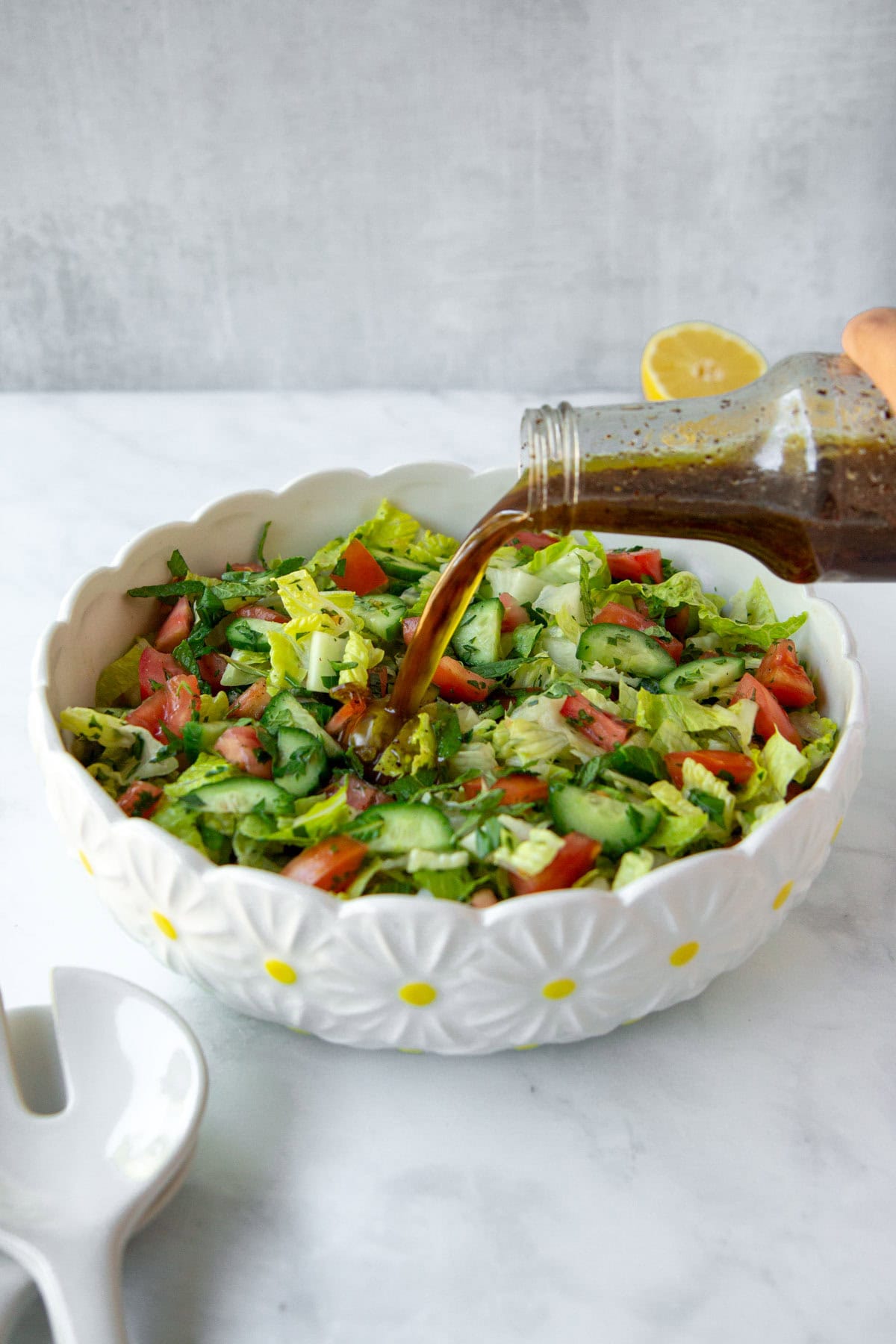
Step 4: Toss the lettuce, tomatoes, cucumbers, and parsley together with some of the dressing and give it a taste test. Adjust salt, lemon, or olive oil if needed.
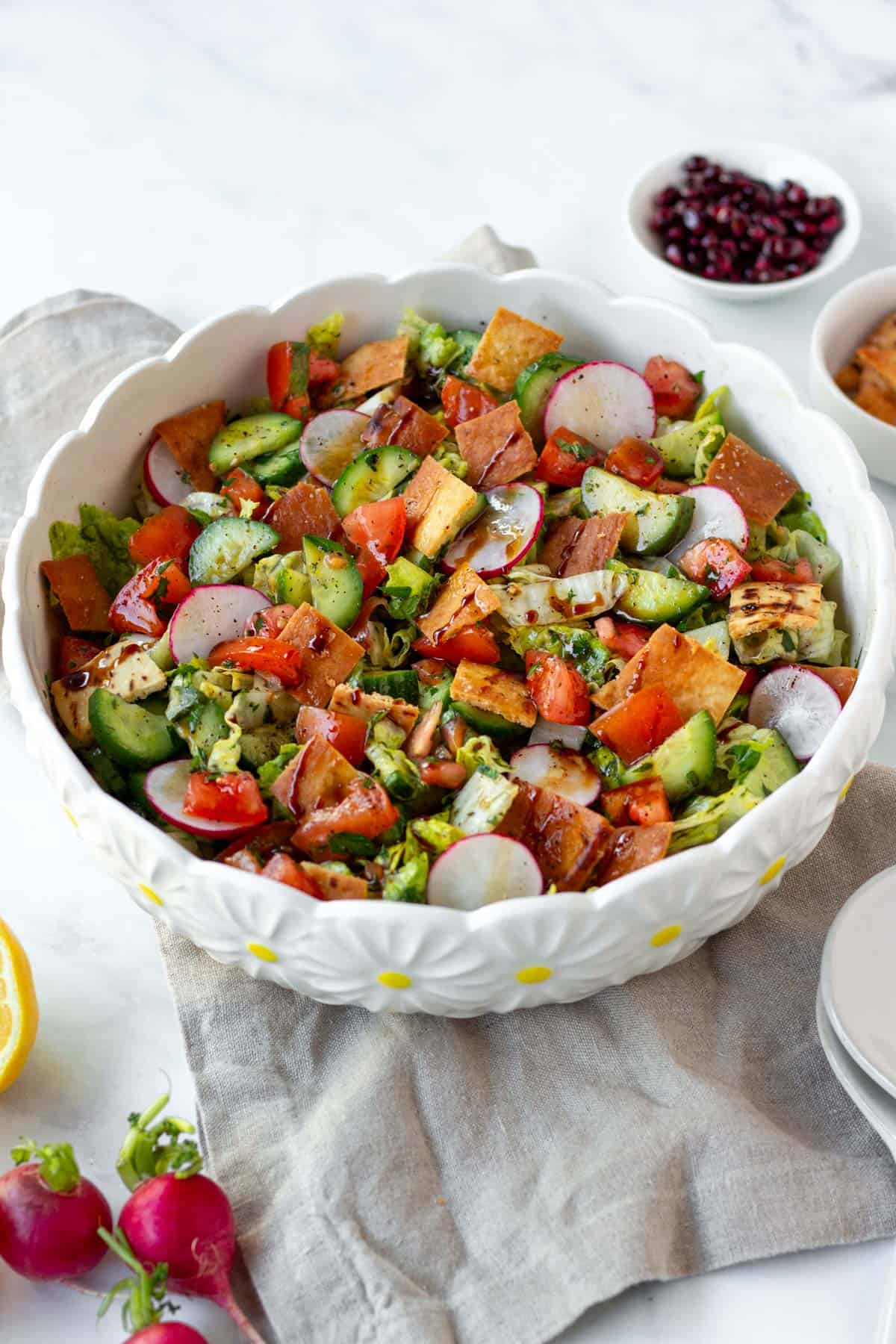
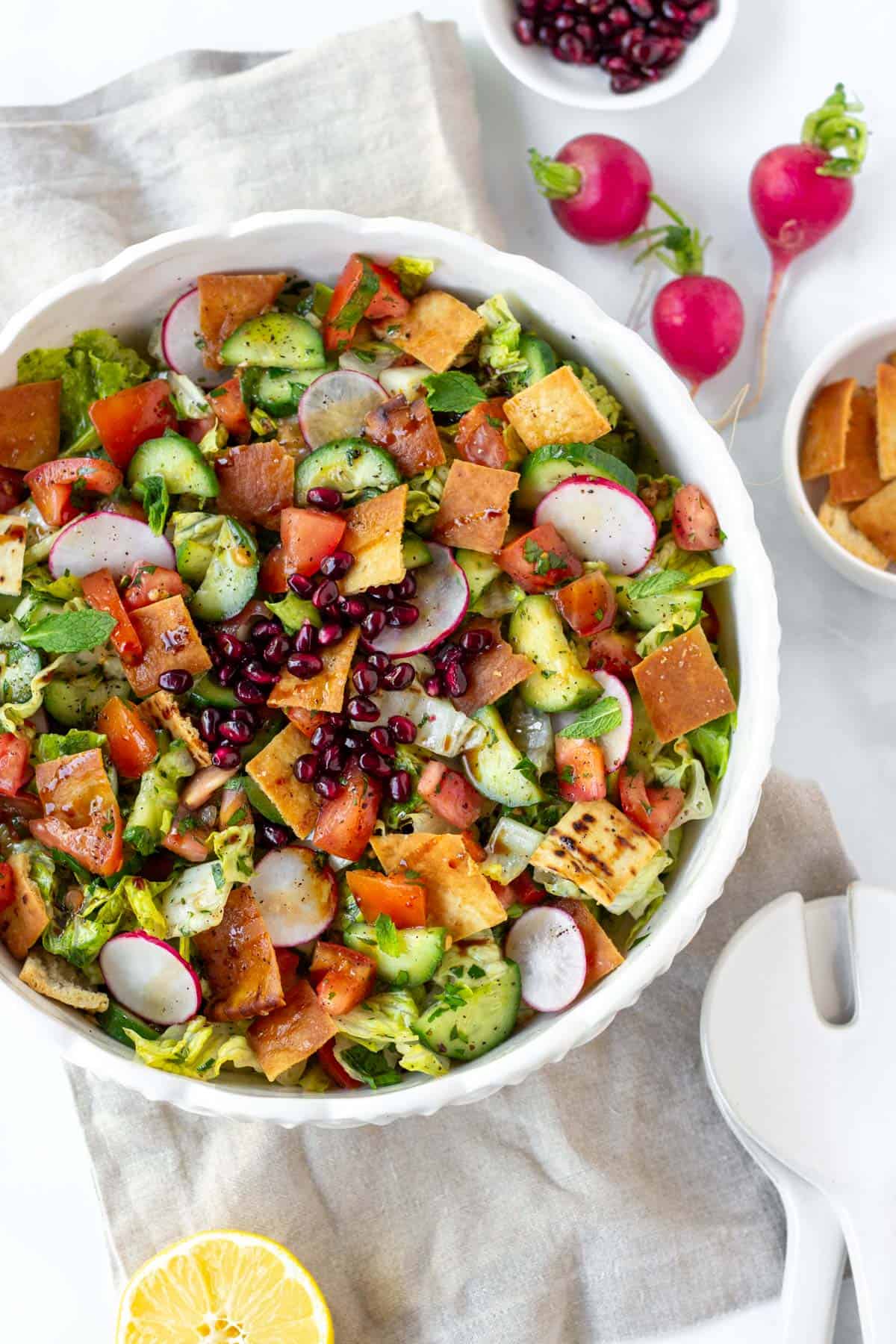
Step 5: Top with radishes, if using, pita chips, and mint leaves. Finish with an extra drizzle of dressing and a touch of pomegranate molasses.
Top tips
- Let the pita chips cool after baking, while you make the rest of the salad. They will continue to crisp up as they cool.
- To slice the radishes as thinly as possible, it's best to use a mandoline slicer.
- Make sure the dressing is thoroughly emulsified just before pouring it over the salad. If you mixed it a while ago, you might need to shake or mix it one more time just before pouring, as it tends to separate quickly. For the smoothest dressing, you can use an electric frother to mix it.
- For a crisp salad, toss the salad with the dressing right before serving, so it doesn't get soggy. If you prefer your salad to marinate and soak up more of the dressing, you can toss it earlier.
- Top the salad with the pita chips just before serving to keep them crunchy. Then, drizzle a little bit of the dressing on top. I do this because I prefer the pita chips to have more crunch, but if you want them to soak up more of the dressing, you can toss them lightly into the salad.
FAQs
Sumac is an ingredient that's hard to replace in this recipe, as it gives this salad its signature tart, fruity flavor. For the best fattoush dressing, don't skip it. However, if you're in a pinch, add a little extra lemon juice or lemon zest to your dressing.
I'd encourage you to find it though because it's a pantry staple in Middle Eastern cooking that transforms so many other dishes. Dishes like Syrian pasta with lentils (harak osbao) and chopped Palestinian salad are just a couple of examples.
If you can't find pomegranate molasses, you can add the optional balsamic vinegar to the dressing along with some more lemon juice. That said, I recommend getting some pomegranate molasses for the most authentic flavor, especially for the drizzle on top.
Storing
Store all the salad components together, except for the pita chips and dressing. Store the pita chips in an airtight container at room temperature, and store the dressing in its own container in the fridge.
If you are making a batch to eat over more than one day, only dress the portion you'll eat right away. Keep the rest of the salad undressed, with a portion of the pita chips stored separately in an airtight container at room temperature. As the dressing tends to separate, give it a mix before serving.
Once tossed with the dressing, leftover salad can be stored in the fridge for 1-2 more days, but it won't be as crunchy.
What to serve with this recipe
- Serve fattoush as a refreshing side salad to accompany a hearty main dish like mujadara with bulgur or tomato bulgur pilaf.
- Serve it alongside Middle Eastern lentil soup to make a complete meal out of it, with or without a side of Arabic vermicelli rice.
- Fattoush salad also goes great with yalanji, vegetarian stuffed grape leaves.
More salad recipes you'll love
Recipe
Authentic Fattoush Salad (Syrian Pita Bread Salad)
Ingredients
Salad
- 1 large Romaine lettuce heart about 7 cups chopped, loose pack
- 1 cup Italian parsley leaves chopped, loose pack (about half a bunch or slightly more)
- ½ cup mint leaves sliced, loose pack
- 2 medium vine tomatoes diced (about 3 cups, loose pack)
- 4 Persian cucumbers (about 3 cups chopped, loose pack)
- 1-2 teaspoon pomegranate molasses to drizzle on top
- 3-4 radishes, thinly sliced optional
- Handful of purslane leaves optional
- Pomegranate seeds optional, for garnish
Dressing
- ⅓ cup olive oil
- 3-4 tablespoon lemon juice (~juice of 1 lemon)
- 2 teaspoon pomegranate molasses
- 1 teaspoon sumac
- ½ teaspoon salt or to taste
- 1 teaspoon balsamic vinegar optional
Pita chips
- 1 double-ply pita round
- 1-2 tablespoon olive oil
- Pinch of salt
Instructions
- Preheat the oven to 400F. Split a double-ply pita round in half, and separate the layers so that they're one layer thick. Slice the layers into 1-inch squares. Toss with olive oil and salt, and place on a parchment-lined baking sheet. Bake for 7-10 mins, watching closely, until golden brown and crispy. Let cool to crisp up.1 double-ply pita round, 1-2 tbsp olive oil, Pinch of salt
- Prep your ingredients. Slice romaine lettuce into strips. Dice tomatoes. Slice Persian cucumbers into half-circles. Chop parsley leaves finely. Chiffonade or thinly slice mint leaves. Thinly slice radishes if using.1 large Romaine lettuce heart, 1 cup Italian parsley leaves, ½ cup mint leaves, 2 medium vine tomatoes, 4 Persian cucumbers, 3-4 radishes, thinly sliced
- Mix ingredients for dressing thoroughly until emulsified.⅓ cup olive oil, 3-4 tbsp lemon juice, 2 tsp pomegranate molasses, 1 tsp sumac, ½ tsp salt, 1 tsp balsamic vinegar
- Toss lettuce, tomatoes, cucumbers, parsley, and purslane leaves, if using, with enough of the dressing to coat. Taste salad and add a touch more salt, olive oil, or lemon if needed.*Handful of purslane leaves
- Top salad with pita chips, mint leaves, and radishes if using.** Drizzle with some more dressing and the extra pomegranate molasses. Garnish with pomegranate seeds if using. Enjoy!½ cup mint leaves, 1-2 tsp pomegranate molasses, Pomegranate seeds, 3-4 radishes, thinly sliced

Leave a Reply