
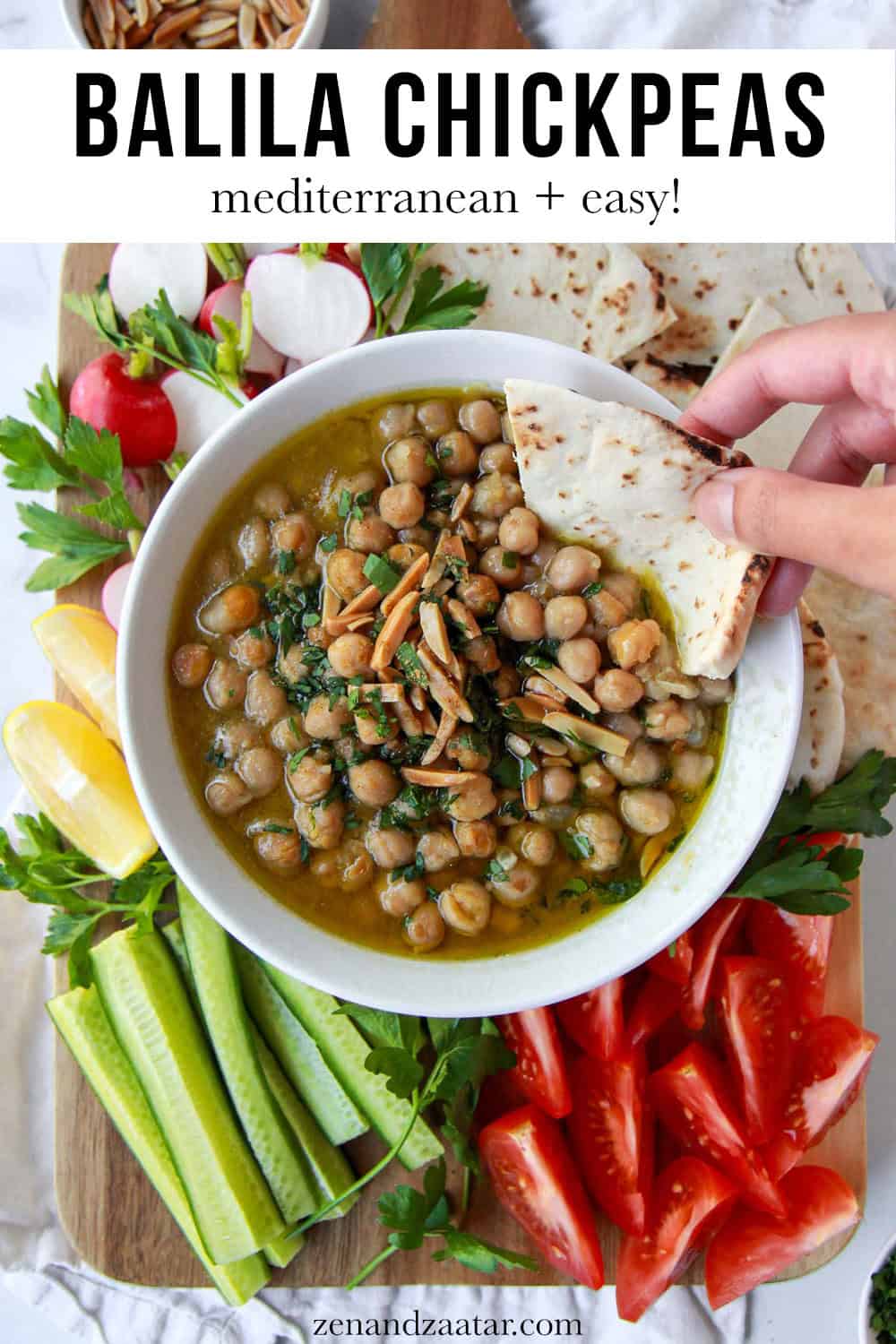
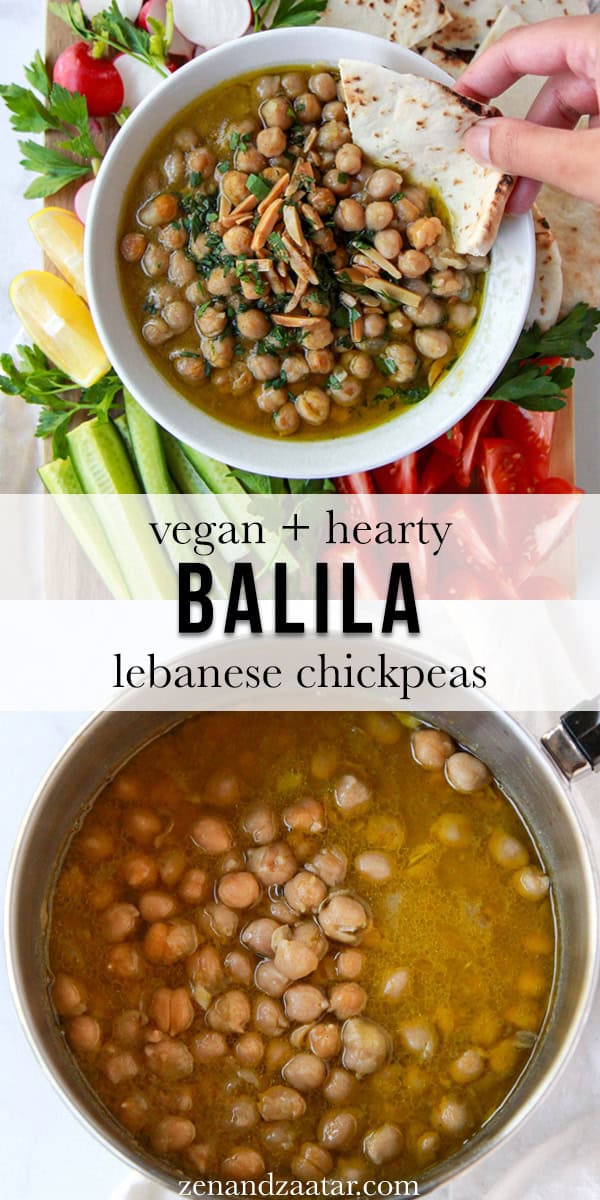
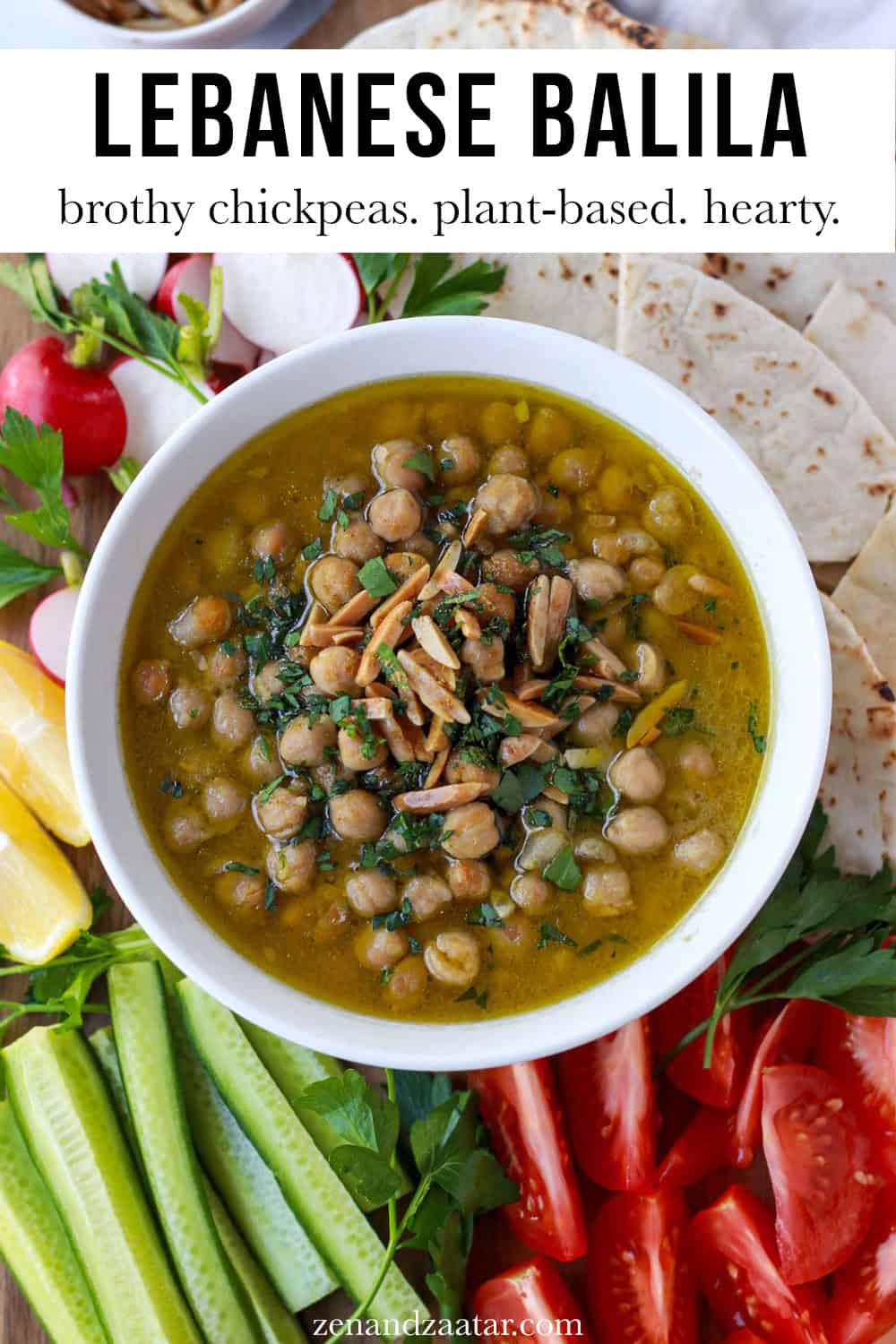
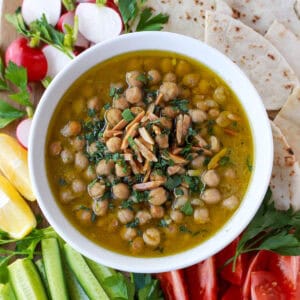
Balila embodies the things I love most about Mediterranean cooking-simplicity, whole foods, and mezze culture. With only 6 main ingredients, this simple yet flavorful dish becomes a cozy breakfast or lunch. Inspired by my time in Lebanon and my Syrian roots, these brothy Lebanese chickpeas might just become your newest breakfast obsession.
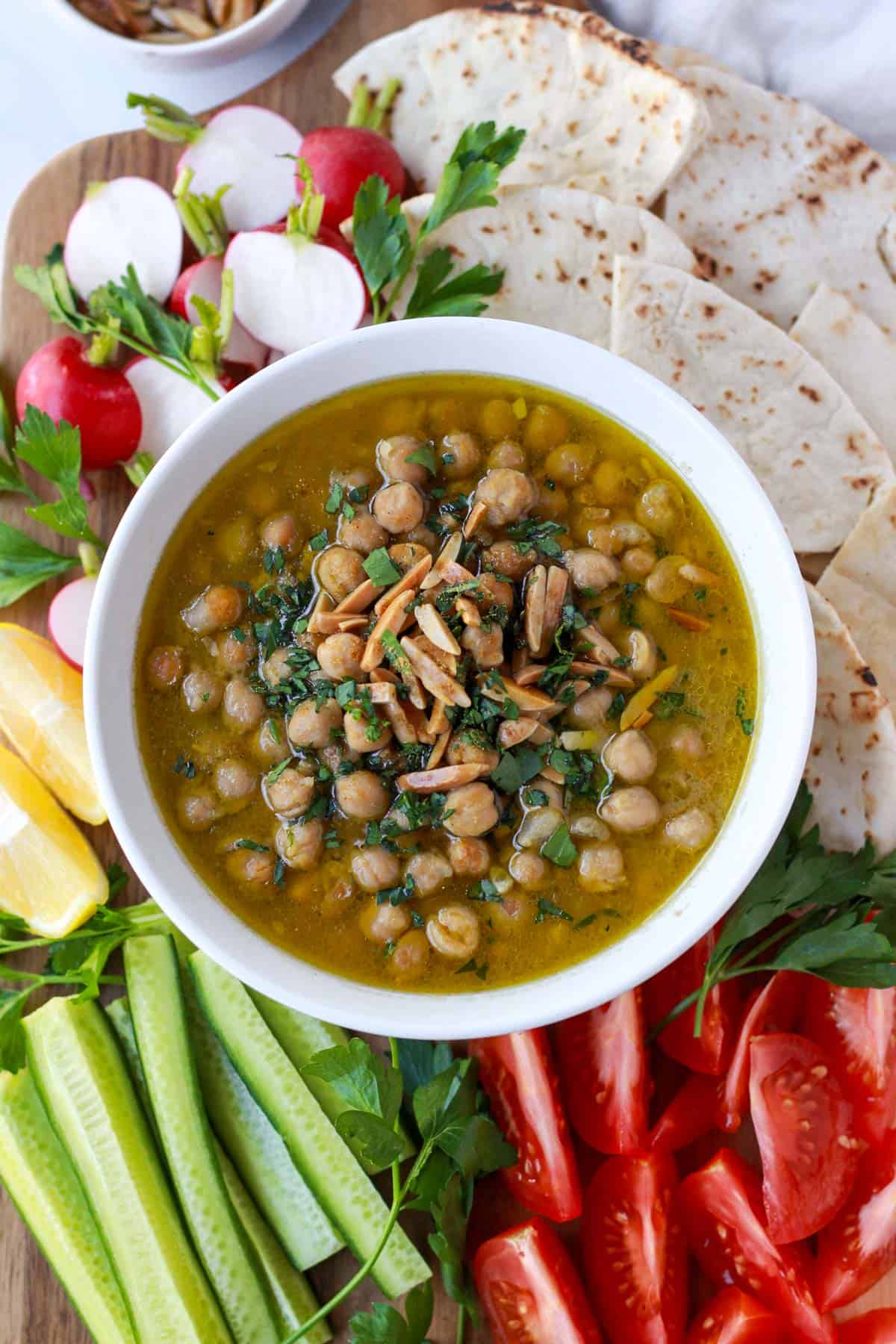
I tested this recipe 4 times to make sure you can recreate it at home using either canned or dried chickpeas. I'm confident that if you follow the simple steps and tips below, you'll be enjoying the most delicious bowl of balila with ease, and you'll want to make it again and again.
Jump to:
What is balila?
Balila is a traditional Levantine dish made up of warm chickpeas simmered with cumin, garlic, lemon, and olive oil, served as hot mezze. It's also known as "hummus balila." "Hummus" literally means "chickpeas" in Arabic, and balila is thought to come from the Arabic word "balla," meaning "to soak" or "wet," which describes how the chickpeas are simmered in broth until soft and creamy.
This naturally vegan Middle Eastern recipe is deeply rooted in Levantine cooking, where legumes are a staple. It's commonly enjoyed as a part of mezze-style breakfast and lunch spreads in Lebanon, served with warm pita bread, fresh vegetables like cucumbers and tomatoes, herbs such as parsley and mint, and plenty of olive oil for drizzling.
While closely associated with Lebanon, you'll also find variations of this warm chickpea dish in Syria, Jordan, and Palestine. Alongside balila, Syrian-style foul mudammas is another traditional Levantine breakfast made with fava beans and chickpeas, also served warm with plenty of olive oil and fresh crudités.
This dish instantly takes me back to my time in Lebanon, where I ordered it for breakfast every chance I got. You can also find a similar dish in Syria, where you'll see vendors on the street cooking up a big pot of warm, brothy beans. They'll scoop up the steaming beans, put them in a plastic bag, tie it up, and hand it to you, still warm and fragrant.
Ingredient notes
To make balila, you'll only need 6 simple, main ingredients.
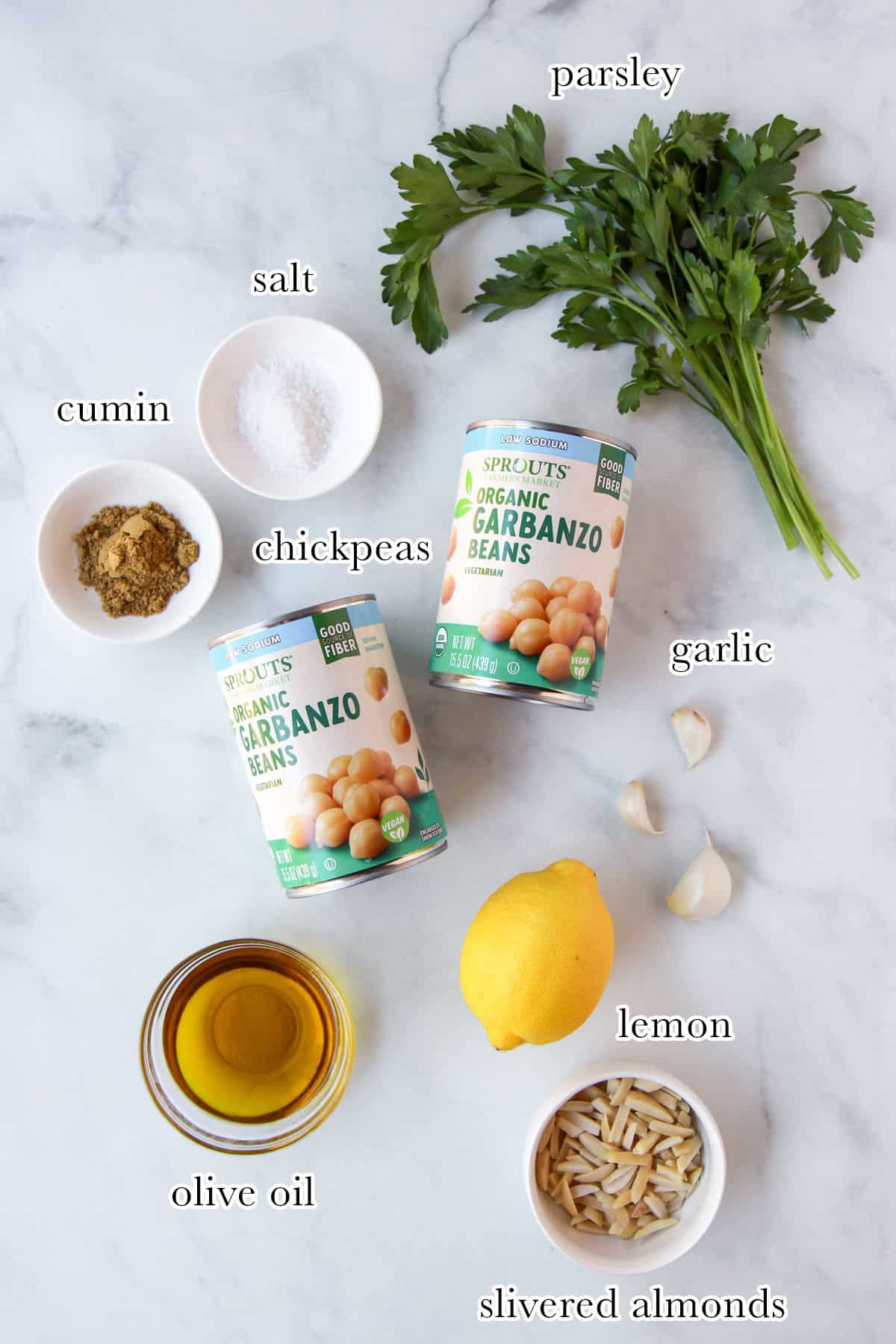
- Chickpeas: You can use canned or dried chickpeas for this recipe. If using dried chickpeas, soak them overnight before cooking. Canned chickpeas can contain varying amounts of salt, so taste the broth and adjust salt as needed.
- Cumin: This is one of the star ingredients of this recipe. It adds a rich depth of flavor to the broth, so don't skip it.
- Garlic: Use fresh garlic rather than jarred for the best flavor. I like to mince the garlic, but you can also chop it a little more roughly. I don't like grating the garlic, because it makes the flavor too sharp.
- Lemon juice: Fresh lemon juice adds the best flavor to this dish. Since it can have a stronger flavor, start with the minimum amount noted, and add more for taste. However, for me personally, the more lemon juice, the better.
- Olive oil: High-quality extra virgin olive oil adds a rich flavor, so make sure to use your best for this dish. My favorite is Canaan's Palestinian, fair trade olive oil.
- Parsley: Fresh parsley adds a pop of brightness and freshness to the finished dish. I prefer to use Italian flat-leaf parsley.
- Toasted pine nuts or slivered almonds: Optional, this topping adds a delightful crunch to the finished dish.
See the recipe card below for exact quantities.
Substitutions and variations
- Garlic: If you don't like garlic, like my grandma, you can simply omit it. It will still taste delicious without it.
- White beans: Try making this recipe with white beans instead of chickpeas for a variation.
- Herbs: You can add various herbs in addition to parsley to top the finished dish, or replace the parsley with another herb, like chopped, fresh mint leaves or green onions.
- Spicy: If you like heat, at the same time you add the seasoning, add a spoonful of Middle Eastern chili paste, shatta.
Using canned vs. dry chickpeas
You can use either canned or dried chickpeas for this balila recipe, although the method will differ slightly.
Canned chickpeas method
For canned chickpeas, I recommend cooking the chickpeas in their canning liquid for extra flavor. If you prefer not to, drain and rinse the chickpeas and add enough water to cover them by a few inches. I like using canned chickpeas because it's much quicker-this dish can be on your table in just 30 minutes, perfect for mornings where you want something special but don't have a lot of time.
Dried chickpeas method
To cook balila from dried chickpeas, it will take a bit longer and require some prep. Plan for about 90 minutes of mostly hands-off cooking time, plus overnight soaking.
Soak your chickpeas overnight, then drain and rinse them. Cook them in plenty of water. As they simmer, the cooking liquid will pick up flavor from the chickpeas.
Since the time can vary depending on the quality of your chickpeas, make sure to check on them every 10-15 minutes to make sure they don't dry out. Add ¼-½ cup water as needed if you see the liquid getting low. By the time they're finished cooking, there should be ½-¾ cup liquid remaining, before adding the rest of the ingredients.
It can take 60-120 minutes until the chickpeas are fully tender, but it typically will be about 90 minutes. You'll want the chickpeas to be very soft.
How to make balila
Making Lebanese-style balila is simple and almost foolproof. The main thing you need to watch is the liquid level, so check in every 10-15 minutes to make sure your chickpeas stay covered.
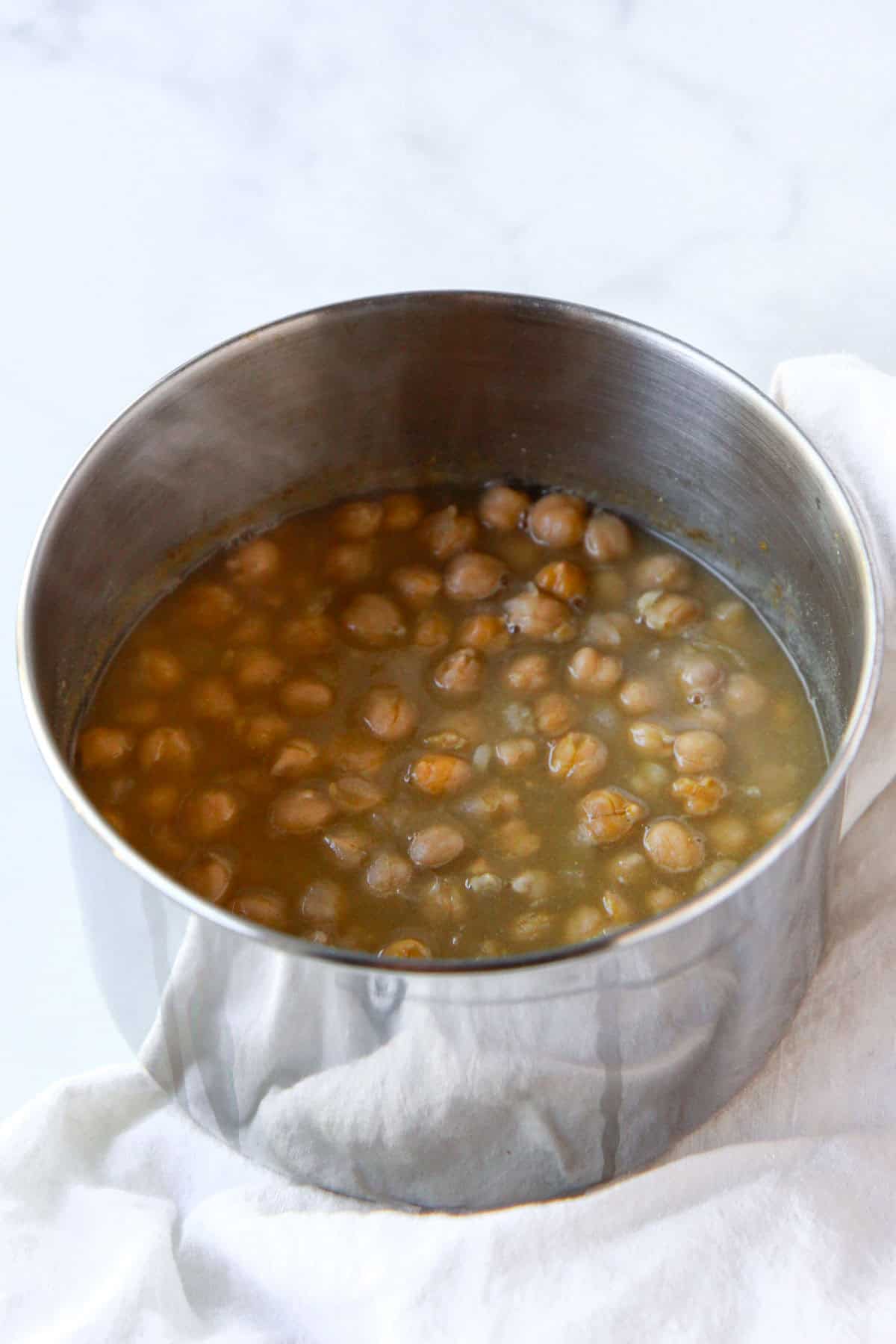
Step 1: Bring chickpeas and liquid to a boil, and simmer until very tender. Add salt, cumin, and garlic, and simmer for a few more minutes.
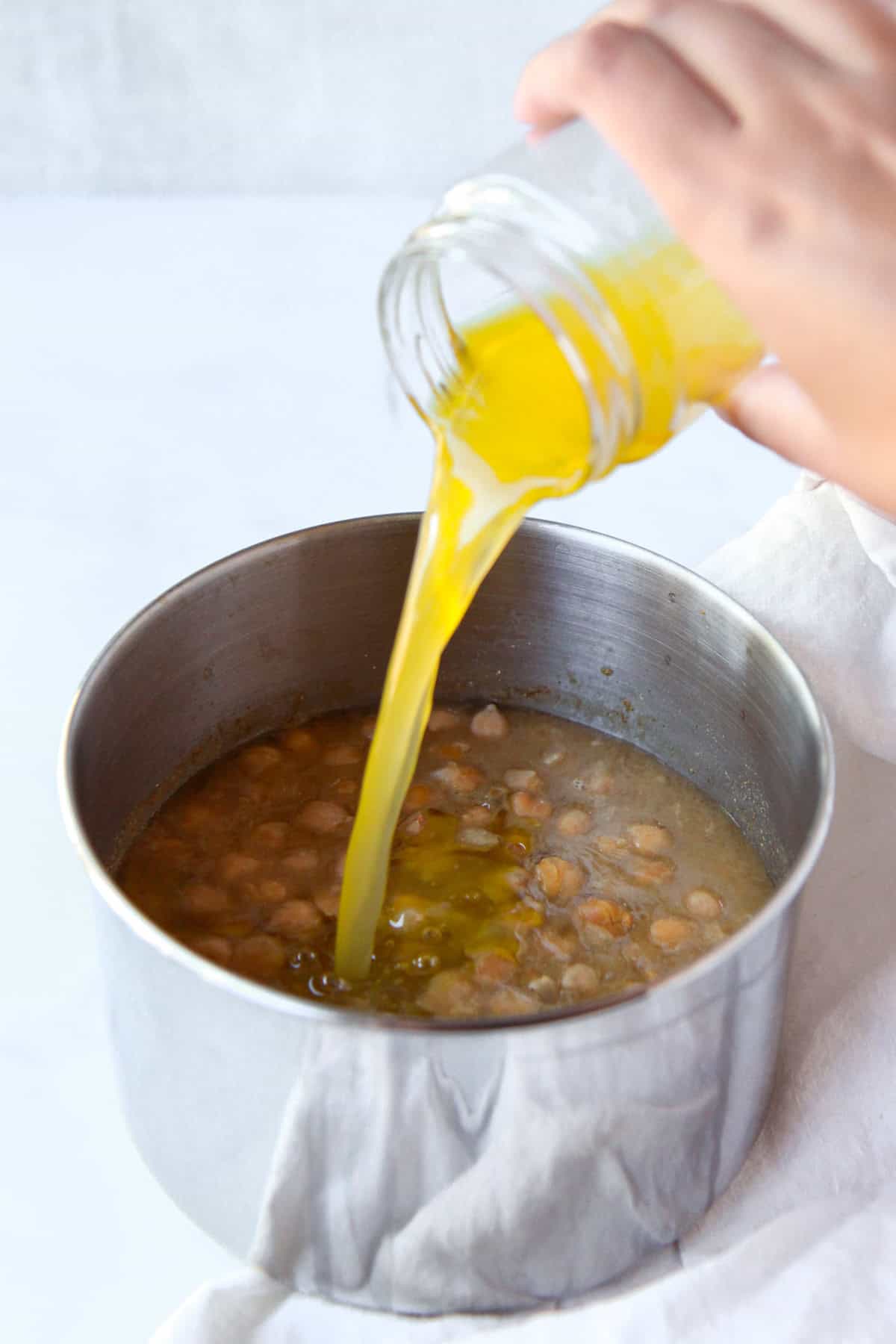
Step 2: Remove from heat and immediately add in olive oil and lemon.
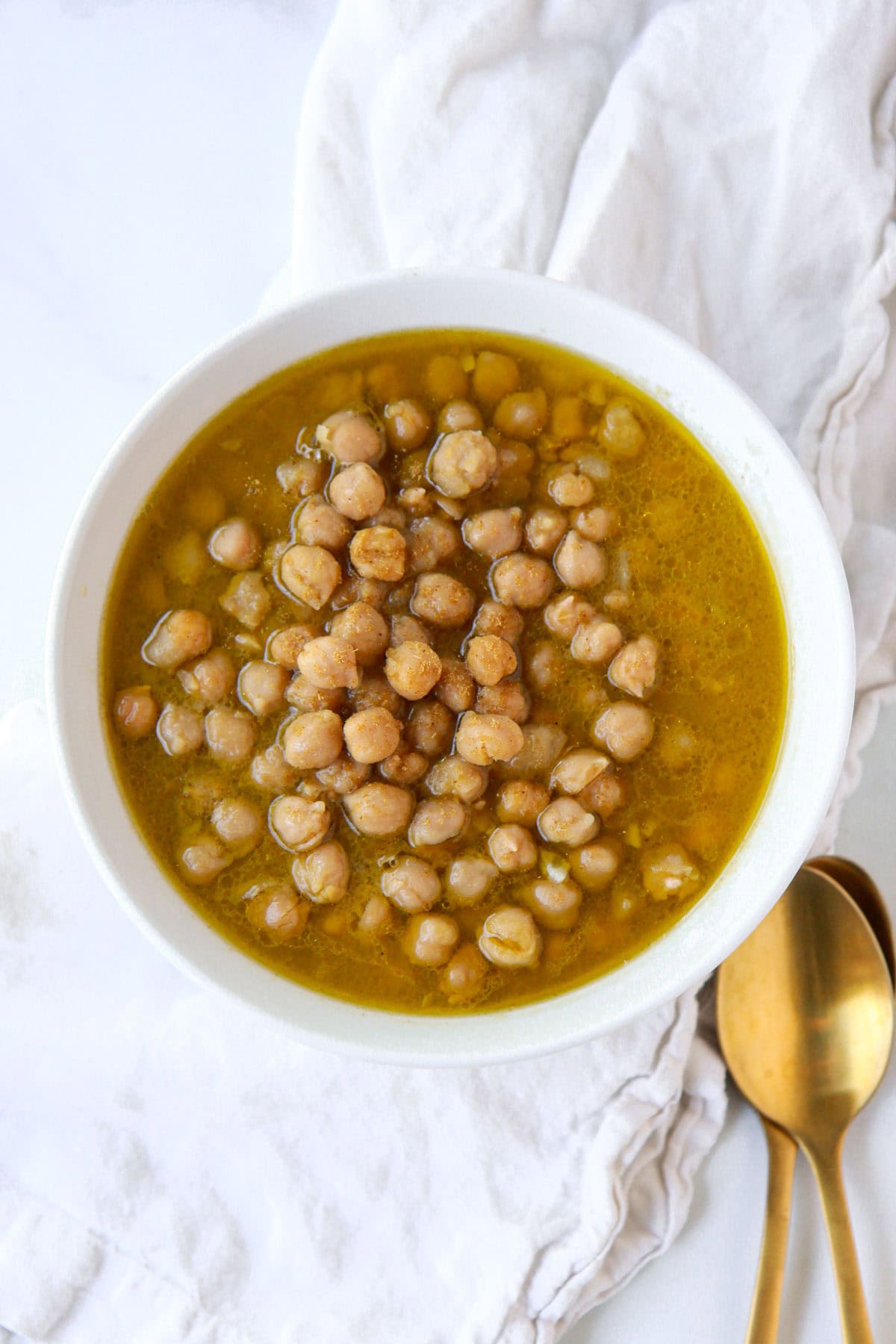
Step 3: Stir to combine and taste to adjust salt and lemon, if desired.
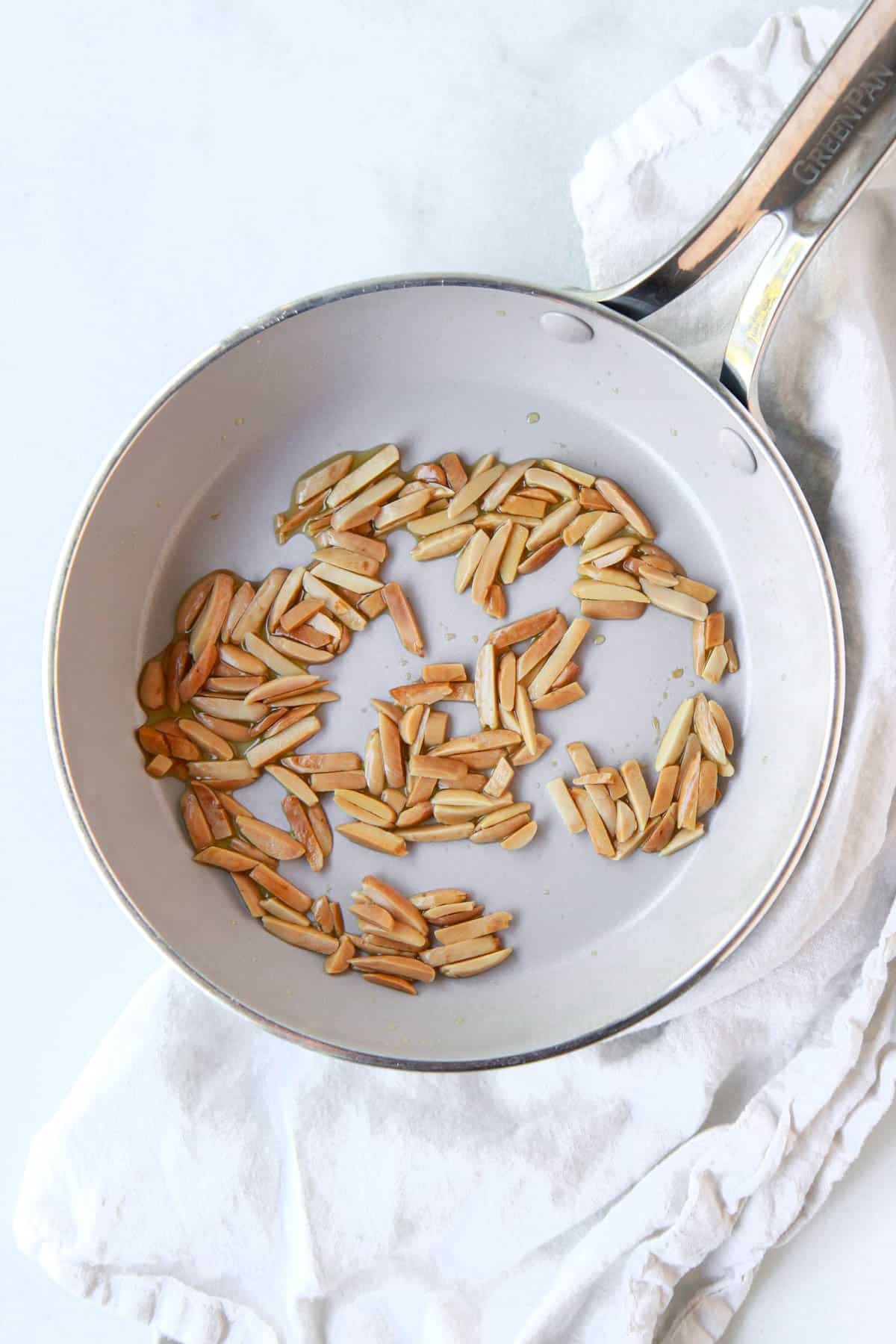
Step 4: If desired, top with slivered almonds or pine nuts, toasted in olive oil until golden.
Top tips
- Overcook the chickpeas, until they're tender, creamy, and beginning to break down on their own. Test a chickpea to make sure it's ready. If you can squish it very easily between your fingers, it's ready. If it still has some bite or crunch, it needs more time.
- Keep checking in on the chickpeas as they cook to make sure they don't dry out. They should always be covered with enough liquid while cooking.
- Add enough liquid. You can always remove a bit at the end or cook off extra liquid if needed, but it's harder to fix chickpeas that dry out.
- Taste and adjust the salt and lemon. Start with the minimum amount of lemon, taste, and decide if you want to add more. I like it very lemony, so I add the full amount. Saltiness can vary between canned chickpeas, so taste before adding any extra salt.
FAQs
I prefer to simmer the chickpeas in their canning liquid for extra flavor and a creamier broth. If you're sensitive to beans or prefer to avoid the can liquid, you can drain and rinse the chickpeas and simmer them in fresh water instead (just add a pinch more salt to taste).
Make sure to add enough water to cover the chickpeas by a few inches. The balila will still be delicious, just a little lighter.
Test a chickpea to make sure it's ready. You should be able to squish one easily between your fingers, and the chickpeas will start to break down on their own into the broth. If they still have a bit of bite or crunch, they need more time.
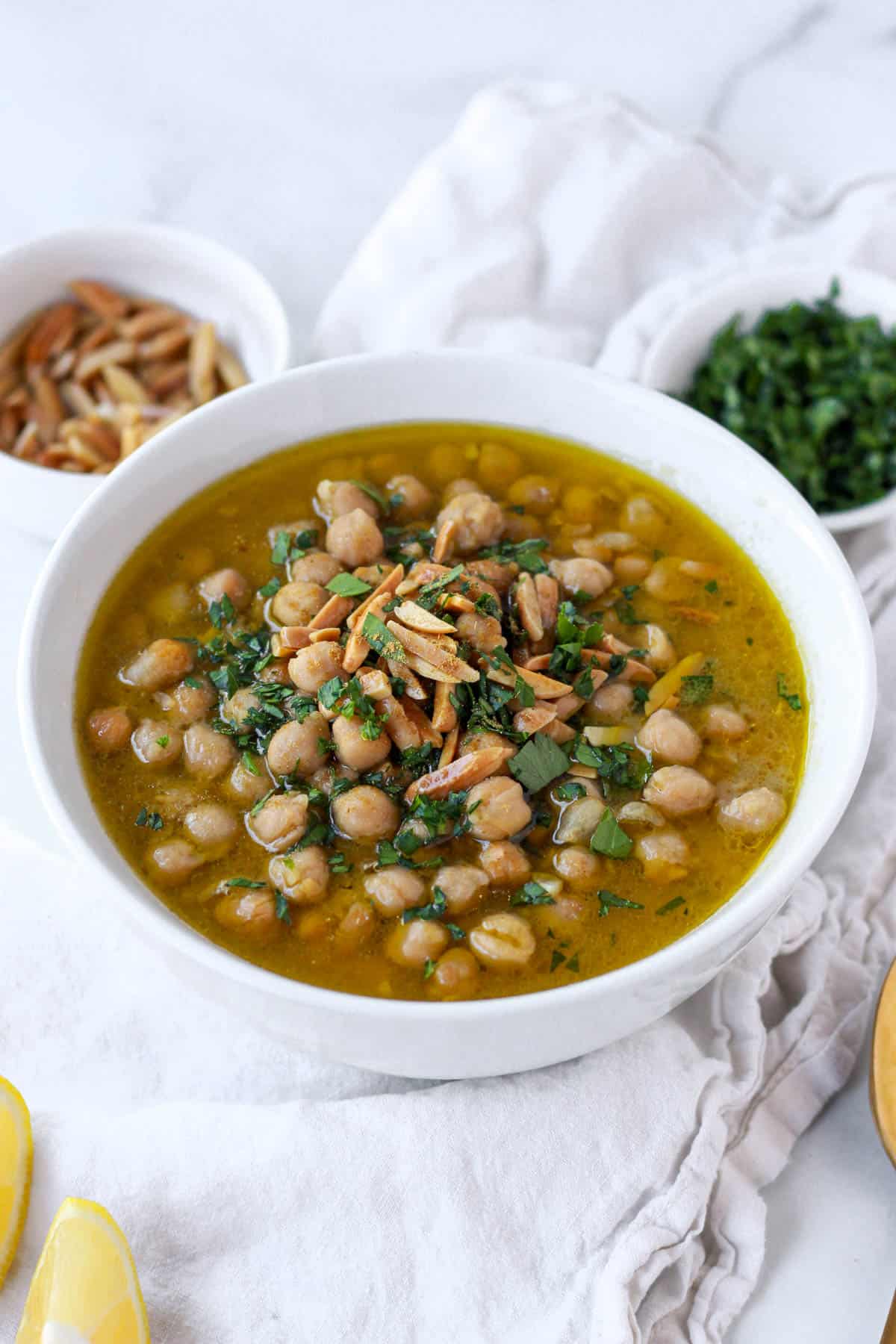
Serve balila hot; don't wait for the chickpeas to cool before serving. After removing them from the heat, immediately add the olive oil and lemon, pour into serving bowls, and top with fresh parsley and toasted nuts. Enjoy warm with bread and fresh veggies!
Storing
Balila lasts about 5 days in the fridge and also freezes well. It keeps in the freezer for about 3 months.
When you reheat it, add some extra water if needed to keep the brothy texture. Reheat it in the microwave or bring to a gentle simmer in a saucepan until heated through.
Store toasted nuts and fresh herbs separately and add them just before serving. Leftovers are best enjoyed with bread or pita and crudités, topped with fresh herbs.
What to serve with this recipe
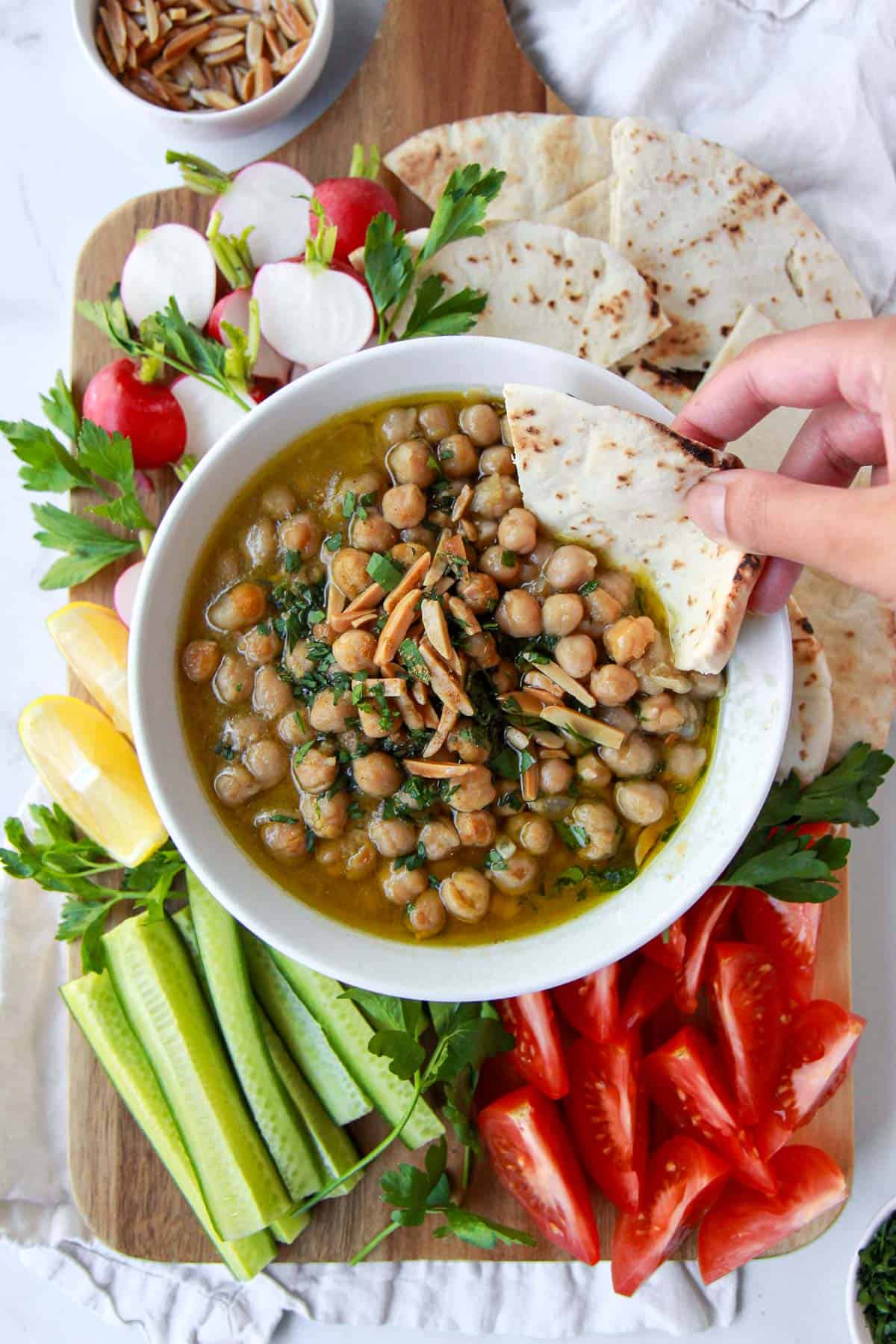
This balila recipe shines as part of a mezze-style breakfast or lunch spread, just like I enjoyed it in Lebanon. Serve it with warm pita, fresh veggies, and other dips and mezze dishes.
- Serve alongside a fresh, vibrant salad, such as Palestinian salad or red onion and tomato salad.
- Serve alongside dips to accompany the bread and crudités, like beet mutabal or Syrian baba ganoush.
- Include flavorful sautéed tomatoes as another option for dipping bread into, galayet bandora.
More Middle Eastern breakfasts you'll love
Recipe
Balila (Lebanese Chickpeas)
Equipment
Ingredients
- 2 15 oz. cans chickpeas (~3 cups cooked) or 1 cup dried chickpeas, soaked overnight
- 1 cup water + more as needed
- 1 teaspoon salt + more to taste
- 2 teaspoon cumin
- 3 cloves garlic minced
- 4-6 tablespoon lemon juice juice of 1 lemon
- ¼ cup olive oil + more for drizzling
- ¼ cup parsley leaves chopped
- ¼ cup toasted pine nuts or slivered almonds (optional)**
Instructions
- Add 2 cans of chickpeas along with their liquid and 1 cup of water to a saucepan. Bring to a boil over medium-high heat. Lower heat and simmer for 20-25 mins, until very tender. Skim any foam and loose skins if desired. If liquid drops, add hot water ¼ cup at a time to keep them covered. (I typically end up adding ½ cup extra water total.) See notes below for the dried chickpeas method.*2 15 oz. cans chickpeas, 1 cup water
- Add salt, cumin, and garlic, and simmer for 2-3 more mins.1 tsp salt, 2 tsp cumin, 3 cloves garlic
- Remove from heat and stir in lemon juice and olive oil. Taste and adjust salt and lemon if desired.4-6 tbsp lemon juice, ¼ cup olive oil
- Top with cumin, olive oil, fresh parsley, and toasted nuts. Serve warm with bread or pita and crudités.¼ cup parsley leaves, ¼ cup toasted pine nuts
Notes
- Soak 1 cup dried chickpeas overnight. Drain and rinse. Add to a pot along with 6-8 cups water and bring to a boil (cover by 2-3 inches).
- Skim any foam, and lower to a simmer for 60-120 mins (plan on ~90 minutes), until very tender but holding shape. If liquid level drops, add hot water ¼ cup at a time to keep covered. If you end up with too much liquid, simmer uncovered for 10-15 minutes to reduce. Continue with the method above from step 2.
kapila says
At first, this recipe looked so ordinary and simple that I doubted whether it would live up to how you were making it out to be, Zena. Well...I am glad to be proven quite wrong. The dish, as written, turned out 100% fabulous, my young child ate a bunch of it with relish (and getting them to eat is no easy task), and my hubs loved it. For anyone who doesn't think they need yet another chickpea recipe in their lives....they def need this one. Thanks so much for sharing this with the world, Zena! We love you!
Zena Hassoun says
Kapila, this comment made my whole week. 🥹 I’m SO happy you gave it a chance, and even happier that your little one and your husband loved it too! I know that kid approval is no joke 😂
And I love that you said it looks simple at first, because that’s exactly what I adore about it. It’s really one of those humble dishes that surprises you. Thank you for taking the time to leave such a thoughtful and glowing review! Sending you all so much love! 💚