
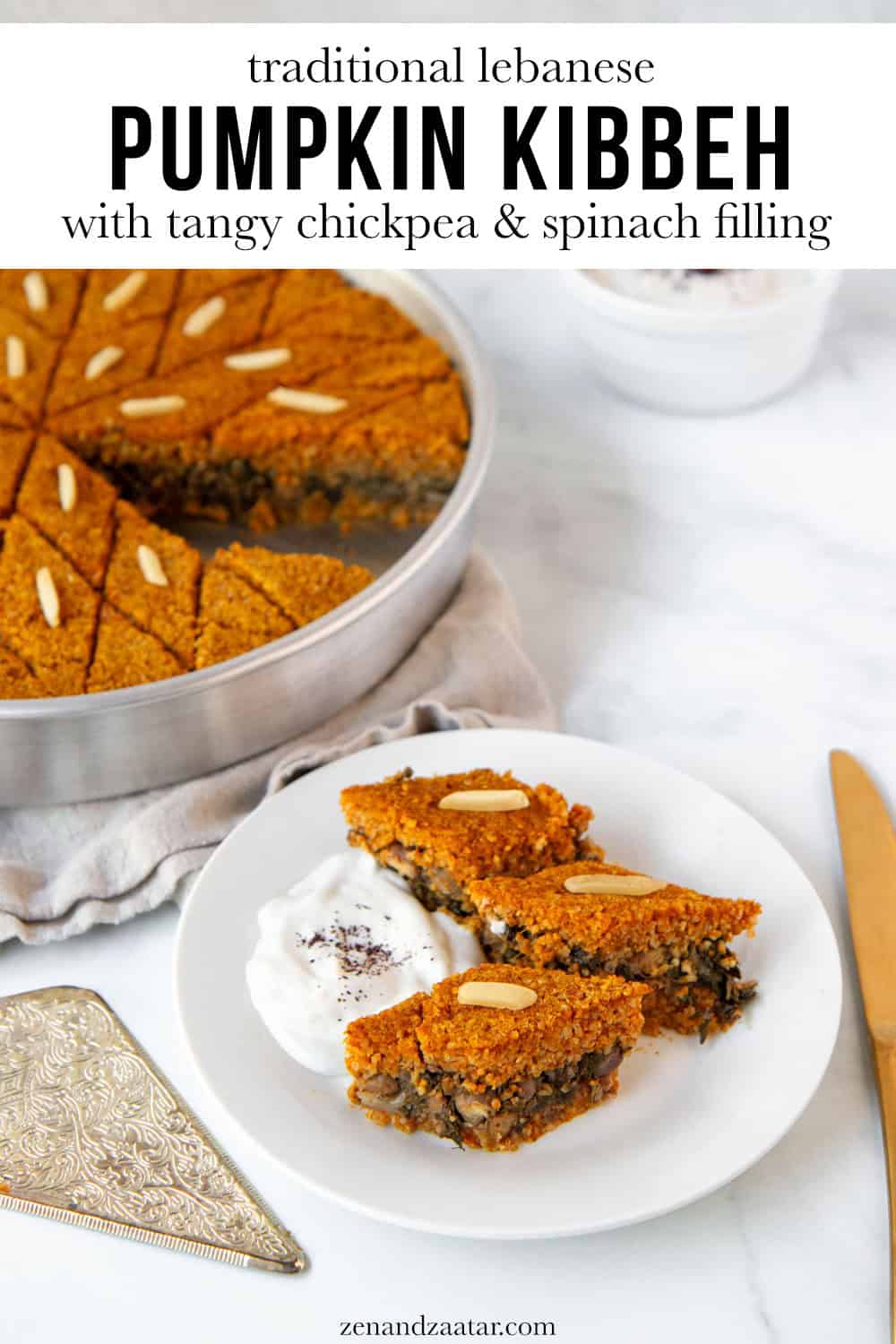
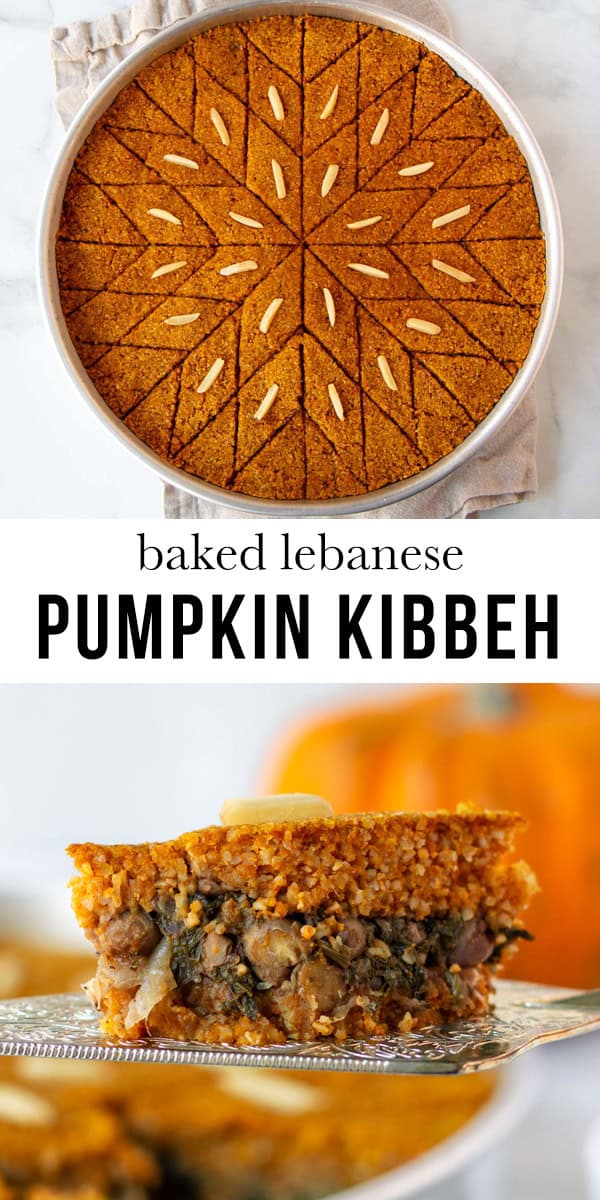
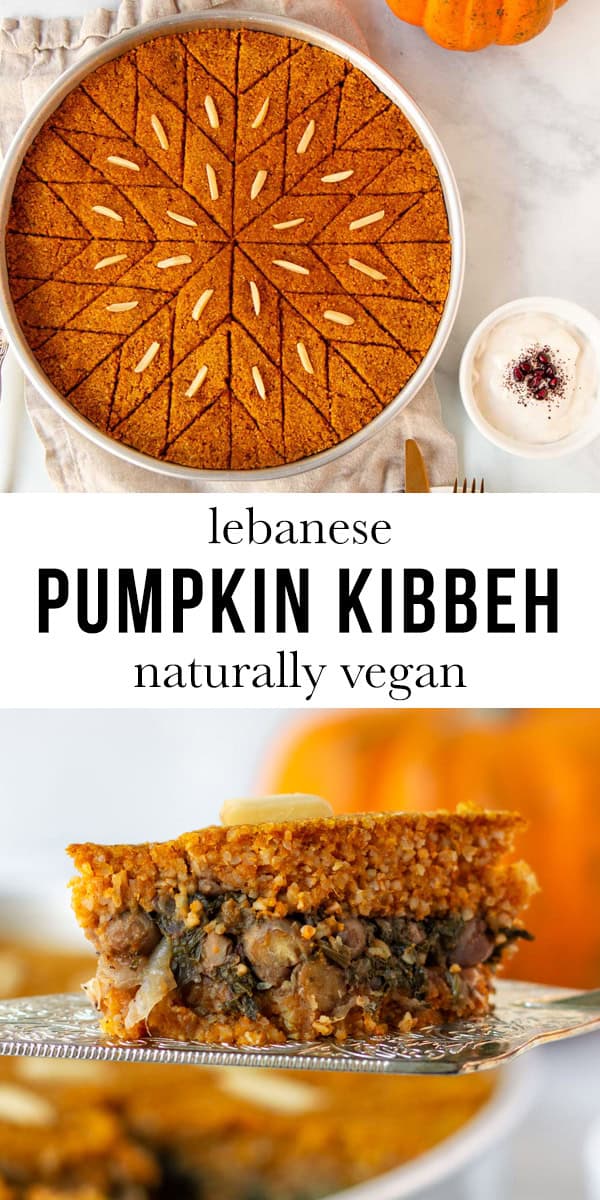
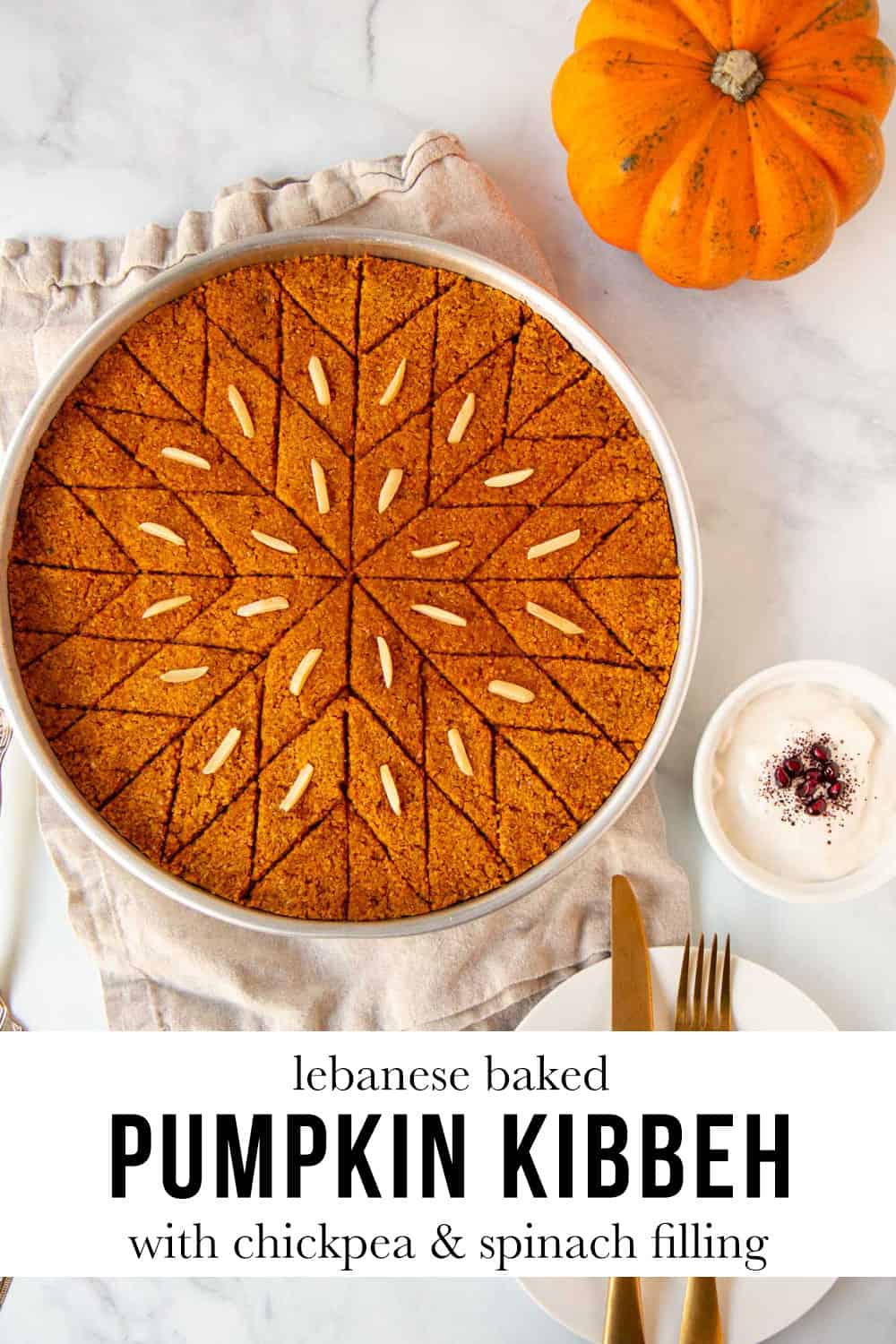
This pumpkin kibbeh has been wholeheartedly approved by my non-vegan Arab family (some of the toughest critics), and many of them said it's even better than the meat version. Layers of pumpkin-bulgur dough encompass a tangy, savory chickpea and spinach filling, making a stunning centerpiece for your holiday table or celebratory dinner. This baked kibbeh recipe is a refreshing take on the Levantine staple dish with layers of flavor that entice even skeptics.
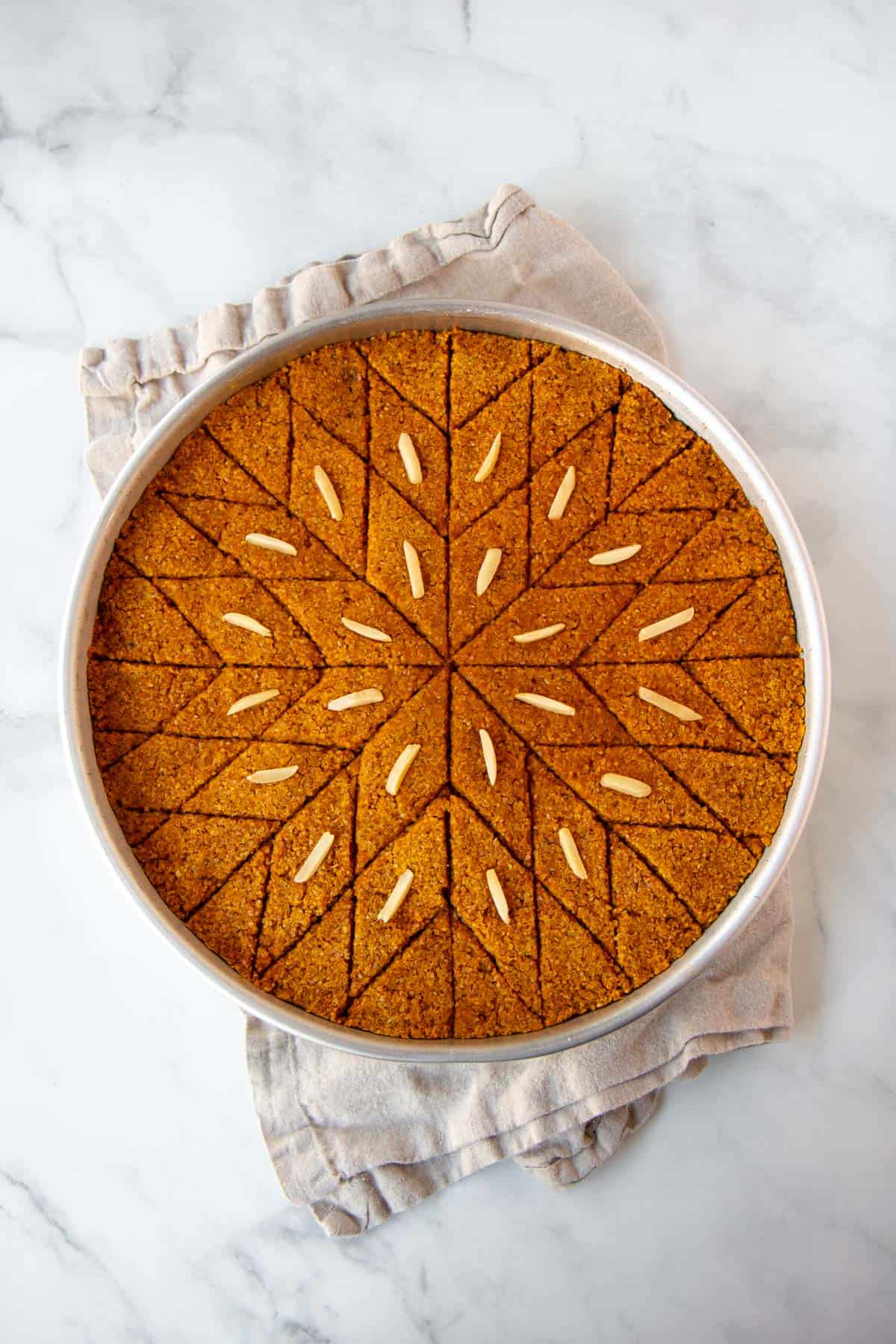
I first tried pumpkin kibbeh at a vegan Lebanese restaurant in Beirut and immediately knew I had to recreate the crispy pumpkin dough and the tangy, pomegranate-infused filling. After 4 rounds of testing and feedback from over 10 Syrian and Palestinian family members (all meat eaters), I landed on this version. They went back for seconds and thirds, and many even said it beats the traditional meat version.
While this dish is a labor of love, shortcuts like frozen spinach, canned pumpkin, and a food processor make it much more doable. You can get it into the oven in under an hour, and the rest is mostly hands-off baking time. This Lebanese pumpkin kibbeh recipe makes a great centerpiece for Thanksgiving, Christmas, or Eid, especially when pumpkin is in season, but if you can find canned pumpkin year-round, you don't have to save it for the holidays.
Jump to:
What is pumpkin kibbeh?
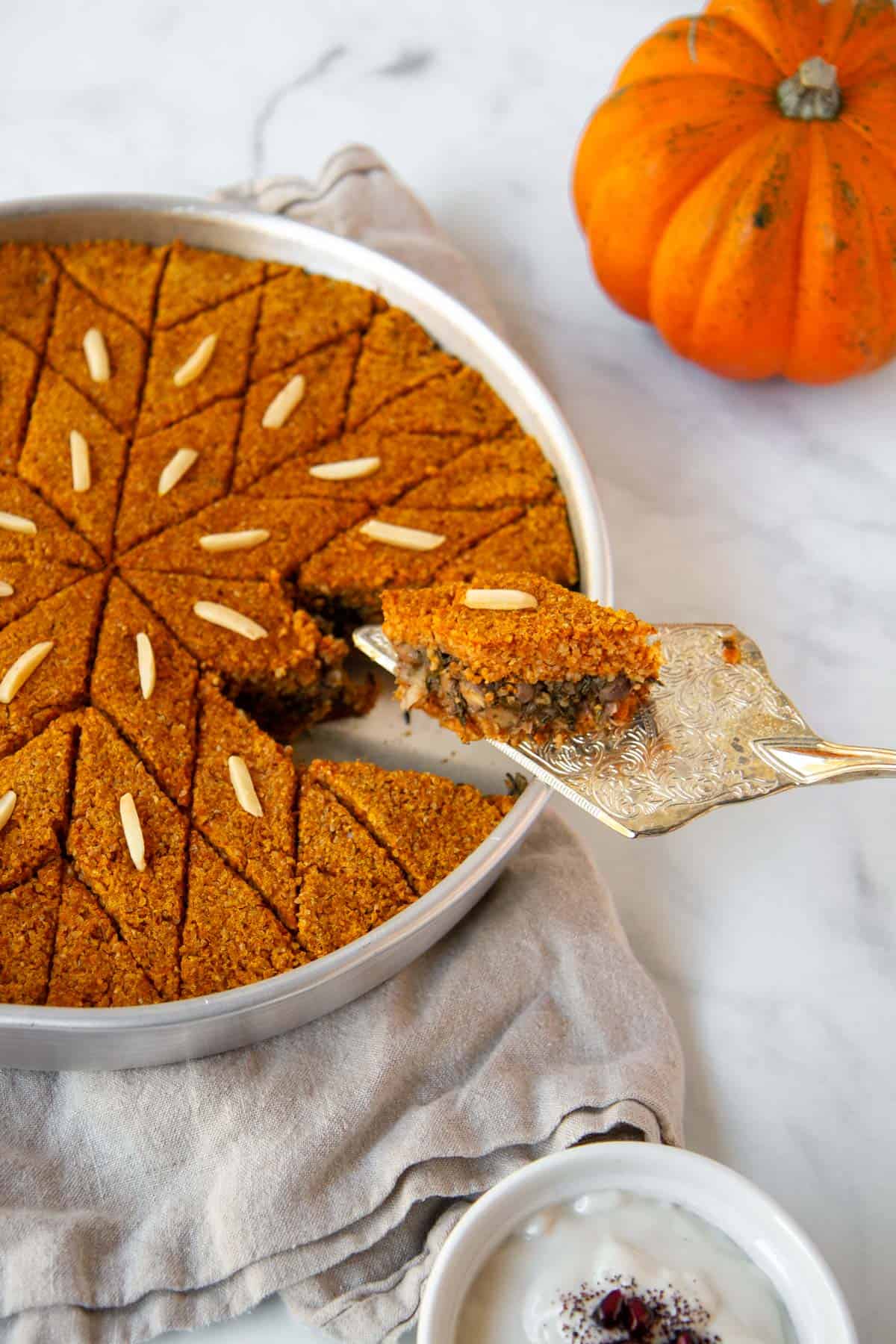
Pumpkin kibbeh ("kibbet lakteen" in Arabic) is a naturally vegan Lebanese dish where pumpkin replaces meat in the bulgur-based dough. Kibbeh itself is an iconic Levantine dish that traces back centuries and is essential to Syrian and Lebanese cuisine. This version is a variation of tray-baked kibbeh or "kibbeh bil sanieh."
Kibbeh typically combines bulgur wheat and ground meat into a dough, filled with spiced meat, onions, and pine nuts. Lebanese Christian communities traditionally made this vegetarian kibbeh as a Lenten alternative to the meat-based versions, using pumpkin in the dough and often filling it with chickpeas and greens.1,2
Ingredient notes
You'll need a handful of ingredients for both components of this dish: the pumpkin dough and the kibbeh filling.
Pumpkin dough
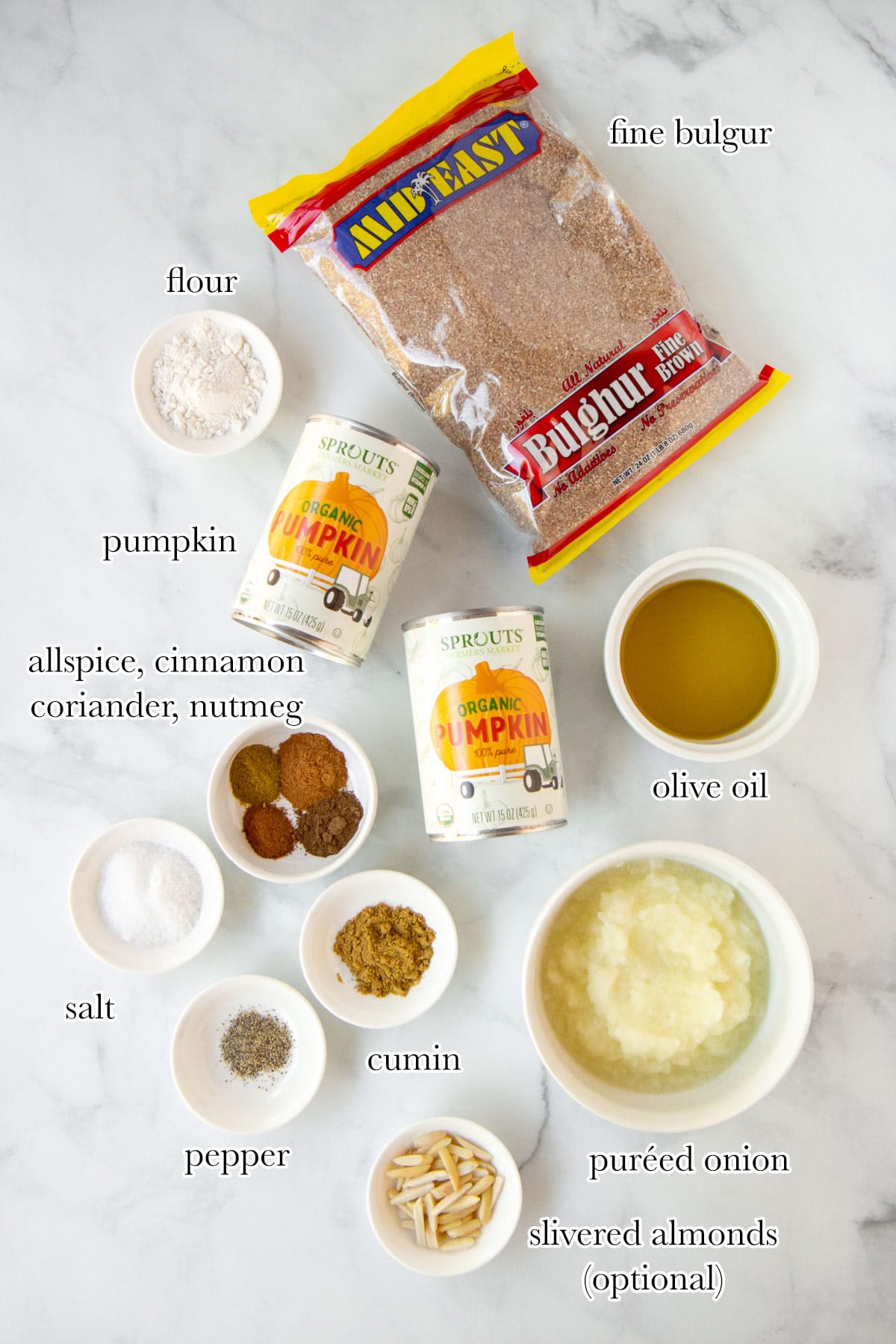
- Fine bulgur: It's important to only use fine bulgur for this recipe (not medium or coarse). I use Mid East brand fine bulgur wheat, which works perfectly and is available online or at Middle Eastern grocers.
- Pumpkin: Fresh or canned both work. For fresh pumpkin, I prefer a pie pumpkin, but most pumpkin varieties and similar winter squashes work. The main thing is to drain fresh pumpkin purée before weighing, so the dough isn't too wet. Canned pumpkin doesn't need draining.
- Onion: Onion adds moisture and flavor and helps bind the dough. I use yellow onion, but white onion also works well.
- Flour: A couple tablespoons of flour help the dough hold together.
- Spice mix: Kibbeh recipes often use a mix of traditional spices for the kibbeh dough. I simplified the traditional spice mix in this version to only use a combination of allspice, cinnamon, cumin, nutmeg, and coriander, in addition to salt and pepper. I did this to keep it authentic but accessible. After years of making Syrian recipes, I've found these spices complement pumpkin beautifully without overwhelming it.
- Olive oil: Use high-quality, extra virgin olive oil. This will be key for brushing the pan so the kibbeh doesn't stick and for brushing the top so it bakes up nicely golden. My favorite to use is Canaan's organic Palestinian olive oil.
Kibbeh filling
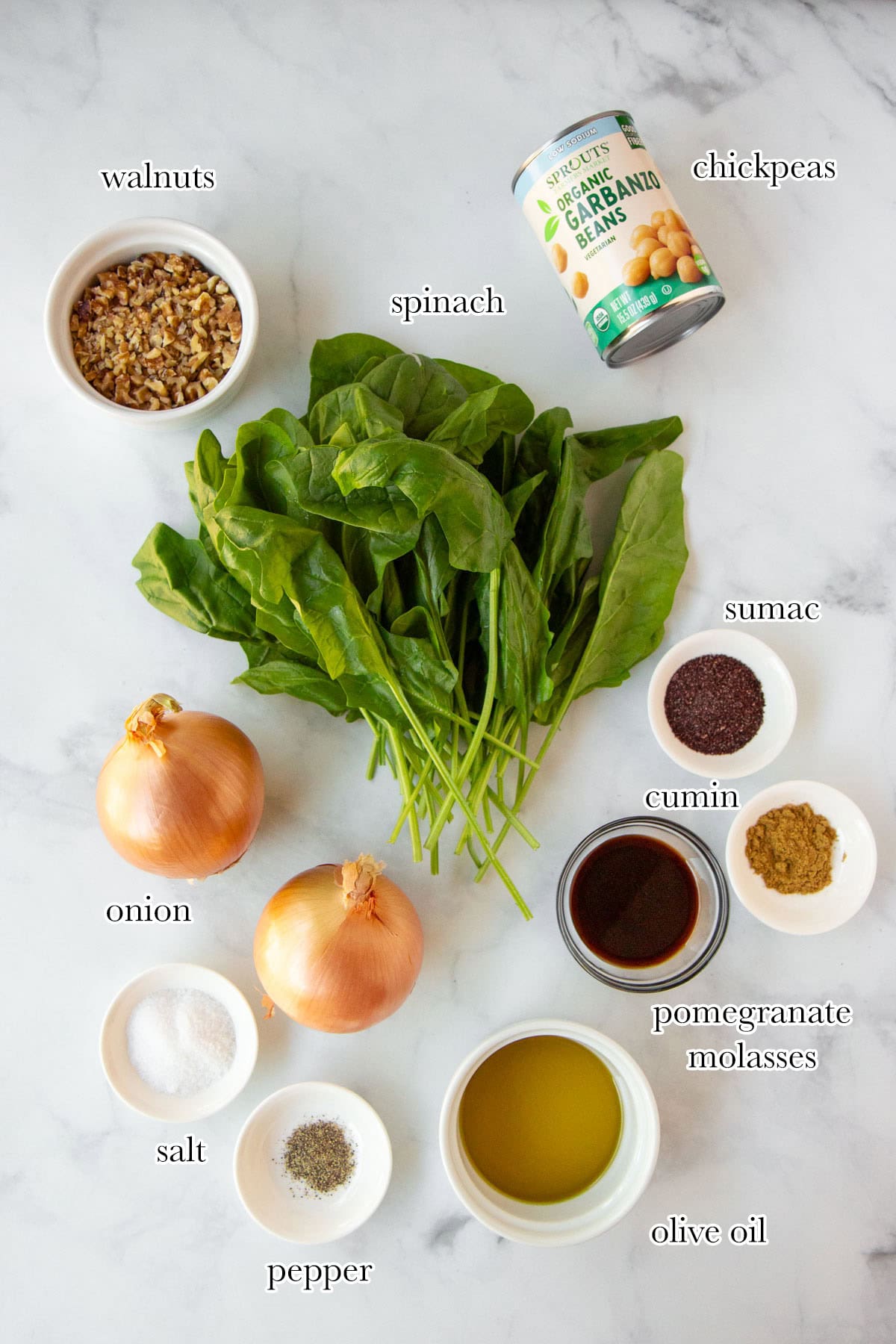
- Walnuts: Instead of the pine nuts used in traditional meat-based kibbeh, walnuts are added to the filling of this vegan Middle Eastern recipe for crunch and to complement the flavors. You can use any size of unseasoned, raw or roasted walnuts. If you buy them roasted, you will not need to toast them.
- Onion: Onion is essential to the flavor and texture of any kibbeh's filling. I use yellow onion, but you can also use white, red, or sweet onion.
- Spinach: This makes up the bulk of the filling. You can use either fresh or frozen spinach. I don't recommend using baby spinach because it's not as sturdy and shrinks down more.
- Chickpeas: These add protein, crunch and texture. You can use any cooked chickpeas. I use canned chickpeas for convenience.
- Cumin and sumac: These add warmth and extra tanginess to the filling.
- Pomegranate molasses: This adds the signature tangy taste to this kibbeh stuffed with spinach. I prefer to use Cortas brand pomegranate molasses which can easily be found online or in a Middle Eastern grocery store.
See the recipe card below for exact quantities.
Substitutions and variations
Dough variations
- Canned vs. fresh pumpkin: Both work. Canned pumpkin is more convenient (you'll need about 2 15-ounce cans). If you're using fresh pumpkin purée, it often holds more water, so let it drain in a fine-mesh strainer for 15-20 minutes before weighing. To make fresh purée: roast or steam pumpkin, scoop out the flesh, then purée or mash very well. A 3-4 lb pumpkin usually gets you close to what you need, depending on the variety.
- Butternut squash: Butternut squash purée works great as a substitute for pumpkin purée, offering a slightly sweeter flavor that is also delicious.
- Sweet potato: I haven't tried it, but sweet potato purée could also work well to replace the pumpkin purée. Just pay attention to the dough texture, as it may have less liquid content than pumpkin purée.
- Margarine or vegan butter: To brush the top of the kibbeh, you can use this instead of olive oil, or use a combination of both to make it richer.
Filling variations
- Chard: Chard works great instead of spinach.
- Pomegranate molasses: If you can't find pomegranate molasses, you can use lemon juice for acidity. However, if you can grab it, pomegranate molasses gives the filling that signature tart flavor that makes this dish taste authentic. It's also a staple in many of my recipes, like Syrian baba ganoush and harak osbao, a Syrian lentil pasta.
- Nuts: Instead of toasted walnuts in the filling, you could use pine nuts. For the optional garnish, you can use any nut you like, such as slivered almonds, whole almonds, pine nuts, cashews, or walnut halves.
How to make pumpkin kibbeh
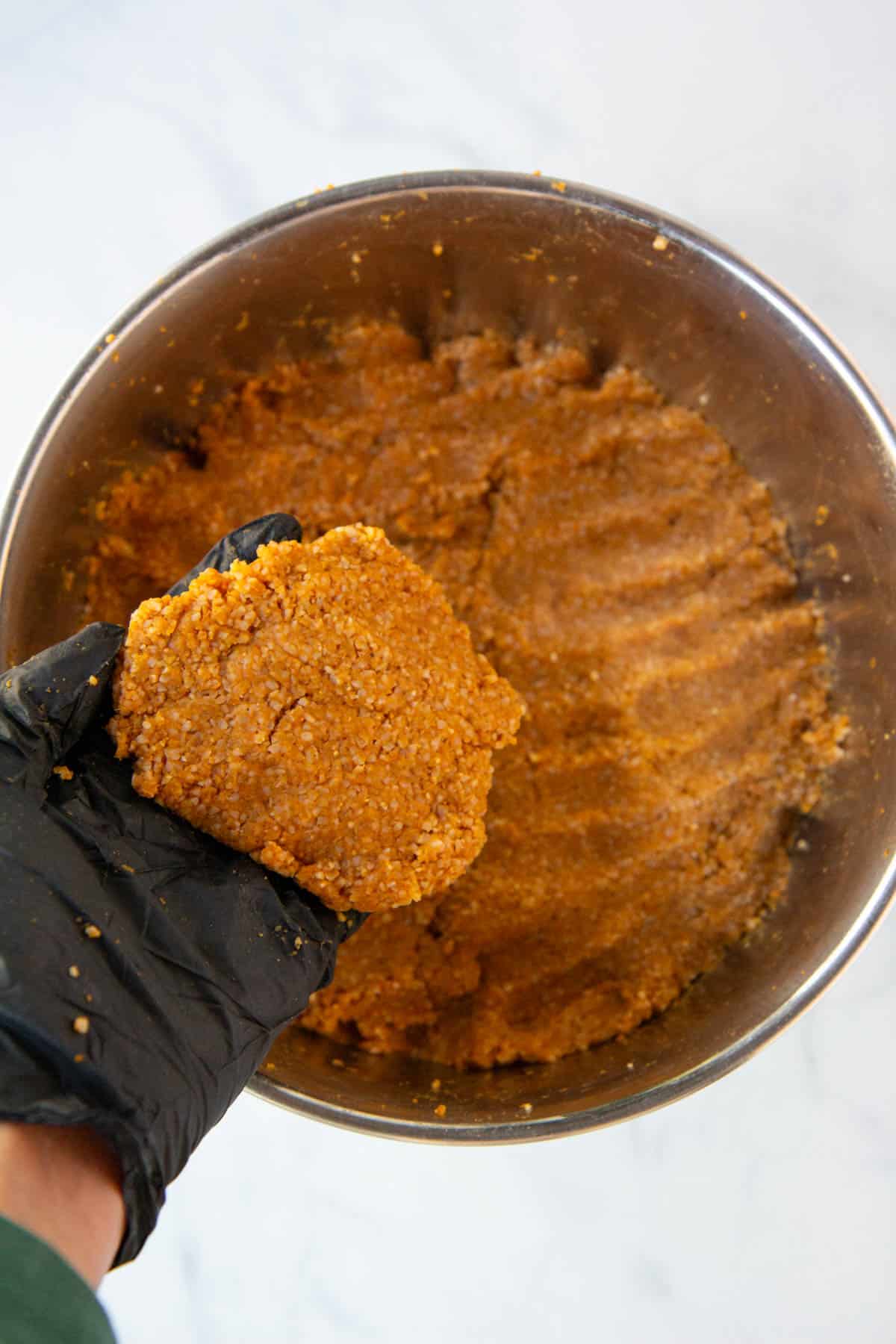
Step 1: Make the dough. Mix the bulgur, pumpkin, onion, flour, and seasoning. Let it rest for 15-20 minutes before testing the texture. To test it, grab a golf-ball-sized piece and flatten it. If it holds together and doesn't crack or crumble, it's good.
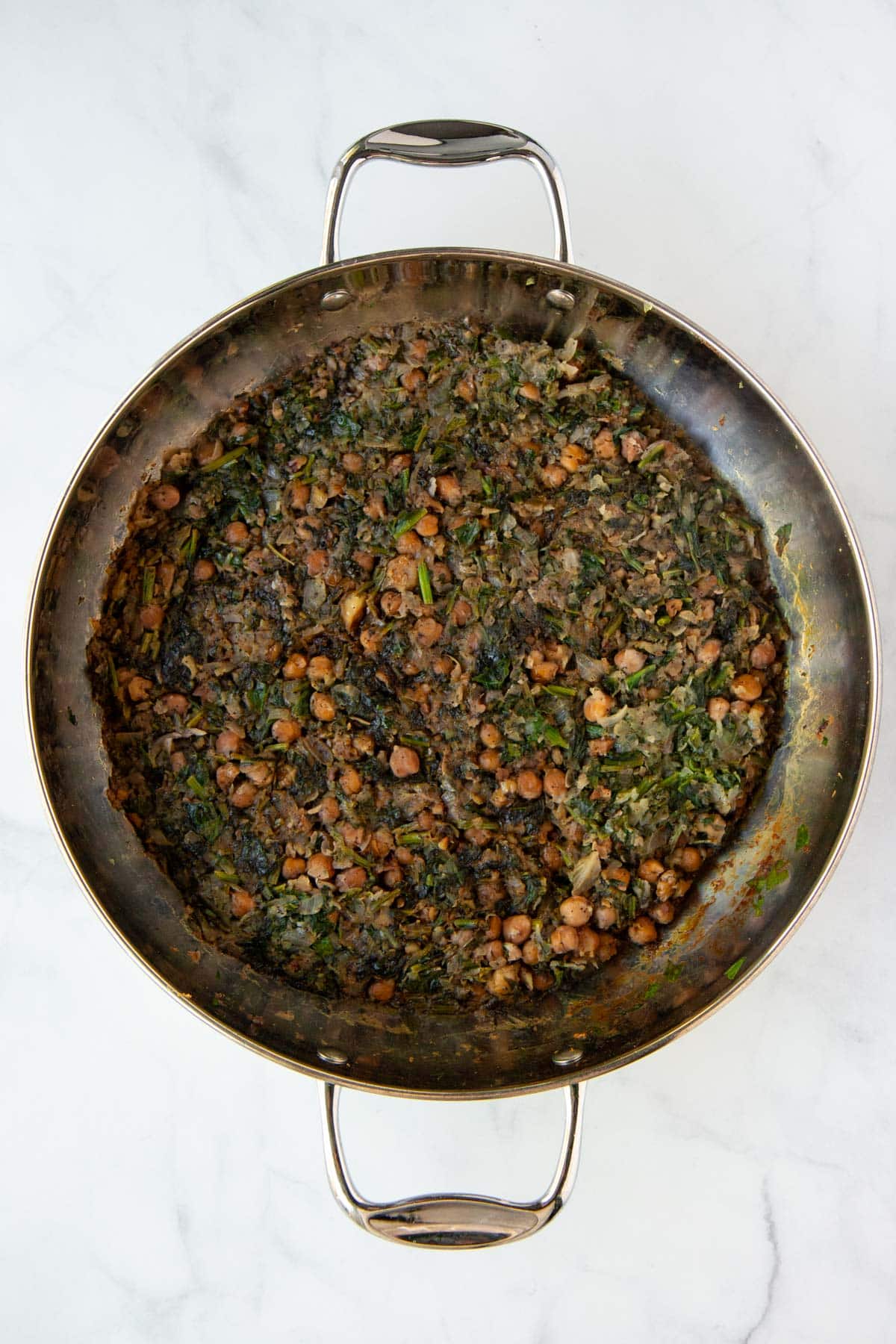
Step 2: Cook the filling of onions, spinach, chickpeas, spices, and toasted walnuts. Cook until most moisture evaporates and the filling looks almost dry. Then add pomegranate molasses and cook briefly until it reduces.
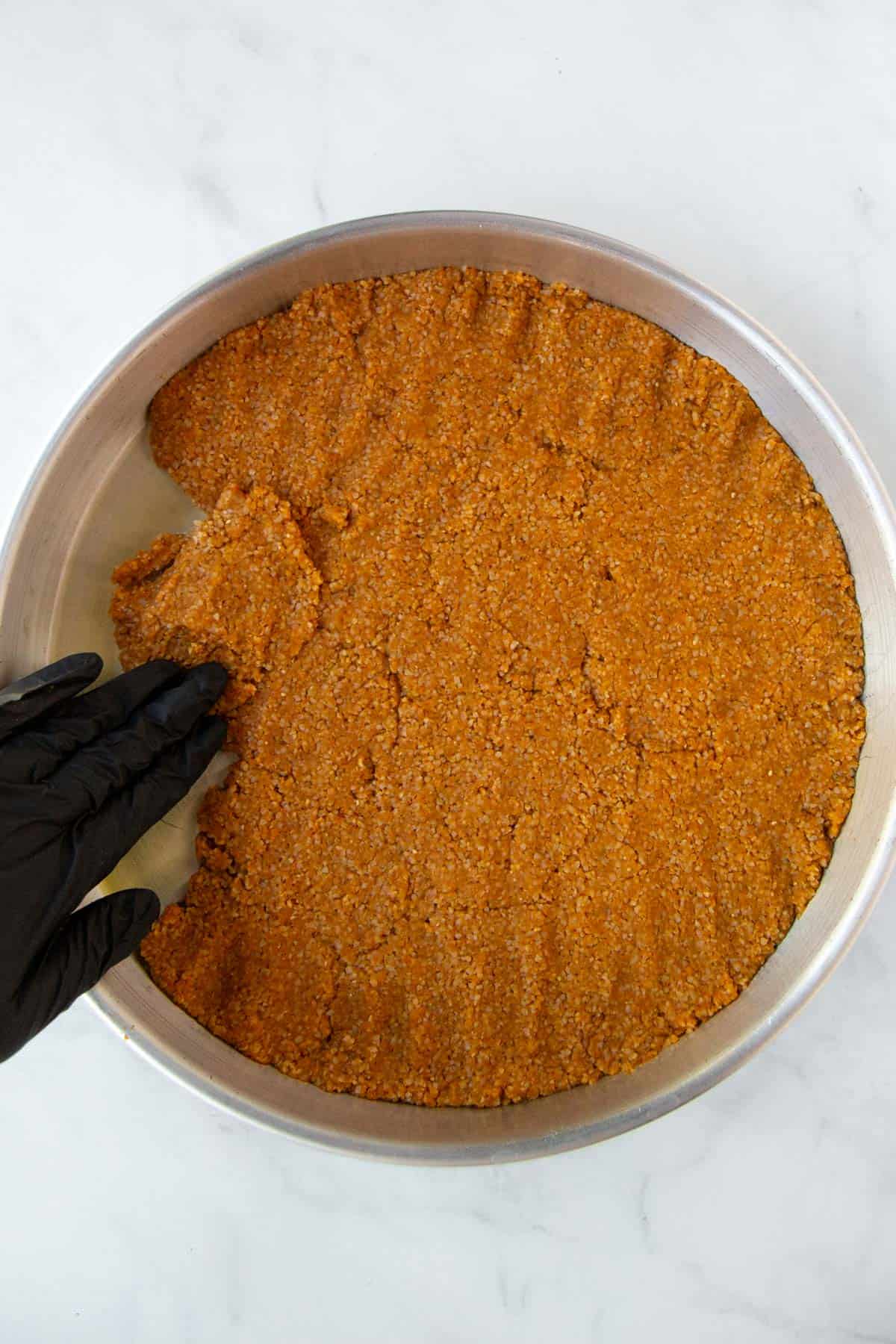
Step 3: Divide the dough into 2 portions. Press down half of the dough a little at a time into a greased pan. Wet your hands and smooth down the layer.
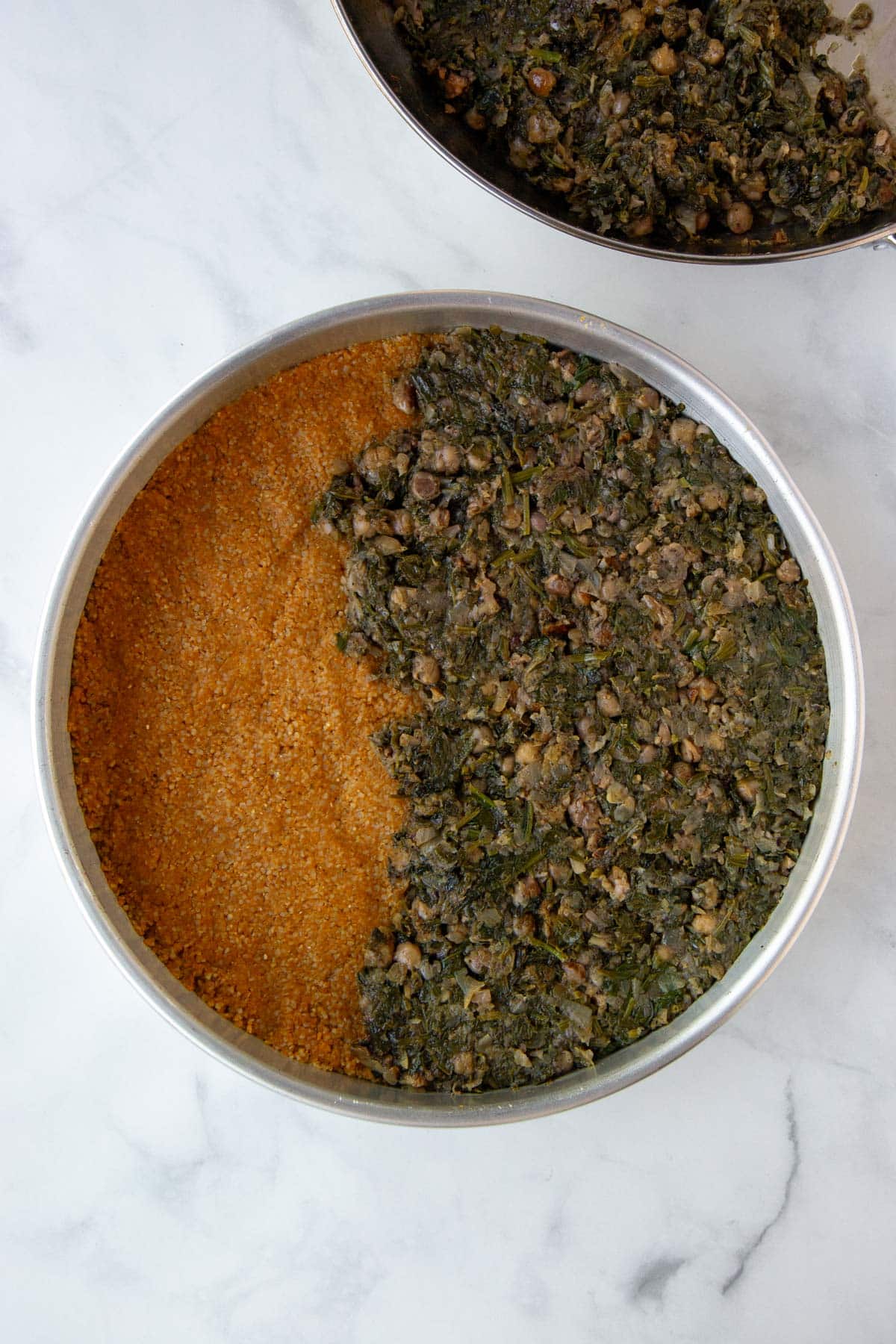
Step 4: Spread out the filling on top of the first layer of dough.
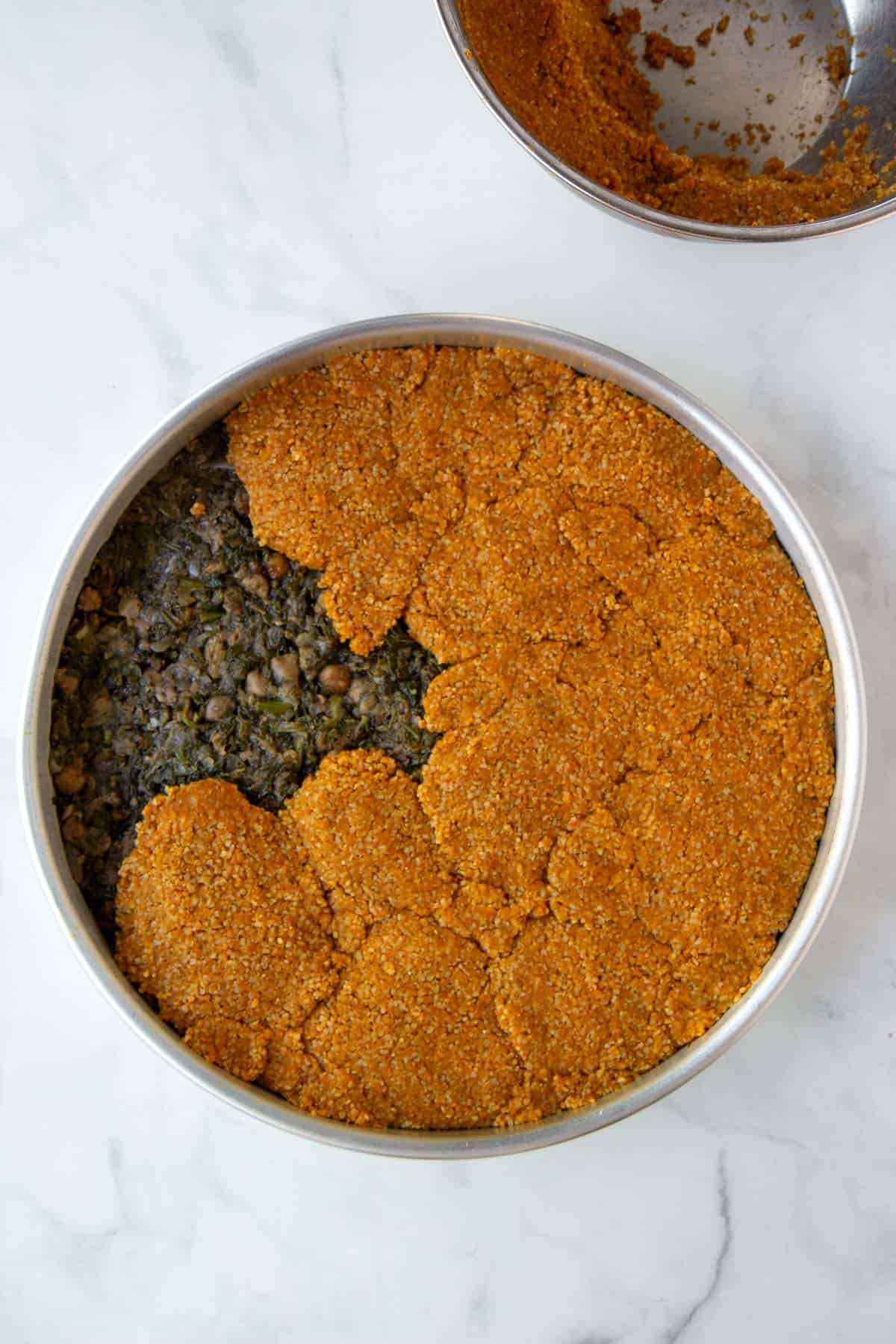
Step 5: Cover the filling with the second layer of dough. Work with a little bit of dough at a time, flattening each piece over the filling. Smooth down the layer. Then, it's time to score the kibbeh before baking.
I love baking this in a 12 inch round kibbeh-style pan for that classic look, however, you can also use a rectangular 9x13 inch baking pan.
Scoring the kibbeh star
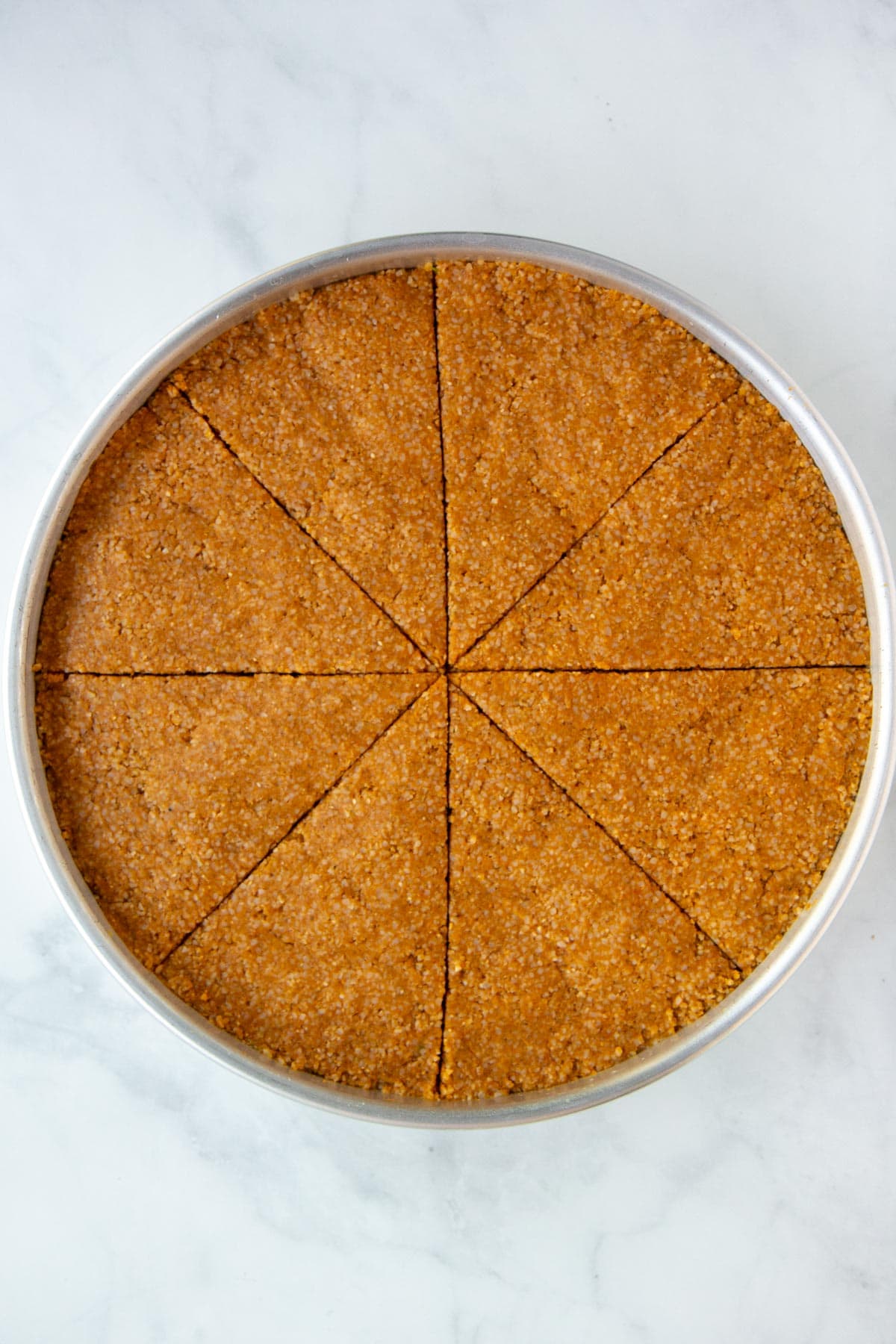
Step 1: First, cut a cross through the center of the kibbeh with a large knife. Wipe your knife clean between each cut. Then, cut each quadrant in half through the middle, creating 8 equal wedges.
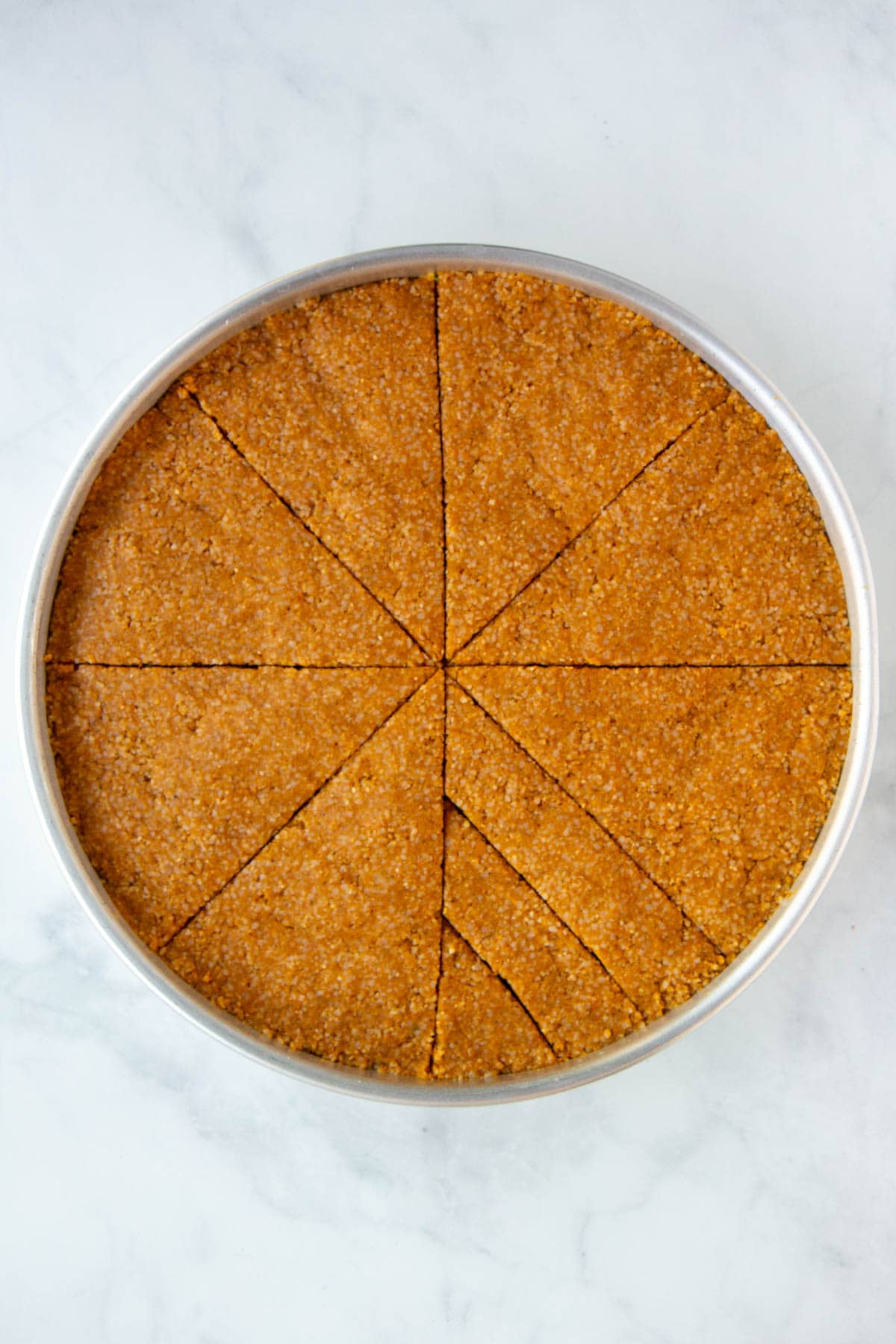
Step 2: Working with one wedge at a time, make 2 parallel cuts inside each wedge, so the wedge is divided into 3 strips of equal width.
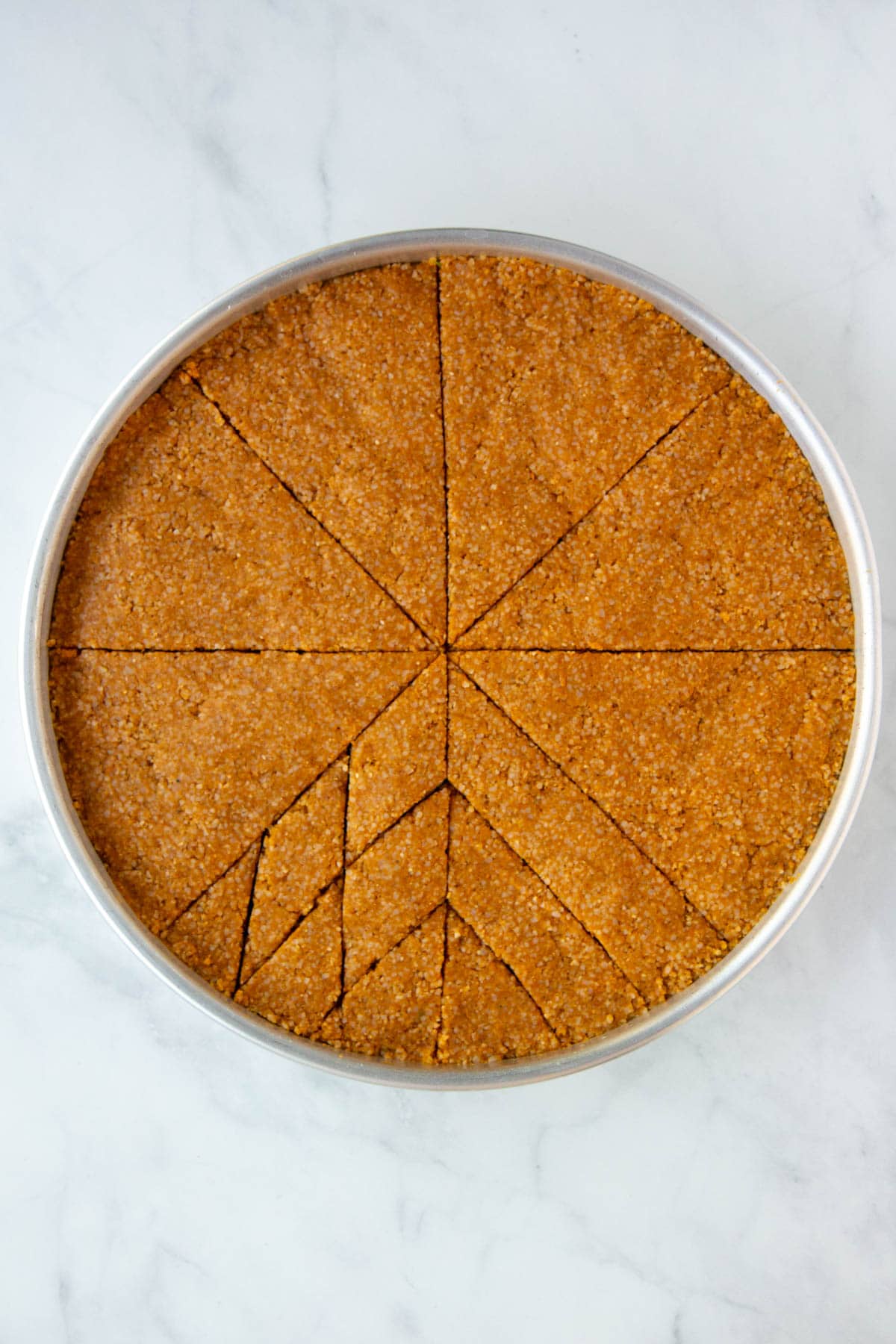
Step 3: Turn the pan slightly and cut across those strips at an angle, using the original quadrant lines as guides, creating diamond shapes.
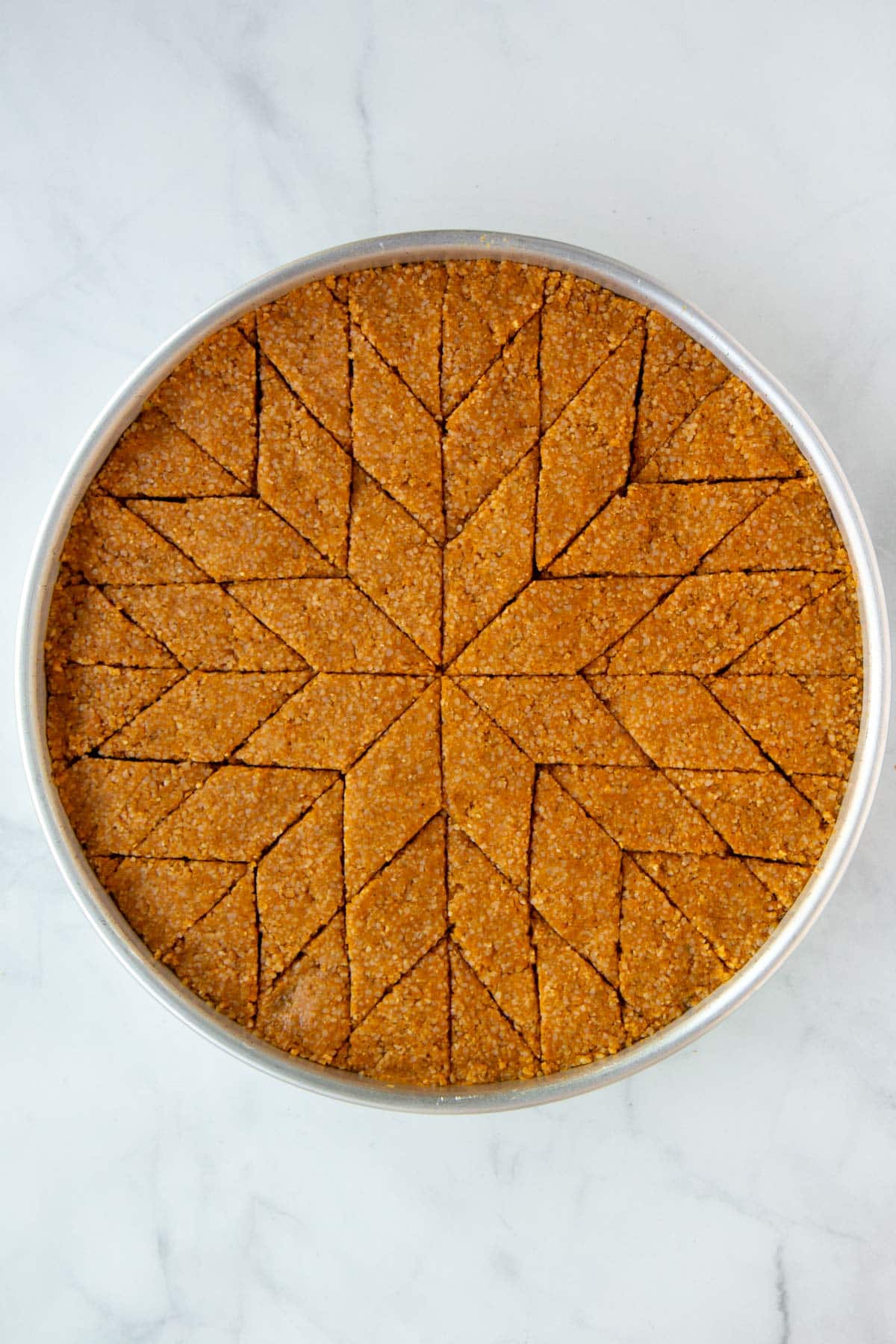
Step 4: Repeat across the pan, until the whole tray is scored.
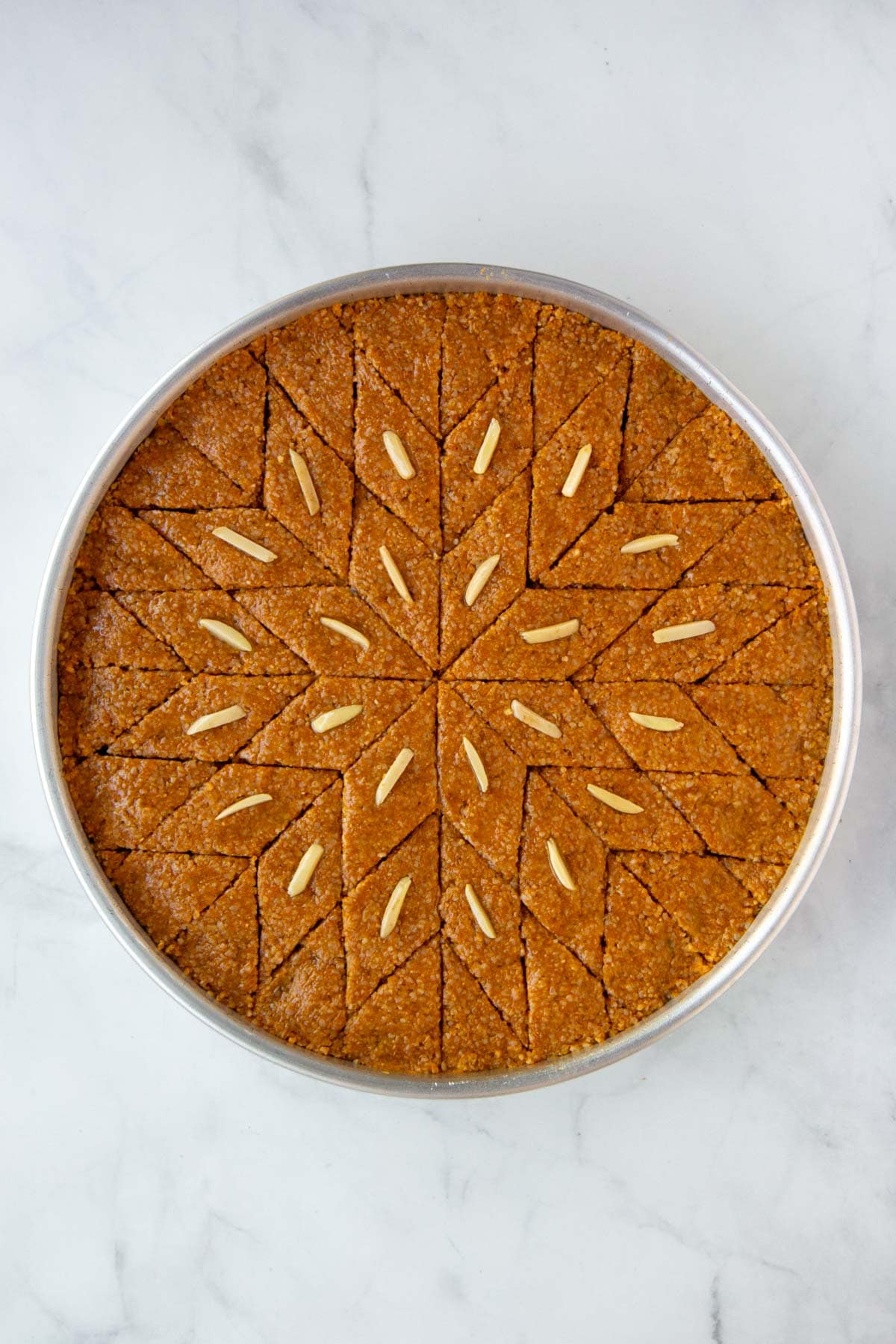
Step 5: If you like, press a nut into the center of some or all of the diamonds. Brush generously with the remaining olive oil before baking. Bake until slightly crisped and golden on top.
Scoring the diamond slices to form the kibbeh star seems complicated, but if you take it slowly step-by-step, it's not too bad. If you prefer not to do this, you can also score your kibbeh into squares or a simple diamond pattern by scoring diagonal lines in both directions across the tray.
Top tips
- Test the dough consistency right before you assemble the kibbeh. Bulgur keeps absorbing moisture as it sits, so the dough can dry out fast.
- For an onion chopping shortcut, purée the onion for the dough in the food processor, and then use it to chop the onions for the filling. Do this by adding chunks of the peeled onions, a little at a time, in batches, so they don't get fully puréed.
- Wet your hands with cold water while kneading the kibbeh dough, assembling the dough layers, and to smooth out the dough after each layer.
- Cook the filling until it looks almost dry. Extra liquid can make the layers steam instead of crisp.
- Wipe your knife clean between each cut when scoring the kibbeh for clean cuts.
- Chill the assembled kibbeh for 10 minutes before scoring if your dough feels very soft. It will make scoring easier.
FAQs
If your kibbeh dough cracks or crumbles at all when you hold a flattened piece of it, it's too dry. If this is the case, knead water into the dough 1 tablespoon at a time until it holds together, looking smooth without any cracks. If it feels loose and slumps instead of holding its shape, it may be too wet. Add flour or fine bulgur 1 tablespoon at a time, until it holds together.
No, you do not need to soak or rinse the bulgur before adding it to the ingredients because it's parboiled. Make sure not to rinse or soak it before mixing your kibbeh dough, as it will absorb too much of the liquid and change the consistency.
Yes, the kibbeh can be made and assembled up to 24 hours before and stored unbaked in the fridge. Before baking, if the top looks a little dry, lightly brush it with water to add back some moisture.
Let the kibbeh come close to room temperature by bringing it out of the fridge 20 minutes before baking. Finally, brush with an extra 1-2 tablespoons of olive oil, until glossy, right before baking.
Storing
- Refrigerating: Cooked kibbeh lasts up to 5 days in the fridge.
- Freezing: Freeze baked kibbeh for up to 3 months.
- Reheating baked kibbeh: Thaw if frozen. If it looks dry, brush with water. Reheat in the microwave or oven (brush with 1-2 tablespoons olive oil before baking).
- Baking from unbaked (make-ahead): If you assembled ahead and refrigerated or froze it unbaked, thaw if needed and let it sit at room temperature for 20 minutes. Brush with water if dry, then brush with extra olive oil. Bake as directed, adding a few extra minutes if needed.
What to serve with this recipe
These are some of my favorite ways to serve baked pumpkin kibbeh:
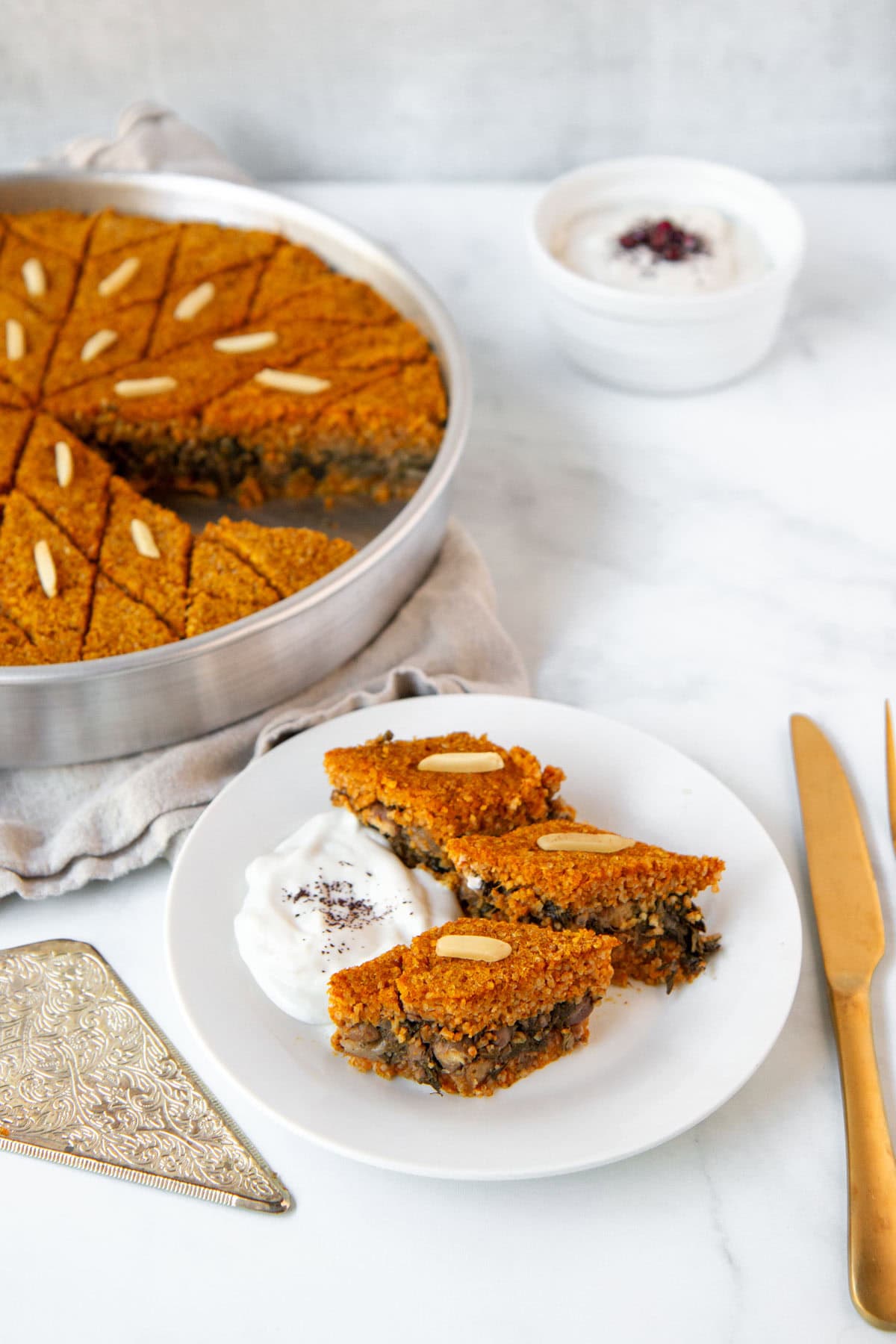
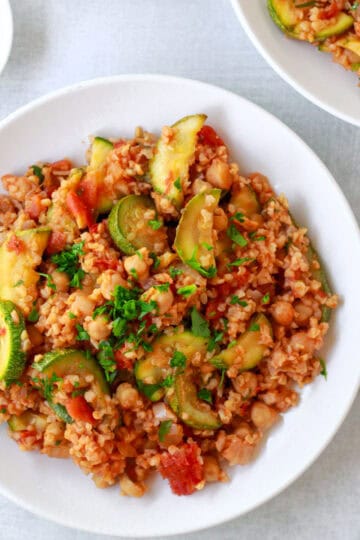
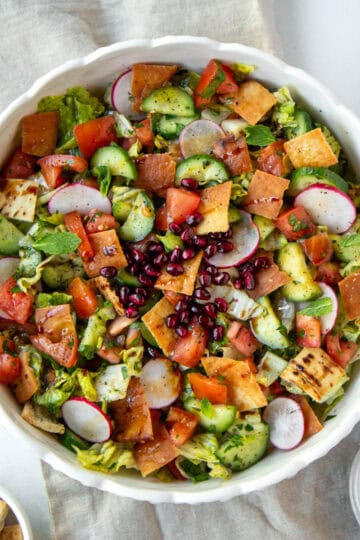
- Serve it with a refreshing salad like Middle Eastern tomato salad or Palestinian salad.
- Kibbeh always goes great with a side of Middle Eastern lentil soup, to make an extra cozy meal.
- Serve it with a side of yogurt (I like non-dairy cashew yogurt) or a simple creamy tahini sauce.
More Middle Eastern mains you'll love
Recipe

Pumpkin Kibbeh (Baked)
Equipment
Ingredients
Pumpkin dough
- 2 cups fine bulgur wheat
- 2 15 oz. cans pumpkin purée or about 2 lbs fresh pumpkin purée*
- 1 onion grated or puréed
- 2 tablespoon flour for binding
- 2 teaspoon salt
- ½ teaspoon black pepper
- 1 teaspoon allspice
- 1 teaspoon cinnamon
- 1 teaspoon cumin
- ½ teaspoon nutmeg
- ½ teaspoon coriander dried
- ¼ cup olive oil
- Pine nuts or slivered almonds for garnish (optional)
Filling
- ¾ cup walnuts chopped into small pieces
- 3 tablespoon olive oil
- 2 onions finely diced
- 1 teaspoon cumin
- 1 lb fresh spinach chopped**
- 1 15 oz. can chickpeas drained and rinsed
- 1.5 teaspoon salt or to taste
- 1 tablespoon sumac
- ¼ teaspoon black pepper
- 3 tablespoon pomegranate molasses or juice of 1 lemon
Instructions
- Prepare the dough. Mix the bulgur, pumpkin purée, onion, flour, salt, and spices together, and knead until a cohesive, smooth dough forms.*** Let the dough rest while you prepare the filling.2 cups fine bulgur wheat, 2 15 oz. cans pumpkin purée, 1 onion, 2 tbsp flour, 2 tsp salt, ½ tsp black pepper, 1 tsp allspice, 1 tsp cinnamon, 1 tsp cumin, ½ tsp nutmeg, ½ tsp coriander
- Preheat your oven to 350F.
- Toast walnuts. Place walnuts in a large skillet over medium heat, and dry toast for 2-3 mins, until fragrant. Set aside.¾ cup walnuts
- Prepare filling. Heat olive oil in the skillet over medium heat and sauté onions for 5-8 mins, until translucent. Stir in cumin and then add spinach. Add spinach in batches if needed. Cook until wilted, 2-5 mins. Then, add chickpeas, toasted walnuts, salt, sumac, and pepper, and stir to combine. Continue cooking until most of the moisture has evaporated, and the mixture almost looks dry, about 8-10 mins. Stir in pomegranate molasses, let the liquid reduce again, and set the filling aside.3 tbsp olive oil, 2 onions, 1 tsp cumin, 1 lb fresh spinach, 1 15 oz. can chickpeas, 1.5 tsp salt, 1 tbsp sumac, ¼ tsp black pepper, 3 tbsp pomegranate molasses
- Test the dough. Grab a golf-ball sized piece of dough, and squeeze and flatten it in your hand. If it holds together and you can lift it without it slumping apart, it's good. If it crumbles or cracks at all, add cold water 1 tablespoon at a time, until it holds together. If it's too mushy, add 1 tablespoon of fine bulgur or flour at a time, until it holds together well.
- Grease the bottom and sides of a round 12 inch or rectangular 9x13 inch baking pan with olive oil.¼ cup olive oil
- Divide the pumpkin dough into 2 equal parts. Press the first half of the dough evenly into the base of the pan.***
- Add the filling. Spread the spinach and chickpea filling evenly over the first layer.
- Cover the filling with the second layer of dough. Grab a small ball of dough at a time, press it flat with your hands, and place it over the filling. Repeat until you use all of the dough. Wet your hands with cold water, and smooth out the top so it's even.
- Score the top. Using a large, sharp knife, score the dough into square or diamond shapes (this makes cutting after baking easier), and garnish with slivered almonds or pine nuts. To do this, follow the instructions below for scoring the kibbeh.Pine nuts or slivered almonds
- Brush the top generously with the remaining olive oil.¼ cup olive oil
- Bake the kibbeh at 350F until the top is nicely browned and the pumpkin dough is cooked through and slightly crisped, about 35-45 minutes, depending on thickness.
- Rest and serve. For cleaner cuts, let the baked kibbeh rest for about 20 minutes before slicing along the scored lines. Serve hot, with yogurt or fresh salad.
Scoring the kibbeh
- First, cut a cross through the center of the kibbeh, making 4 equal quadrants.
- Wipe your knife clean between each cut.
- Cut each quadrant in half again through the middle, so you have 8 equal wedges.
- Working with one wedge at a time, make two parallel cuts inside the wedge, so the wedge is divided into 3 strips of equal width.
- Turn the pan slightly and cut across those strips at an angle, using the original quadrant lines as guides. This creates diamond shapes.
- Repeat across the pan. If you like, press a pine nut or almond sliver into the center of some or all of the diamonds.

Leave a Reply